
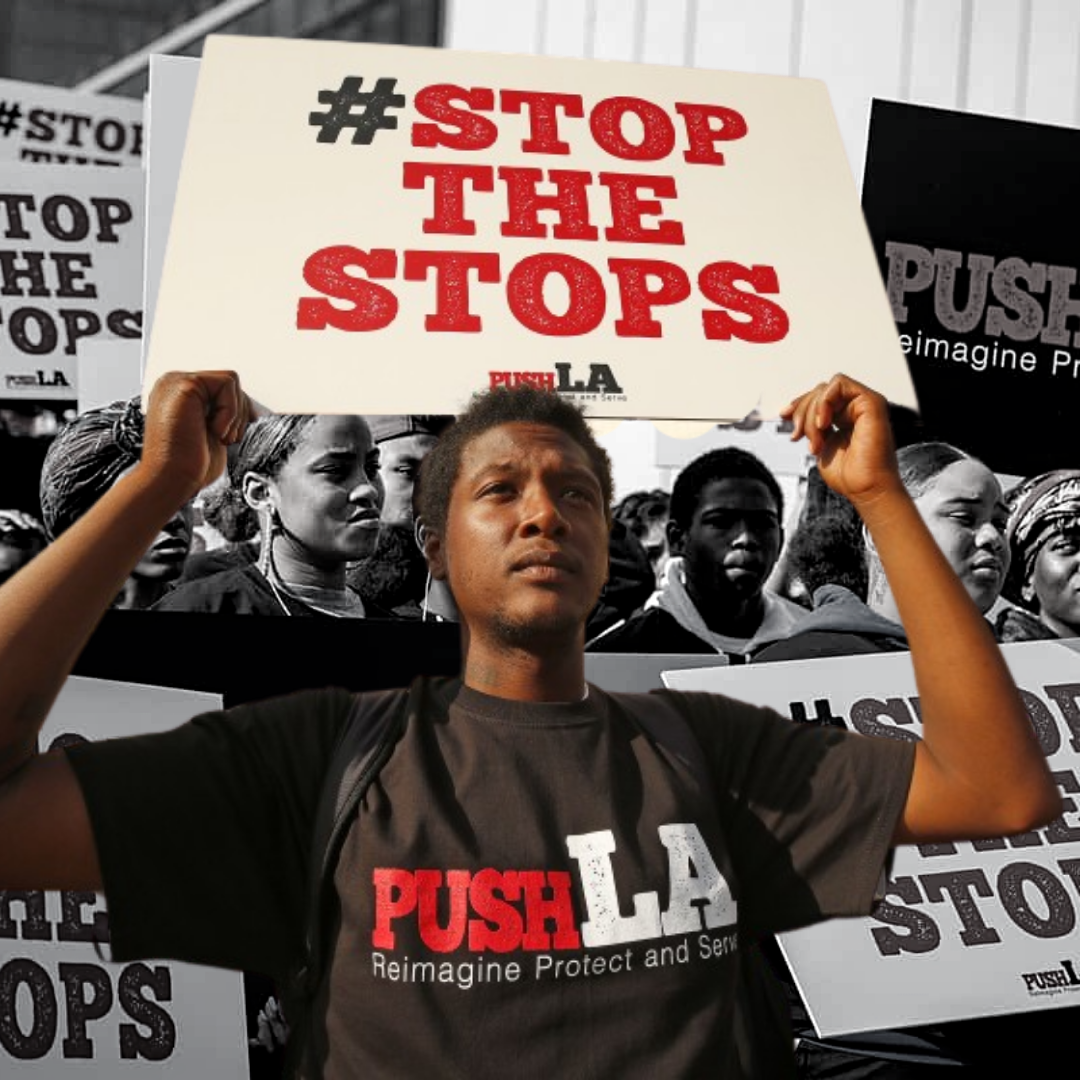
For years, civil rights advocates in Los Angeles have raised concerns about a policing tactic known as the pretextual traffic stop. The practice is simple. An officer pulls a driver over for a minor violation such as a broken taillight, expired registration tags, or an object hanging from a rearview mirror. The stated reason is the traffic violation. The real purpose is often something else. Officers use the stop as an opportunity to question the driver, search for evidence of unrelated crimes, or investigate what one speaker at a recent City Hall hearing described as little more than a “hunch.”
Advocates say the practice has long been one of the most common gateways to racial profiling in Los Angeles. A 2020 City Council motion introducing the issue argued that LAPD has historically used minor traffic infractions “as a pretext for harassing vulnerable road users and profiling people of color,” particularly Black and Latino Angelenos. The motion cited decades of complaints about overpolicing in communities of color and noted that many Black residents describe being repeatedly pulled over for “driving while Black.”
That motion, introduced in the aftermath of the 2020 uprisings against police violence, launched a years long city debate over alternatives to police centered traffic enforcement. The proposal called on city departments to examine non police approaches to traffic safety and to rethink the role of armed enforcement in transportation policy. Former CD11 Councilmember Mike Bonin was among the councilmembers who introduced the original motion.
In 2022, LAPD adopted an internal policy intended to limit pretextual stops. Under the policy, officers are not supposed to conduct pretext stops unless they have articulable information suggesting more serious criminal activity in addition to the traffic violation itself. But critics have argued that the policy leaves broad discretion in officers’ hands and does little to address the underlying racial disparities that motivated the reform effort in the first place.
According to data presented during a special joint meeting of the Ad Hoc Committee on Unarmed Crisis Prevention and Transportation Committee, stops for minor traffic violations have continued at significant levels despite the 2022 policy. Presenters from the PUSH LA coalition said Black residents, who make up roughly 8 percent of Los Angeles’ population, accounted for between 27 and 32 percent of stops for minor traffic violations between 2019 and 2025. Latino residents were also disproportionately stopped, while white residents were significantly underrepresented in the data.
The March 6 hearing became one of the most emotional policing discussions at City Hall in recent months. For hours, residents, organizers, clergy members, researchers, and elected officials described pretextual stops as a source of trauma that has shaped daily life for generations of Black and Brown Angelenos.
Council President Marqueece Harris-Dawson opened the hearing by calling pretextual stops “racially biased” and “ineffective,” arguing that they do not demonstrably improve public safety while subjecting entire communities to fear and humiliation. He described the “talk” many Black families give their children before they are old enough to drive: keep your hands visible, do not make sudden movements, do not raise your voice, comply immediately. “One small thing can result in serious injury and/or death,” Harris-Dawson said. He noted that 86 percent of pretextual stops in Los Angeles involve Black and Brown residents and described the practice as deeply corrosive to public trust.
The hearing included testimony from Senator Steven Bradford, who said pretextual stops disproportionately target Black and Latino Californians while rarely producing meaningful public safety outcomes. Bradford recounted his own experience being stopped late at night for a broken headlight while serving in the Legislature, only for the encounter to escalate into a field sobriety investigation despite no evidence of wrongdoing. “We want law enforcement to go after the bad guys,” Bradford said. “Again, never leads to any type of arrest, citation, or criminal activity being stopped.”
Dozens of residents described encounters with LAPD that they said left lasting psychological scars. Speakers recounted being pulled from cars at gunpoint in front of children, searched without cause, handcuffed, interrogated about gang affiliation, or detained for extended periods without citations ever being issued. One speaker described watching officers scatter his belongings across the sidewalk after searching his car in front of his teenage sons during a birthday outing. Another described how repeated stops as a young Latino driver caused him to tense up every time he sees a police vehicle behind him. Others spoke about losing family members during police encounters that began with minor traffic or bicycle violations.
The PUSH LA coalition, which has led much of the organizing around the issue, argued that pretextual stops are not only racially disproportionate but ineffective as a public safety strategy. During the presentation, coalition members described how stops for equipment violations and administrative infractions often function as fishing expeditions for unrelated criminal investigations. They also emphasized that the coalition is not calling for an end to enforcement of dangerous driving behavior such as reckless speeding, but rather an end to stops over minor equipment and administrative issues that disproportionately expose Black and Brown residents to police contact.
It was in that context that the Transportation Committee considered recommendations to strengthen LAPD’s existing pretext stop policy. The recommendations included prohibiting most pretextual stops except where there is a significant and imminent safety risk, banning consent searches during those stops absent independent legal justification, requiring officers to clearly articulate the reason for stops on body worn camera footage, and exploring a mail based notification system for certain non moving violations instead of officer initiated traffic stops.
Three members of the committee supported advancing the recommendations.
One voted no. Councilmember Traci Park was the only member of the Transportation Committee to oppose the proposal.
The transcript shows that Park participated in the hearing, but her comments focused primarily on the number of guns and weapons recovered during traffic stops. Questioning LAPD officials, Park highlighted statistics showing hundreds of firearms recovered annually and asked what types of crimes officers were able to solve through these stops. LAPD representatives responded by emphasizing firearm recoveries and violent crime concerns.
Park did not publicly engage during the hearing with the testimony about racial profiling, trauma, or disproportionate impacts on Black and Brown communities. After her exchange with LAPD officials, she concluded: “Thank you very much, I have no other questions.”
Because two committee members were absent, the committee lacked enough votes to formally recommend the proposal to the full City Council. The item was therefore transmitted “without recommendation,” even though Park was the lone no vote.
The debate now moves to the full City Council, where Los Angeles officials will decide whether the city should go further in limiting a policing tactic that advocates say has defined the experience of mobility for generations of Black and Brown Angelenos.