
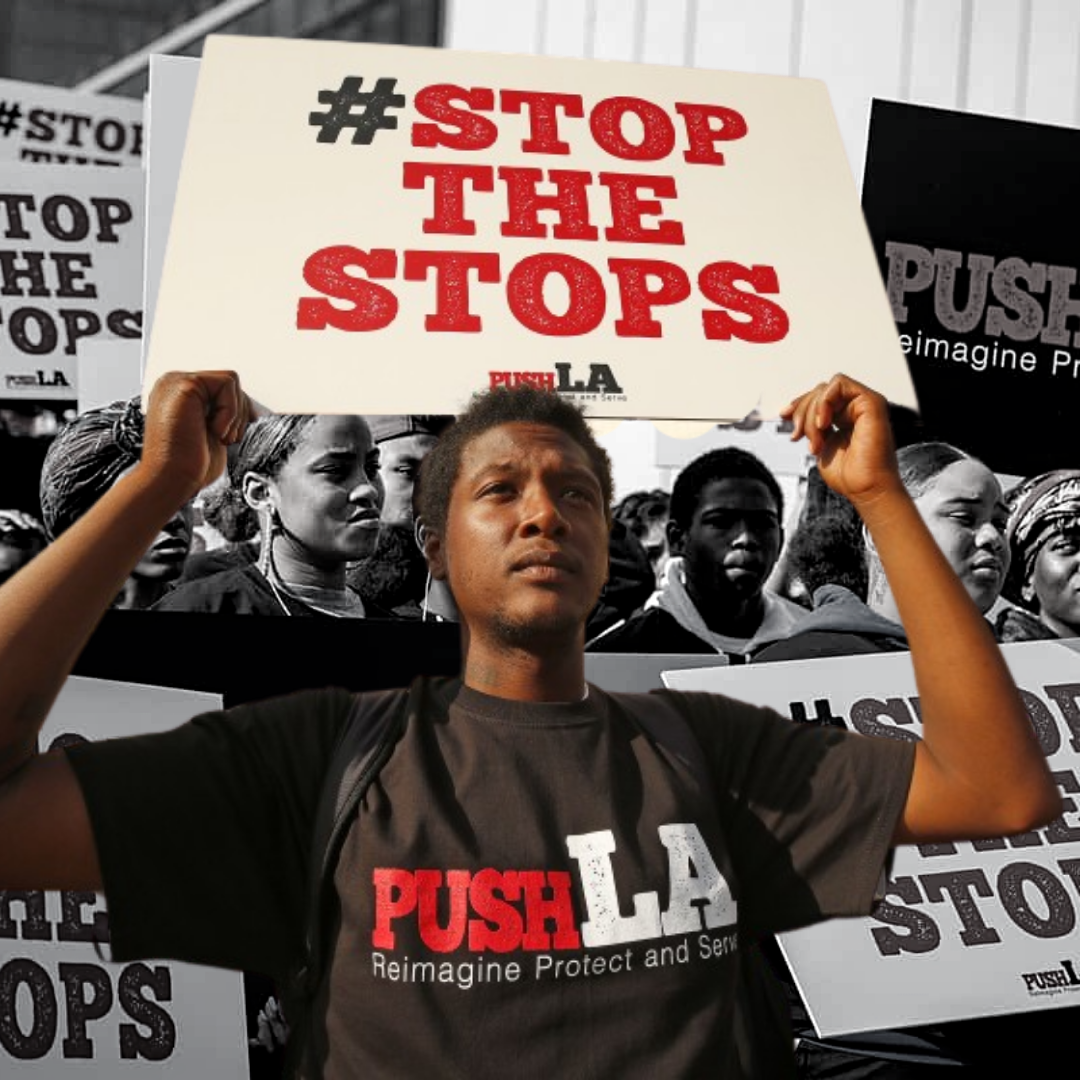
For years, civil rights advocates in Los Angeles have raised concerns about a policing tactic known as the pretextual traffic stop. The practice is simple: an officer pulls a driver over for a minor violation such as a broken taillight, a hanging air freshener, or failing to signal. The stated reason is the traffic violation, but the real purpose is often something else. Officers use the stop as an opportunity to question the driver or search for evidence of unrelated crimes.
Advocates say the practice has long been one of the most common gateways to racial profiling. Studies and city data have repeatedly shown that Black and Latino drivers are stopped and searched far more frequently than white drivers in Los Angeles. For many residents, the experience has become shorthand for something else entirely. Being pulled over for “driving while Black.”
That history is what prompted a group of Los Angeles councilmembers to introduce a motion in 2020 asking the city to rethink how traffic enforcement works. The motion argued that minor traffic infractions had often been used as a pretext for harassment and profiling and that heavy reliance on armed police to enforce traffic rules had undermined trust in many communities. The proposal directed city departments to examine alternatives that could improve safety without relying on police stops for minor violations.
The debate has unfolded slowly over the past several years. In 2022, LAPD adopted a new internal policy intended to limit pretext stops. Under that policy, officers are supposed to have articulable information suggesting a more serious crime before using a minor traffic violation as the basis for a stop that leads to further investigation. The change was meant to reduce stops based on vague hunches and require clearer justification for discretionary enforcement. But even with that policy in place, pretext stops continue. LAPD data reviewed as part of the ongoing council file shows that since the policy took effect, roughly ten percent of traffic stops citywide have been classified by officers as pretextual.
That data has fueled calls for stronger limits. Transportation and civil rights advocates have argued that the current policy leaves wide discretion for officers and does little to address the underlying problems that led the city to begin examining alternatives in the first place. In recent months, the City Council has been considering updated recommendations that would strengthen the rules around pretext stops and push the city further toward non police approaches to traffic safety.
Those recommendations came before the City Council’s Transportation Committee earlier this month. Among other things, the committee considered proposals to strengthen LAPD’s policy by prohibiting most pretextual stops unless the violation poses a significant and immediate safety risk. The recommendations also ask city departments to explore alternative enforcement models, including systems that could allow certain minor violations to be addressed through mailed notices rather than officer initiated stops.
Three members of the committee voted to advance the recommendations, but Councilmember Traci Park cast the lone no vote. The vote places Park on the opposite side of a reform effort that has been developing in Los Angeles for decades and that reflects a broader national shift in how cities think about traffic enforcement. Across the country, jurisdictions from Oakland to Philadelphia have begun limiting pretextual stops or shifting traffic enforcement toward automated systems and civilian programs focused on safety rather than criminal investigation.
In Los Angeles, the conversation is still unfolding. Supporters of reform argue that reducing pretext stops is a necessary step toward rebuilding trust in communities that have experienced decades of disproportionate traffic enforcement. Opponents warn that limiting police discretion could make it harder for officers to detect other crimes during routine stops. For now, the question is headed to the full City Council.