
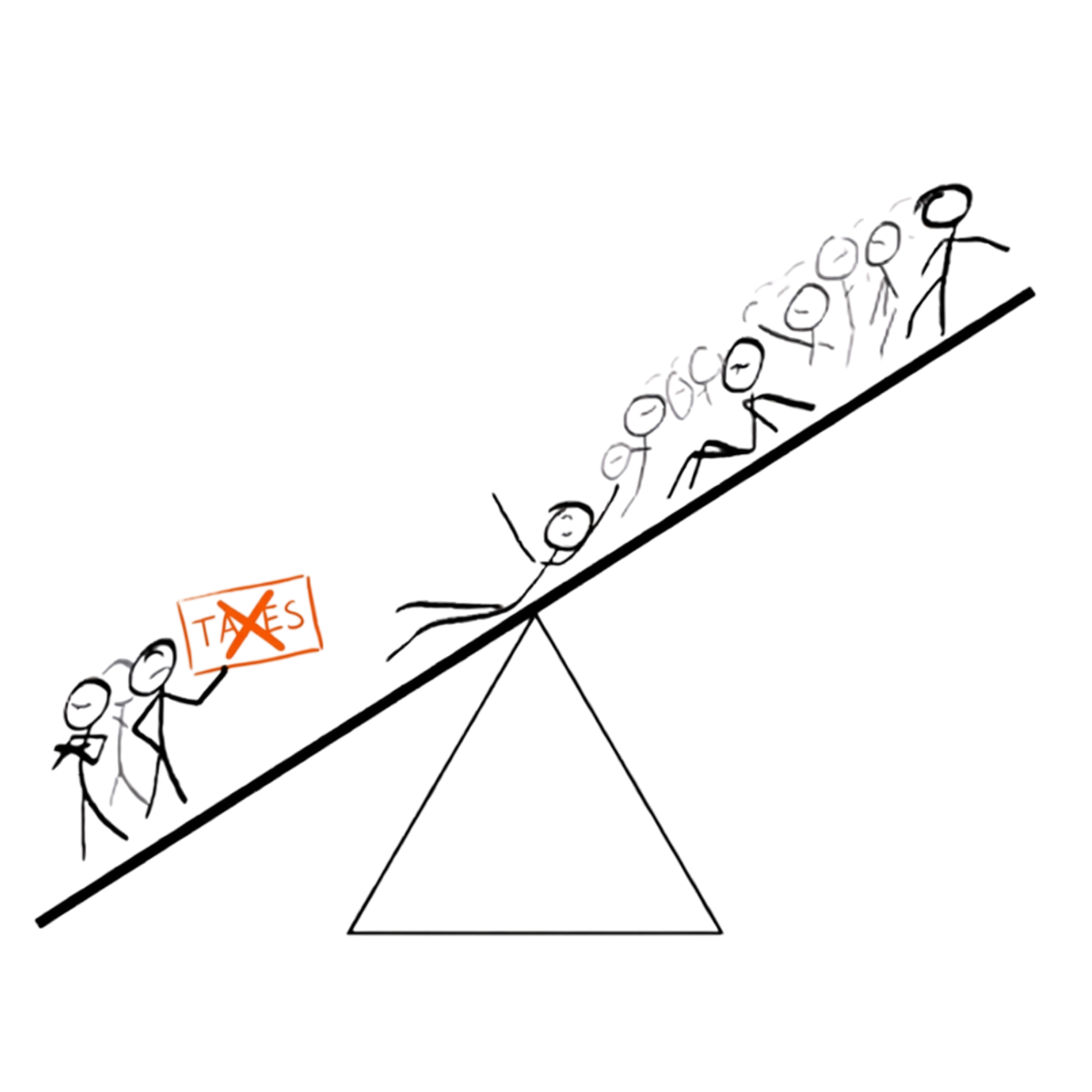
After more than a year of lawsuits, repeal campaigns, legislative attacks, and relentless pressure from the real estate industry, Measure ULA appears to have survived its biggest political threat.
On Wednesday, LA City Council rejected proposals to send broad changes to the voter-approved transfer tax back to the ballot. Instead, councilmembers approved a narrowly tailored tax credit for certain multifamily housing developments, preserving the core of the measure that has generated more than $1.24 billion for affordable housing, eviction defense, rental assistance, and homelessness prevention since Los Angeles voters approved it in 2022.
The council’s action followed months of hearings by its Ad Hoc Committee on Measure ULA, where supporters and opponents sparred over whether the tax was discouraging new housing construction. City-commissioned research ultimately found that high interest rates, construction costs, and financing conditions, not Measure ULA itself, were the dominant forces slowing development. While researchers identified one relatively narrow category of for-sale multifamily housing that appeared sensitive to the tax, they found little evidence supporting broader claims that ULA was responsible for the city’s construction slowdown.
Rather than dismantling the measure, the council chose to address that narrow issue. Under the new policy, newly constructed multifamily housing sold within ten years of completion may qualify for partial or complete relief from the transfer tax if projects include affordable housing and pay prevailing wages.
For housing advocates, the vote marked an important victory. After months of efforts to weaken Measure ULA through litigation, industry lobbying, proposed state legislation, and pressure from City Hall, Los Angeles instead chose to preserve the measure while making targeted adjustments supported by the available evidence.
But while City Hall was debating how to refine Measure ULA, another negotiation was unfolding in Sacramento that may ultimately prove to make it much harder to pass anything like Measure ULA in the future.
The Howard Jarvis Taxpayers Association managed to qualify their “Local Taxpayer Protection Act” for the November ballot. Not only would this initiative have challenged Measure ULA and other transfer taxes on the books across California, it would have imposed a two-thirds vote requirement for citizen-sponsored local special taxes, effectively overturning the legal framework established by the California Supreme Court’s 2017 California Cannabis Coalition v. City of Upland decision.
That matters because Measure ULA exists because of Upland. LA voters approved the measure with just under 58 percent of the vote, so it would have failed under the two-thirds requirement, as would many future measures supported by a clear majority of voters but opposed by a determined minority.
The implications of requiring supermajority approval extend well beyond housing. Citizen-sponsored local tax measures have become one of the primary ways Californians fund affordable housing, homelessness prevention, public transit, parks, libraries, climate resilience, mental health services, and other public investments when elected officials fail to act. Requiring two-thirds approval does more than make those measures harder to pass. It redistributes political power by giving a minority of voters the ability to block policies supported by most of the electorate.
But rather than allowing Howard Jarvis measure to proceed, legislative leaders negotiated a compromise. In exchange for Howard Jarvis withdrawing its ballot measure, state lawmakers placed ACA 22 on the November ballot. Under AC 22, existing taxes like Measure ULA would remain intact, but any future citizen-sponsored local special taxes would once again require two-thirds voter approval.
While the agreement protected Measure ULA, it also fundamentally changed the political contest Californians will face this November. The original Howard Jarvis initiative carried significant political liabilities and may very well have crumbled under its own weight. It would have jeopardized billions of dollars in existing local housing, homelessness, and other public funding by threatening measures like ULA that voters had already approved. It was drafted, funded, and championed by one of California’s most influential anti-tax organizations, making it easier for opponents to frame the election as a choice between preserving local investments and advancing a broader anti-tax agenda.
But that election will never happen. Instead, Californians will vote on ACA 22, a constitutional amendment referred not by a notorious anti-tax organization, but by the state legislature. While the measure preserves existing taxes like ULA, it adopts Howard Jarvis’ central structural goal of requiring a two-thirds vote for future citizen-sponsored local special taxes.
Whether this move represents prudent risk management or a missed political opportunity is difficult to know. The compromise eliminated the possibility that the Howard Jarvis initiative might slash existing local revenue. But the legislature also prevented voters from rejecting Howard Jarvis’ proposal outright, repudiating not only its immediate attack on Measure ULA but the broader effort to replace majority rule with rule by an anti-tax minority.
That question feels particularly relevant at a moment when billionaire wealth, corporate influence, and tax fairness have become central issues in national politics. Measure ULA itself passed because a majority of Los Angeles voters concluded that the city’s highest-value real estate transactions should contribute more toward addressing an escalating housing and homelessness crisis. Whether voters would have embraced a sweeping Howard Jarvis proposal that threatened those investments is something Californians will now never have the opportunity to decide.
The compromise also removed a competing constitutional question from the ballot. As part of the negotiation with Howard Jarvis, legislative leaders withdrew ACA 13, a proposed constitutional amendment designed to protect majority rule in future ballot initiatives. ACA 13 addressed a simple question: If a citizen initiative seeks to make future ballot measures harder to pass (for example, by raising the approval threshold from a simple majority to two-thirds), that initiative would first have to clear the same higher threshold itself. In other words, if you want to require two-thirds approval going forward, your proposal should itself receive two-thirds support.
Howard Jarvis repeatedly called ACA 13 a “poison pill” and made its removal a central demand during negotiations. By agreeing to withdraw it, legislative leaders gave up the opportunity to let voters decide whether California should adopt this constitutional safeguard. Had ACA 13 passed, it would have established a lasting principle making it more difficult for future citizen initiatives to weaken majority rule by imposing higher voting thresholds. That question will now never reach the ballot.
Over the past year, Measure ULA has been the subject of lawsuits, legislative proposals, repeal campaigns, administrative delays, and repeated predictions that it would collapse under its own weight. Instead, it has generated more than $1.24 billion for housing and tenant programs. This year’s spending plan alone allocates roughly $544 million, including $381 million for affordable housing and $163 million for homelessness prevention.
Those dollars represent homes built, tenants defended from eviction, families receiving rental assistance, and communities with greater capacity to confront an ever-deepening housing crisis. The debate over Measure ULA has never really been about transfer taxes. It has always been about whether communities retain the democratic power to address problems that markets and existing institutions have failed to solve.
For now, Los Angeles has kept one of those tools. But in saving Measure ULA from Howard Jarvis, state leaders may have made it much harder for future communities to pass measures like it.