
The LAPD has let its agreement with surveillance company Flock Safety expire, acknowledging that the deal never adequately settled who controls the data collected by the company’s automated license plate readers, who can access it, or how it can be shared. The lapse, announced last week after warnings from privacy advocates, was quickly framed as a major shift in the city’s approach to the technology.
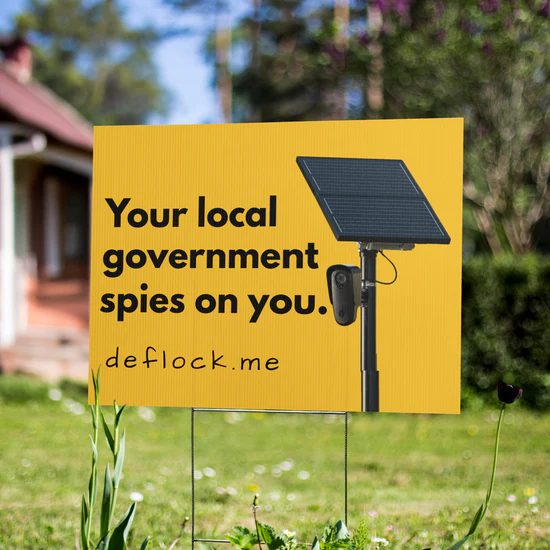
It probably won’t last. LAPD officials told the Board of Police Commissioners on Tuesday that the department is already negotiating a replacement agreement with Flock, whose CEO recently called the anti surveillance group DeFlock a terrorist organization. The proposed deal would make LAPD the owner of every image, record, and piece of metadata collected through the cameras, bar Flock from selling or sharing that information or using it to train artificial intelligence systems, and require the company to report a data breach within 24 hours. Flock submitted its own proposed revisions to the city on Monday.
The announcement follows mounting evidence that networked license plate readers have let federal and out of state agencies reach data collected by local police departments, including in California, where state law sharply restricts that sharing. Agencies around the state have suspended or terminated Flock programs after audits revealed access they had not authorized or did not understand. Los Angeles’ own Inspector General has now concluded that LAPD lacked adequate agreements governing not only its relationship with Flock but key parts of its broader automated license plate reader system.
The backlash has even reached Mar Vista. Thirty nine Flock cameras were installed across Council District 11 after Councilmember Traci Park directed $450,000 in discretionary funds toward the acquisition, installation, and maintenance of license plate readers, part of a broader plan she initially promoted as a 100 camera public safety expansion. After heavy public opposition, the Mar Vista Community Council voted to oppose additional Flock installations and called for existing cameras in the neighborhood to be removed. It is the kind of “results” Park points to on the campaign trail, but the results in this case are 39 cameras residents did not ask for and a council vote demanding their removal.
The expiration of LAPD’s agreement is a product of that wider resistance, including public records requests, litigation, neighborhood organizing, and sustained pressure from the Stop LAPD Spying Coalition and other community groups. But residents are right to be skeptical of what comes next. Police reform usually means adding training, technology, consultants, auditors, and administrative requirements while supplying departments with new funding and leaving their underlying authority intact. This approach preserves police as the central provider of public safety and often expands police power through new resources and technologies.
Angelenos were recently reminded of how entrenched police power is in this city when the City Council abandoned a central Charter Commission proposal that would have given residents more meaningful authority over LAPD policy and discipline. The Council pulled major police oversight proposals from the November ballot after the Los Angeles Police Protective League demanded bargaining over the measures, preserving a structure in which the Council appropriates billions of public dollars to LAPD but has little direct control over the department’s policymaking.
The response to Flock is following the same pattern. LAPD has not decided to dismantle the system, reduce the volume of data it collects, or transfer authority over surveillance decisions to the public. It has agreed to negotiate better paperwork.
Most visibly, the cameras are still running. All 138 pole mounted Flock cameras connected to LAPD remain active and continue collecting images, license plates, timestamps, and location data. LAPD says its personnel no longer have routine access to the information while the agreement is inactive, but the data continues to be stored in Flock’s cloud and may be available to investigators again once a replacement deal is completed. Officials also indicated that the department might still seek access for a particular investigation during the interim. The pause applies principally to LAPD’s ordinary access, not to the collection of information or continued operation of the surveillance infrastructure.
The department’s handling of 50 cameras installed in the Pacific Palisades after the January 2025 fire offers another warning about how temporary deployments quietly become permanent. Flock loaned the cameras to LAPD under an emergency arrangement that was supposed to last six months. The agreement bypassed the normal public Police Commission process on the grounds that the fire created emergency circumstances, and the City Attorney’s approval line on the document remained unsigned. The cameras continued operating and LAPD retained access long after the stated period ended, without a subsequent agreement explaining the legal basis for the extension. The Palisades cameras are still active.
The proposed regulatory process is also narrow. The Inspector General recommended suspending new automated license plate reader contracts and deployments until the public could weigh in and the city could conduct a broader review of vendors and data practices. The Police Commission accepted that recommendation, and the Inspector General scheduled a two hour online listening session for July 30. LAPD’s decade long Axon contract expires the following day, which suggests the hearing is a procedural step to clear before LAPD renews or replaces contracts it already intends to continue, rather than a genuine opportunity for the public to decide whether the system should exist.
The limits of the reform become clearer once Flock is placed within the rest of Los Angeles’ surveillance system. LAPD does not rely on a single company. It uses automated license plate reader technology supplied by Flock, Motorola Solutions, and Axon. Its inventory includes 298 pole mounted readers, 140 cameras mounted on patrol car roofs, approximately 1,500 readers built into police vehicles, and seven mobile trailer systems. During August and September 2025 alone, those systems recorded more than 210 million license plate reads.
Flock itself also plays a much larger role than installing and maintaining cameras. Axon’s readers, operating in roughly 1,500 LAPD vehicles, store their data in the company’s Evidence.com system. Because that platform cannot search the information by license plate, Axon partnered with Flock so that LAPD could use Flock’s software to query data collected by Axon equipment. LAPD has been feeding Flock license plate information that did not originate from Flock cameras, using the company as an analytical and search layer for another vendor’s surveillance system.
The Inspector General found no written agreement between LAPD, Axon, and Flock establishing the security rules for this arrangement or defining what access Flock has to the Axon generated data. LAPD could not produce documentation establishing the contractual authority for the integration. That finding undermines the idea that the problem can be solved by simply declaring LAPD the owner of data produced by Flock cameras. The company’s platform is woven into the processing of information collected elsewhere, under relationships the department itself has failed to fully monitor.
Nor does the city’s proposed Flock agreement address the full network of privately owned cameras. Homeowner associations, businesses, shopping centers, apartment complexes, and other private entities can buy Flock cameras and grant police access to the resulting information. LAPD actively encourages neighborhood groups and private homeowners to finance cameras, while donations routed through the Los Angeles Police Foundation have allowed wealthier communities to purchase surveillance equipment for specific police divisions. The Inspector General identified 49 Flock cameras in West Los Angeles funded through Police Foundation donations from local homeowner associations, in addition to the 39 funded directly by Council District 11 and the 50 loaned for the Palisades.
The city does not appear to have a complete public accounting of which private camera owners share information with LAPD, under what conditions, or how often officers search those privately generated records. Ending or rewriting LAPD’s direct agreement with Flock would not switch those cameras off. It would not prevent private owners from continuing to collect information from public streets. And unless the city adopts enforceable restrictions on police access to privately collected data, it would not necessarily stop that information from entering police investigations through another arrangement.
These cameras are also being folded into a larger project. Since 2023, Los Angeles has used state funding to expand Real Time Crime Centers intended to combine license plate readers with feeds from businesses, public infrastructure, and other surveillance systems. City planning documents discuss integrating cameras operated by the Bureau of Street Lighting and LADOT, along with private business feeds, into centralized police platforms. The significance of that project is not simply the number of cameras installed. It is the interoperability that allows information collected by different agencies, companies, and private entities to become part of one searchable environment.
The Inspector General’s report found serious gaps beyond Flock. LAPD did not have formal agreements governing all services provided by its three automated license plate reader vendors. Its Axon contract lacked specific provisions addressing retention, search capabilities, and sharing with other law enforcement organizations. Its internal audits were infrequent, and its monthly reviews of officer searches were not formally documented. The department’s agreements with 15 California law enforcement partners allowed those agencies to search LAPD information, but LAPD did not regularly inspect their searches or require them to audit their own use.
The shortcomings are especially consequential in a city that calls itself a sanctuary. Automated license plate readers create a searchable record of where a vehicle was seen and when, allowing investigators to reconstruct travel to a home, workplace, protest, place of worship, medical provider, or immigration attorney. Investigations have documented local police agencies conducting searches for ICE and other federal authorities, sometimes through informal requests or network settings that allowed access despite policies purporting to restrict it. Written prohibitions are not self executing when vendors connect thousands of agencies, police run searches on behalf of one another, and audit systems are weak or hidden from the public.
Stop LAPD Spying described the expiration of the Flock agreement as a victory produced by community pressure, but rejected the idea that stronger ownership clauses or privacy promises could make mass surveillance acceptable. No “new and improved” contract, guardrails, or reforms will sanitize LAPD’s nefarious expansion of mass surveillance, the coalition said in a July 14 statement, calling for an end to negotiations with Flock and to LAPD’s use of automated license plate readers regardless of vendor.
The July 30 listening session offers residents a chance to challenge the narrow terms of the debate. The choice is not limited to the existing Flock agreement or a revised version that gives LAPD clearer ownership of the same information. Residents can demand that the Police Commission reject a new Flock deal, suspend the renewal or expansion of Axon, Motorola, and other automated license plate reader systems, turn off cameras while no valid agreement governs them, disclose every public and private camera source available to LAPD, release vendor contracts, locations, retention settings, and search logs, and prohibit the department from receiving privately collected license plate data.
The temporary break with Flock demonstrates that organizing can force even a deeply entrenched police department to respond. Whether it produces meaningful change will depend on whether the public allows LAPD to define reform as a better contract, or demands that the city begin dismantling LAPD’s surveillance apparatus in a meaningful way.