
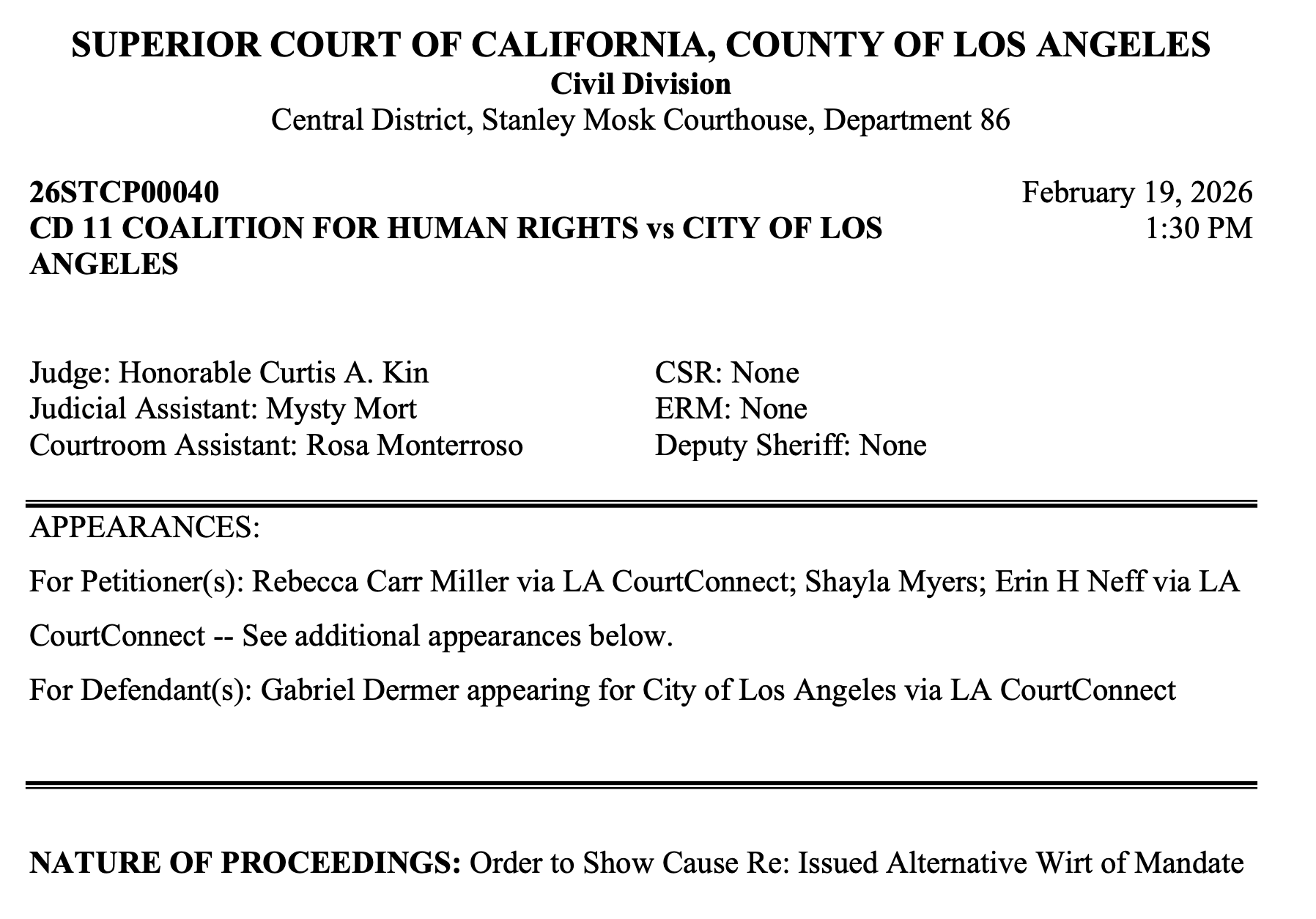
A Los Angeles Superior Court judge has blocked the city’s attempt to expand the towing and dismantling of recreational vehicles, delivering a significant legal setback to one of City Hall’s most aggressive homelessness enforcement efforts and prompting an immediate scramble inside City Council to determine what happens next.
In a ruling issued February 19, Judge Curtis Kin concluded that the City of Los Angeles lacks the legal authority to implement Assembly Bill 630, a state law allowing certain jurisdictions to dismantle abandoned or inoperable RVs valued up to $4,000. The statute applies specifically to Los Angeles County and Alameda County governments, not to individual cities within those counties. Because Los Angeles is one of 88 cities inside Los Angeles County, the court found the city’s attempt to immediately launch an RV disposal program was legally unsupported, writing that AB 630 “provides no such authority to the City of Los Angeles.” The court went further, issuing a writ of mandate ordering the City to vacate its instruction directing departments to implement the policy and to comply with existing law limiting vehicle disposal to those valued at $500 or less.
The writ reflects the culmination of a legal dispute that has been building for months. In December, City Council voted 12 to 3 to direct departments to move forward with implementing AB 630 through a motion introduced by Councilmember Traci Park. The motion stated that the City should take “immediate steps to implement AB 630” and instructed departments to carry out the policy and report back within 30 days, converting what might otherwise have been policy discussion into an operational directive.
Following that directive, advocates and legal organizations issued a formal warning that the rollout exceeded statutory authority and could result in the unlawful destruction of shelter. After those concerns were not addressed, the CD11 Coalition for Human Rights filed suit challenging the implementation directive itself and seeking to prevent the policy from taking effect.
Courts are typically hesitant to intervene in internal policy review, but directives that push agencies toward implementing an unlawful program can warrant judicial relief. Because the motion instructed departments to proceed, the case focused on stopping the directive before implementation occurred. After litigation was filed, the City attempted to avoid a writ by characterizing the directive as exploratory planning. The court rejected that framing, finding that Park’s own language and the motion’s operational instructions made clear departments were being directed to move forward rather than simply evaluate the policy.
The lawsuit was brought by housed and unhoused residents concerned that the policy would result in people losing their homes, belongings, medications, and identification without housing alternatives in place. Some plaintiffs live in RVs themselves and faced the possibility of displacement through the proposed enforcement effort.
Under existing state law, impounded vehicles valued above $500 must generally be sold at auction rather than destroyed. AB 630 raised that threshold to $4,000 for the participating counties, allowing them to bypass auctions and dismantle deteriorated vehicles more quickly. City leaders framed this as necessary to address public health concerns and predatory resale practices. Advocates, however, argued the measure risked accelerating displacement while doing little to expand housing access.
The ruling also reflects the broader policy context in which AB 630 emerged. City leaders, including Councilmember Traci Park, advanced a sustained series of motions targeting vehicle dwellers, including efforts to accelerate RV seizures and enforcement timelines ahead of implementation. These measures represent a coordinated enforcement strategy prioritizing removal over housing solutions and fit within a longer history of vehicle dwelling crackdowns that cycle through enforcement without resolving the underlying housing shortage.
Park expressed frustration with the ruling, calling the lawsuit “another example of activist lawsuits impeding our ability to address urgent public health and safety concerns while moving people indoors.” But the dismantling program did not require housing placements before towing or destruction and focused solely on disposal authority without expanding housing capacity. Park’s claim that the policy would move people indoors is especially striking given her support for prolonged and costly litigation to block affordable and supportive housing projects like Venice Dell.
Within days of the ruling, City Council moved to keep the issue alive. A February 25 motion asks the City Attorney to report back within seven days on the status of the litigation and the implications of the court’s decision, signaling that officials are recalibrating rather than abandoning the policy while considering appeals or legislative fixes.
Meanwhile, State lawmakers are already preparing a possible path forward. Follow up legislation is being developed to extend dismantling authority to cities within Los Angeles County, a move that could revive the policy in a legally defensible form and set the stage for renewed debate over how vehicular homelessness is addressed across the region.