
The Rainbow Coalition is still the only way out of this mess
This article is republished from Carter Moon’s Substack. Support Carter’s work here!
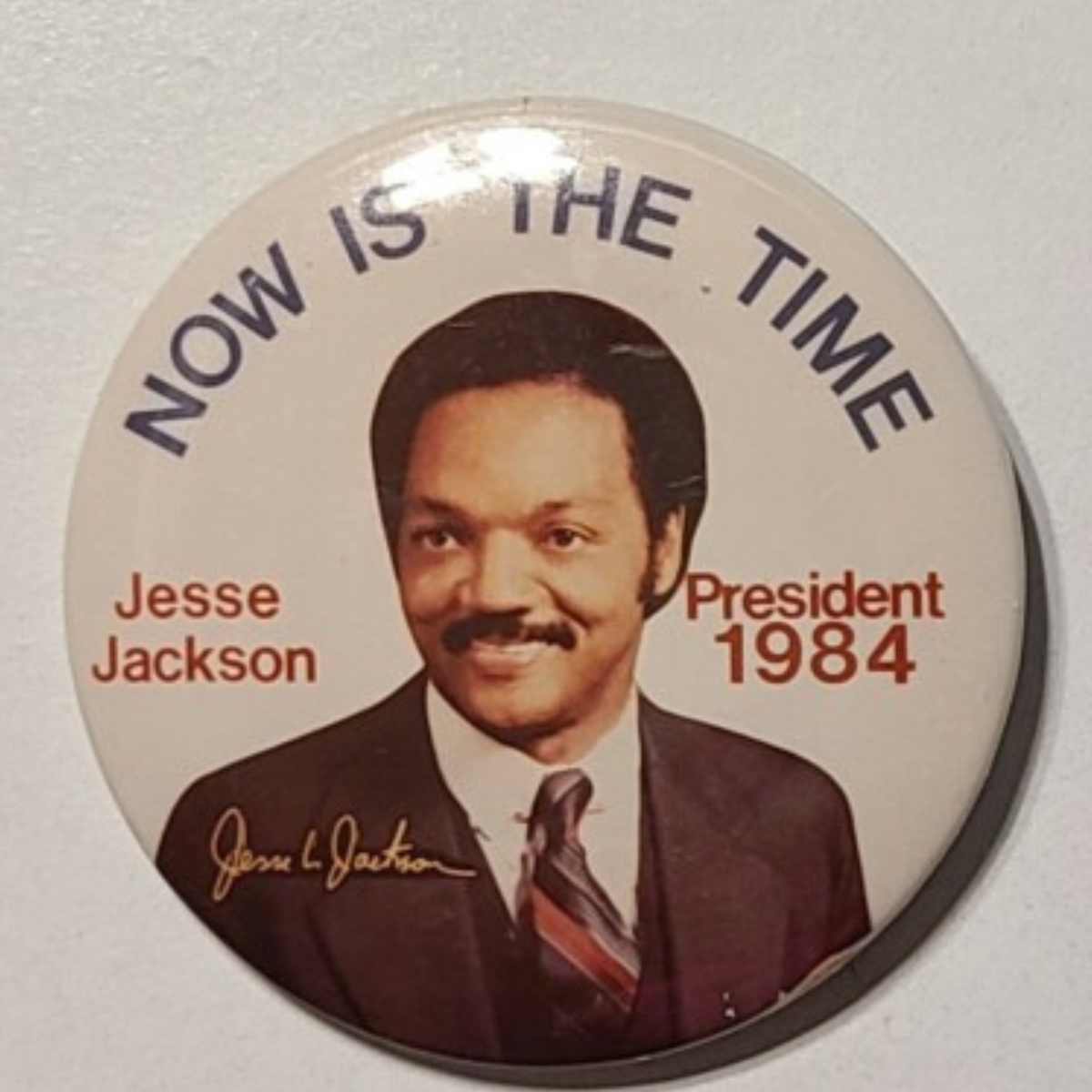
If you revisit Jackson’s speeches, it’s hard to deny that he was one of the greatest orators in American politics. His 1984 DNC speech is fantastic, and shocking in its clarity in understanding the threat that Reagan posed:
“President Reagan says the nation is in recovery. Those 90,000 corporations that made a profit last year but paid no federal taxes are recovering. The 37,000 military contractors who have benefited from Reagan’s more than doubling of the military budget in peacetime, surely they are recovering. The big corporations and rich individuals who received the bulk of a three-year, multibillion tax cut from Mr. Reagan are recovering. But no such recovery is under way for the least of these.”
Look where we are now. As Pam Bondi recently boasted, the Dow is at 50,000 while an estimated 771,480 people experience homelessness. The Pentagon has failed an audit for eight years in a row, meaning we have zero accountability for all of the military contractors who get obscenely rich off of our tax dollars through their death-dealing contracts. The 15 richest billionaires became $1 trillion richer in the first year of Trump 2.0, coinciding with some of the sharpest welfare cuts in American history. Our economy is so unequal that the top 10% of income earners are driving half of all consumer spending. In other words, the world Jesse Jackson was correctly condemning in 1984 has accelerated and become much more nightmarish in the intervening 42 years.
If, like me, you weren’t alive in the ‘80s, it’s easy to feel resigned that no one at the time recognized or cared about what Reagan and the neoliberal turn were doing to this country. After all, in ‘84 Reagan won every single state except Minnesota, a mandate that allowed him to unleash hell in his second term and lead us to the path we’re on today. But Jackson got 3.3 million votes in the ‘84 Democratic primary, despite no support from party insiders. His platform included creating a universal federal jobs program, cutting the budget of the Department of Defense, implementing single-payer health care, passing the Equal Rights Amendment, and supporting the creation of a Palestinian state. All fantastic ideas for someone to run on in 2028. The truth is, there are always people of conscience in any era who are brave enough to speak up for building a more just and equitable society, their significance just often gets downplayed by the powerful.
Reflecting on my perceptions of Jesse Jackson this past week, I thought about how when I was a young person, I often only heard about Jesse Jackson as a punchline. I think a lot of white kids from the suburbs like me are only aware of him because of the South Park episode about him, which reduces him to some kind of wokescold. This seems very intentional; our culture couldn’t tolerate a Black man very plainly telling the truth about the sins of America, even one who tried very earnestly to work within the confines of the system. This excellent tribute to Rev. Jackson in the American Prospect does a great job of laying out how much he created the foundations for what we now call the democratic socialist movement. Bernie Sanders has spoken very affectionately about what an inspiration the Reverend was, calling him “one of the most significant political leaders of the last 100 years.” Jackson was a die-hard supporter of workers, constantly showing up on picket lines whenever he was called, and particularly fighting for immigrant workers at a time when organized labor was at its most demonized.
That’s the beauty of his concept of the Rainbow Coalition. If you intentionally show up for the intersection of racial justice and labor justice, if you make direct appeals to materially improve the lives of the poorest working people in this country — people who are often racialized minorities — you can build a new coalition to overcome the moneyed interests that are strangling us all. In general, the largest demographic of voters in every presidential election is the people who don’t vote. In Mike Davis’ seminal 1986 book, Prisoners of the American Dream, the problem is articulated very clearly: “In no other capitalist country is mass political abstentionism as fully developed as in the United States, where a ‘silent majority’ of the working class has sat out more than half the elections of the last century.” Some of Sanders’ greatest successes in the 2020 primary came from organizing immigrant factory workers who normally sit out elections. Mamdani won in no small part because he took the work of reaching every demographic in New York and speaking to their issues earnestly, he built his Rainbow Coalition. If this country ever wants to meaningfully take power away from the oligarch Epstein class, we will have to figure out how to appeal to Jackson’s Rainbow Coalition.
I am very much trying to help rebuild this coalition through Rev. Rae Huang’s campaign for mayor of Los Angeles. I think LA is the perfect incubator for this type of politics: We have a majority of renters of all backgrounds who share a class interest as tenants. We also have immigrant families who are being targeted and threatened, families who need solidarity and unwavering city policy to defend them from the white supremacist onslaught of the Trump administration. We have a Black population who is disproportionately incarcerated and murdered by our unaccountable police department, who deserve a serious intervention to invest in alternatives to policing in order to preserve their lives. We have an employment crisis as our juggernauts of monopolized entertainment attempt to strangle what used to be good union jobs out of existence. I believe Angelenos are capable of seeing that these struggles are united, that our fates are bound up in each other; none of our personal crises can be solved without addressing the other injustices in our city.
It also matters that Rae is a pastor much like Rev. Jackson. I feel that there can be a strength in invoking the Christian tradition through an interfaith lens to advocate for universal public goods that lift everyone’s standard of living. In his ‘84 speech, Rev. Jackson said something that I find very effective: “Mr. Reagan will ask us to pray, and I believe in prayer. I have come to this way by the power of prayer. But then, we must watch false prophecy. He cuts energy assistance to the poor, cuts breakfast programs from children, cuts lunch programs from children, cuts job training from children, and then says to an empty table, ‘Let us pray.’” I’ve come to believe that we can’t side-step the right’s craven perversion of the gospel to worship abject greed and empire, we have to condemn their abuse in their own terms, like Rev. Jackson did.
Rae sent me this great Substack by Liz Bucar. Bucar quotes Trevor Noah in a conversation with Mamdani. He says: “One of the things that faith requires of you is the ability to believe that this current state that you are in is not the end. There is a possibility that something can be greater. And even though you cannot see it, you believe that it can happen.” To me, that is the fundamental project of liberatory movement politics: building a consensus among a majority of people that they’re allowed to have faith that things can get better, that we can collectively build a more just and peaceful society than the one we have now. I relate it to the brilliant Parable books by Octavia E. Butler. The books follow Lauren Olamina, a teenage girl who develops a new religion called Earthseed. The central tenet of the religion is that “God is change,” and that the devotees have a duty to apply their will to shape that change for the better. The followers of Earthseed go through hell as they’re persecuted by a president who is eerily similar to Trump, but eventually they persevere and transform humanity. This form of faith, the faith that things are constantly changing and that we have the agency to shape that change, is something I really believe in.
Rev. Jackson constantly reminded his audience to “keep hope alive,” a rallying cry we all need in this moment. In a sense, it’s bitterly disappointing that Rev. Jackson’s Rainbow Coalition never came into power in this country. But it’s essential that we remember his courage in putting forth a vision for a better country, even at a time when people were being conned into supporting Reagan’s agenda that would ultimately make life worse for them. Jackson maintained a relentless hope even after watching MLK, his close mentor, get assassinated mere feet in front of him. If he could find that strength, we can do the same.
