
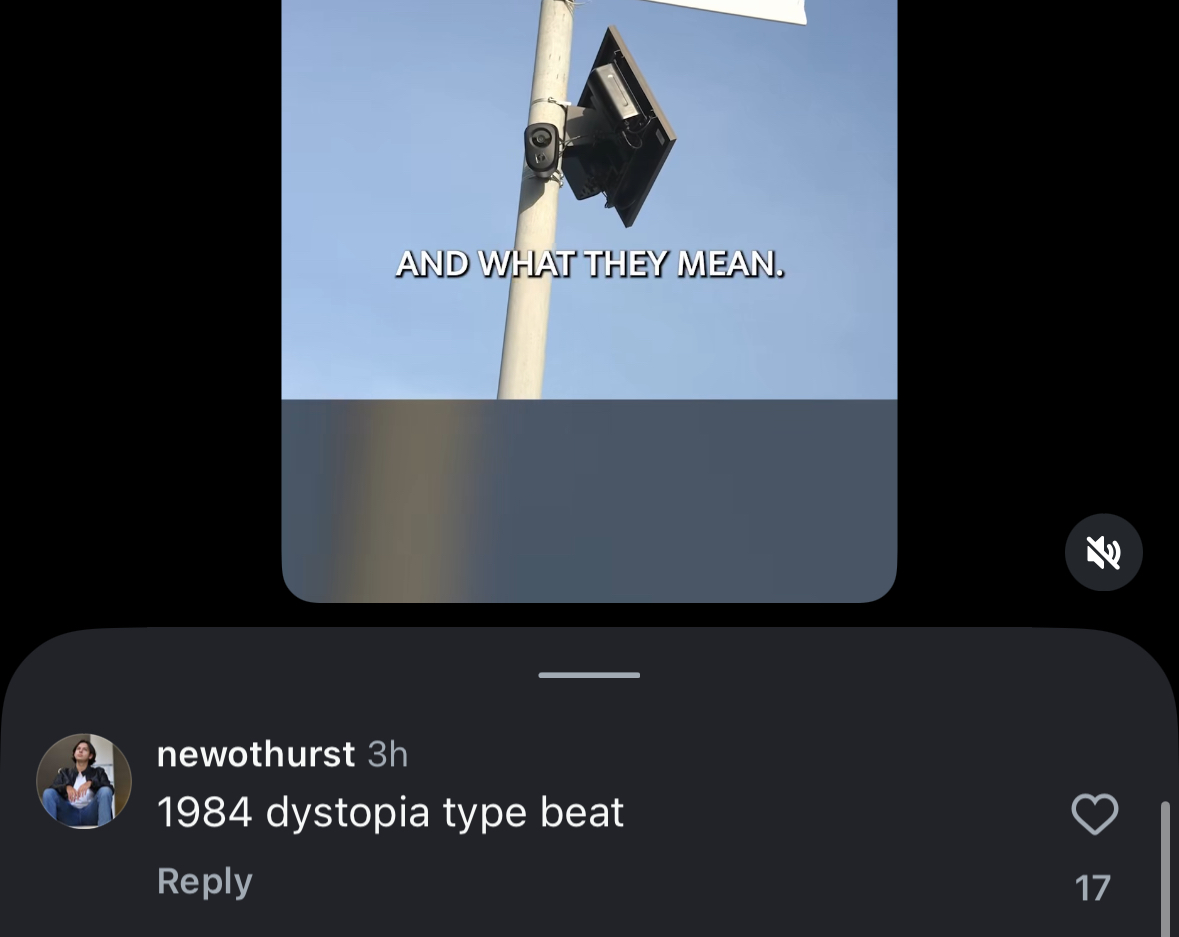
Los Angeles Councilmember Traci Park is overseeing the expansion of automated license plate reader cameras across the Westside, promoting the move as a public safety upgrade in response to an understaffed police department. In a recent Instagram post, Park described the cameras as “more eyes on the community” that operate around the clock and feed real time data directly to LAPD to track stolen vehicles, burglary crews, and violent offenders.
The rollout represents a significant expansion of abusive surveillance infrastructure with limited public debate and few clearly articulated safeguards. Automated license plate readers do not only flag vehicles linked to crimes. They continuously collect and store location data on everyone who drives through a neighborhood, creating detailed records of residents’ movements over time. That data can reveal where people live, work, worship, seek medical care, or participate in political activity, even when they are not suspected of any wrongdoing.
One of the most serious concerns is how this data can be shared. License plate reader systems are designed to make information easily searchable and transferable across agencies. While Park’s announcement focused on local crime, she did not address whether data collected on Westside residents can be accessed by federal agencies or used for immigration enforcement. For immigrant families, including many who live, work, and travel through the Westside every day, the risk is not theoretical. Even indirect data sharing or informal access can place people at risk of detention, family separation, or deportation.
Los Angeles has repeatedly stated that it is a sanctuary city, yet the expansion of surveillance tools that track movement in real time undermines that claim. Without explicit, enforceable prohibitions on data sharing, assurances about safety ring hollow for undocumented residents and mixed-status families. The absence of any discussion of immigrant impacts in Park’s messaging signals how easily these communities are treated as collateral damage in broader law-and-order narratives.
Park has framed the cameras as a practical response to staffing shortages despite the city’s notoriously massive spending on police, arguing that technology can compensate for a lack of officers. That framing normalizes a shift away from human accountability toward permanent automated monitoring. Systems that operate continuously and without discretion may appear efficient, but they also magnify the risks of misuse and overreach, particularly when vulnerable populations are already subject to heightened scrutiny.
There is also the issue of mission creep. Surveillance systems introduced to address specific crimes often expand in scope over time. Once installed, license plate reader data can be repurposed, shared, or retained in ways residents never explicitly consented to. Communities with less political power, including immigrants, are often the first to feel the consequences of that expansion.
The rollout has already generated unease among Westside residents, including people who otherwise support Park. While some welcomed the cameras as a deterrent, others raised alarms about privacy, data security, consent, and the broader implications of mass surveillance.
What remains notably absent is a clear public accounting of how long license plate data will be retained, who can access it, and what independent oversight exists to prevent abuse. Residents were not meaningfully engaged in deciding whether their neighborhoods should become continuous data collection zones or whether the risks to immigrant communities were acceptable.
Public safety matters, but safety that comes at the expense of civil liberties and immigrant protections is neither equitable nor sustainable. Installing automated license plate reader cameras across the Westside is not a neutral technical upgrade. It is a policy choice that expands surveillance, increases the potential for harm to vulnerable residents, and deepens mistrust between communities and the city.