
This article by Carter Moon originally appeared on his Substack, and is republished here with his permission.
Billionaires shouldn’t be able to hide their wealth from the rest of us by hoarding paintings they don’t even care about.
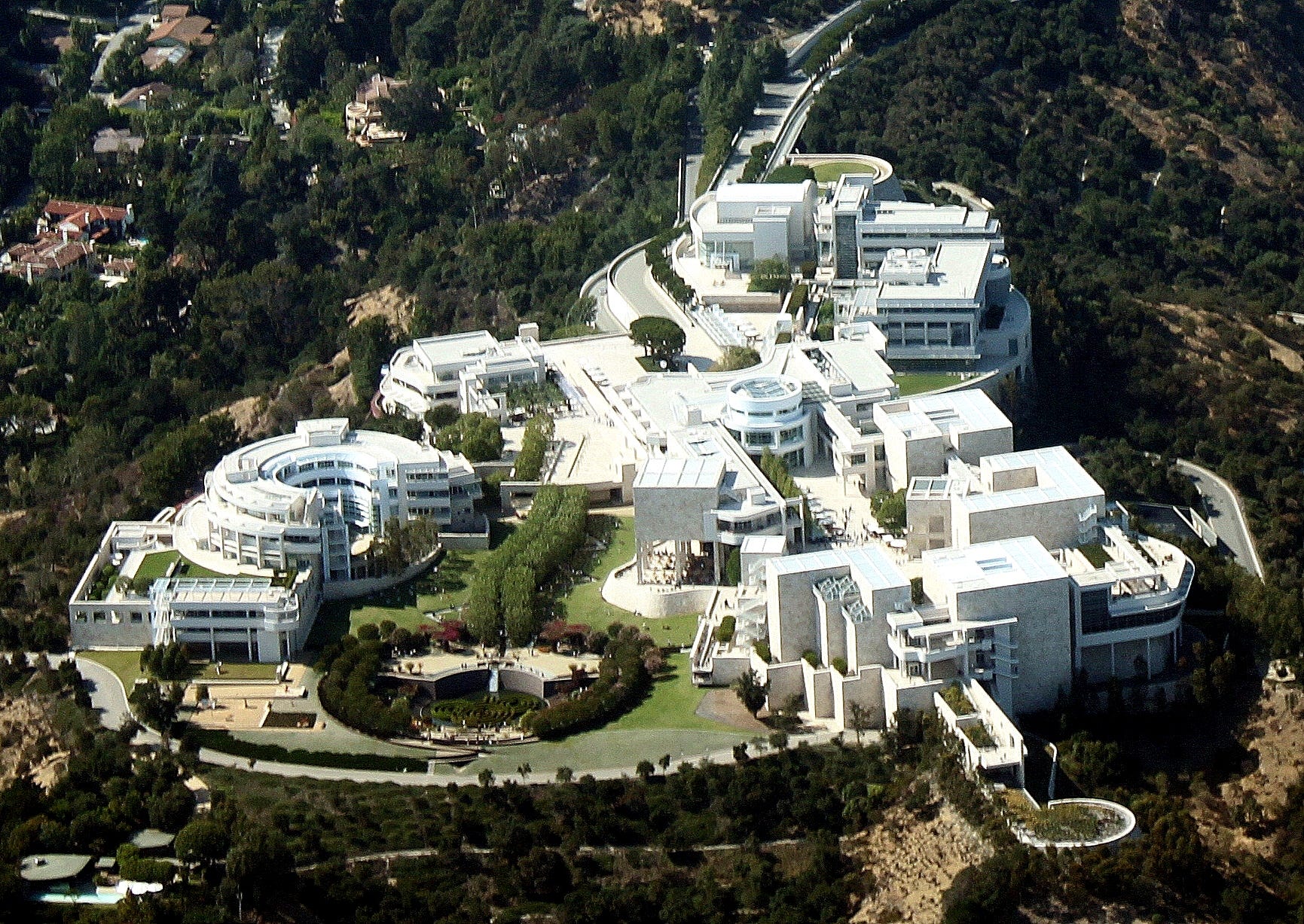
In the South Pavillion of the Getty Museum, you can view a wide array of baroque furniture and art owned by the French nobility in the 17th and 18th centuries. Entire rooms are recreated, with the ornate mirrors and finely crafted floors also on display. Particularly intriguing is a finely crafted swivel chair that belonged to Marie Antoinette. The placard below the chair informs the visitor that the chair was sold at auction by the French revolutionary government in 1793. Two weeks later, Marie Antoinette was put to death.


Much like Versaille in the late 18th century, the Getty is its own monument to extravagant inequality. France’s inequality in 1789 was even more obscene than our own current status, according to Thomas Pickety: “In France just before the Revolution of 1789, the proportion of national wealth held by the top 10 percent was about 90 percent, and the fraction possessed by the top 1 percent was as much as 60 percent.” But here in the US, we have reached the same level of inequality as seen in the Gilded Age right before the market crash of 1929. J. Paul Getty, the museum’s namesake, was of course a product of the Gilded Age. A privileged inheritor of an oil estate, Getty was at one point the richest man in the world. The J. Paul Getty Trust that operates the museum has an endowment of $7.7 billion, which allows Getty’s vast fortune to remain untaxed even decades after his death.

It’s impossible to deny that the museum, with its ornate stone walls and palatial views of LA from the Sepulveda Pass, is impressive. But there’s also a pervasive hollowness to the experience. There’s a sense that the museum seems to want to impress on you that opulence, the extreme wealth of other moments in European history, is the natural state of the world. The collection becomes a journey through the finest antiquities from the Roman Catholic Empire or Louis XIII’s France, telling a story that it is only the wealthy and the art they commission that truly survives the test of time. There is very little art on display that is not from Europe, and even less art that was not in one form or another commissioned by a wealthy patron at the time of its creation. History, in the telling of the Getty Museum, is defined by those at the top. The Getty’s own opulence, its hoarded treasures viciously kept from the public wealth, is justified through all these great works of art produced by similar political and economic conditions to those we exist in today.
A few weeks ago I attended a lecture and Q&A with the Marxist abolitionist geographer Ruth Wilson Gilmore, funnily enough just three-and-a-half miles from the Getty at UCLA. She made a comment that nonprofits represent twice-stolen wages from workers. First, the capitalist class steals from us when they pay us less than the value that our labor produces, creating the profits which they’re able to hoard. Then, they steal from us again when they avoid paying their fair share in taxes and hide their money from us in their tax shelters like the Getty Museum. I thought about how the Getty really represents a third form of theft as well. By building his wealth on oil, by making the world dependent on the substance that is causing the climate crisis, he also robbed the future from our species. From the many observation decks on the Getty’s grounds, you can see the 405 and all the thousands of cars crammed onto it; they are as much a part of Getty’s legacy as the museum. To add one last final insult to Getty’s thievery, the museum itself is free, but the privilege to park there is $25.
J. Paul Getty was a notoriously miserable man. His fifth wife wrote that Getty once chastised her for spending too much money on their son who had gone blind and was dying of a brain tumor. When their son died, Getty didn’t bother showing up to the funeral. He was quoted at the end of his life saying, “I hate and regret the failure of my marriages. I would gladly give all of my millions for just one lasting marital success.” He bragged about working 16-hour days and rarely threw parties. He was so miserly that he never bought a great work of art unless he thought it would appreciate in value; his close companion Penelope Kitson said, “Paul was really too mean ever to allow himself to buy a great painting.” Most famously, when his grandson was kidnapped, he haggled with the kidnappers over the price of the ransom.
Our current class of gilded losers is equally miserable. Musk has abused ketamine so badly it’s allegedly destroyed his bladder and every post he makes on the website he owns nakedly demonstrates how lonely and paranoid he is. He’s also responsible for the deaths of 600,000 people through his dismantling of USAID. Peter Thiel has objectively achieved his most outlandish goals, has massive control over the government, and is still fixated on the end of the world and possibly being the antichrist. The Epstein files have revealed that our wealthiest and most well-connected elites are pathetic men willing to trade all of their secrets and status for a chance to party with a monstrous sex criminal. These are not people who have a divine right to their wealth, their wealth does not in a meaningful sense even improve their lives or the lives of their families, they are miserable sociopaths with a soulless drive to accumulate which is antithetical to everything pure and transcendent about the human spirit.
Of course, these absurd concentrations of wealth always come crashing down. As much as the Getty museum tries to tell a story that extreme highs of wealth are what allow the greatest works of art to endure, ultimately the axe always swings the other way. It becomes more obvious by the second that AI is a massive bubble waiting to burst, and oil markets are similarly headed for a cliff we’ve probably never experienced before. Across history, the guillotines eventually roll out and Marie Antoinette’s furniture gets sold at auction. The horrors of the trenches of WWI come home and the Romanovs get shot in a basement. Sam Altman’s compound in San Francisco has been shot at twice in the last week. The burning of a warehouse in Ontario, California by a furious worker not being paid enough to live has made people online so ecstatic that they’re convincing themselves that other warehouse fires are part of a spontaneous uprising of furious workers, despite zero evidence that this is true. We are living in the long moment of a foot falling before it realizes there’s nowhere left to step.
Spontaneous acts of retributive violence are not the way out of this disaster. Bernie Sanders and Zohran Mamdani staged a massive rally last week to launch the new non-profit Union NOW!, with the explicit goal of supporting building union density across the country and restoring economic democracy for all of us. This is the only real tool at our disposal to force the capitalist class back to the bargaining table. If we leave it up to them, they’ll keep burning fossil fuels for their data centers and dropping bombs until the heat death of the planet. We can trade the next Getty Museum for dignified wages and housing for all of us, and fund our own museums with the wealth we create together. It’s not that we don’t deserve places to preserve history and culture, but those shouldn’t come at the expense of our universal public goods. We deserve palaces even greater than the Getty, but curated with the taste of the most well-trained art historians, not at the whims of one pathetic man.