

A new neighborhood fight unfolding along the edge of the Santa Monica Airport is exposing larger tensions over who gets to shape the future of one of the most contested pieces of public land on the Westside.
Residents living along Dewey Street and the border between Santa Monica and Mar Vista have launched a petition demanding that the City of Santa Monica relocate the Santa Monica Trapeze School after the business was moved from the Santa Monica Pier to a site at 2800 Airport Avenue adjacent to homes near the airport.
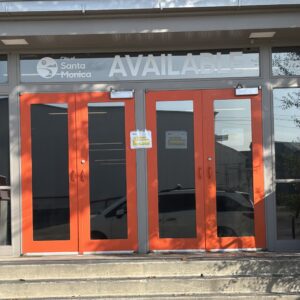
The petition, titled “Make It Right, City of Santa Monica! Save Mar Vista Single Family Homes & Relocate SM Trapeze Lease,” argues that placing the trapeze school next to homes is “fundamentally incompatible” with the surrounding neighborhood. Organizers say the facility has created major privacy concerns because flyers can allegedly see directly into backyards and second story windows while elevated on the trapeze platforms. Residents also cite amplified music, instructor announcements, parking concerns, and fears that the operation could eventually expand.
The controversy reached the Santa Monica City Council in April, where nearby residents urged the city to relocate the business to a commercial or industrial area instead of placing it directly against residential properties.
The Santa Monica Trapeze School had operated for years on the Santa Monica Pier before being displaced after the city ended its lease there earlier this year. The school’s website now advertises the airport location as its new permanent home.
On its face, the dispute may appear to be another classic, hyperlocal Westside land use fight. There’s a noisy business next to homes, and neighbors upset about privacy and quality of life. But the timing and location of the battle are significant. The trapeze school now sits directly inside the broader political war over the future of the Santa Monica Airport site, a 192 acre property scheduled to close as an airport at the end of 2028 after decades of organizing, litigation, and political conflict.
For years, the dominant vision pushed by the Santa Monica Great Park Coalition and other airport closure advocates centered on transforming the site into a massive public park. In 2014, Santa Monica voters approved Measure LC, which restricted future development on the land largely to parks and open space.
But as housing affordability has worsened across the Westside and Los Angeles more broadly, a growing coalition of housing advocates, labor unions, and progressive organizers has argued that the airport represents one of the only realistic opportunities to build large amounts of deeply affordable housing near jobs, transit, and the coast.
Groups connected to the Cloverfield Commons proposal and Santa Monicans for Renters’ Rights have pushed for affordable housing units alongside park space, arguing that reserving all 192 acres primarily for recreation in one of the most expensive housing markets in the country would represent a historic missed opportunity.
That debate has increasingly fractured what was once a relatively unified airport closure coalition. Some longtime airport-to-park advocates now warn that adding housing could derail the entire park conversion process. Housing advocates counter that preserving the site primarily for open space and low intensity recreational uses effectively reserves a massive public asset for the already-housed while working class families continue being displaced across the Westside.
The trapeze school dispute now appears to be colliding directly with those same tensions. The proposed trapeze site sits in the airport’s so-called “Urban Edge” area, a section of the property that has become central to the broader housing debate because it already contains developed and aviation-related uses and is viewed by many housing advocates as the least disruptive place to build housing in the future.
That same area has also become a magnet for competing visions of what airport conversion should look like. Park advocates have proposed cultural and recreational uses there. Others envision adaptive reuse, community amenities, entertainment spaces, or commercial activity. Housing advocates see it as one of the few politically and logistically viable places for affordable housing.
In many ways, the trapeze school controversy reflects the deeper contradiction embedded in the airport debate itself. For years, many anti-housing voices argued that airport land should remain largely open because housing and urban activity would supposedly create unacceptable impacts on neighboring communities. But now, as recreational and commercial uses begin moving onto the site instead, nearby residents are objecting to those uses too. The result is a growing political contradiction at the center of the airport conversation.
If housing is too impactful, and recreation is too impactful, and cultural uses are too impactful, and entertainment uses are too impactful, what exactly is the site ultimately supposed to become? The question of housing is becoming harder to avoid as the affordability crisis surrounding the airport worsens. Rents across the Westside have surged to levels inaccessible to many working class residents, younger families, service workers, artists, teachers, and even longtime community members.
At the same time, surrounding neighborhoods have already lived for decades with the actual impacts of airport operations including jet noise, helicopter traffic, pollution, and safety concerns tied to aviation activity. That history is part of why some housing advocates increasingly argue that the conversation around future uses cannot simply revolve around preserving low intensity space for those who already have access to stable housing nearby.
The stakes are huge. The airport site represents roughly 3.5 percent of Santa Monica’s total land area, making it one of the largest urban redevelopment opportunities anywhere in Southern California. And increasingly, every smaller fight around the airport appears to be turning into a proxy battle over the much larger political question underneath it all: who will actually have a place in the future Westside?