
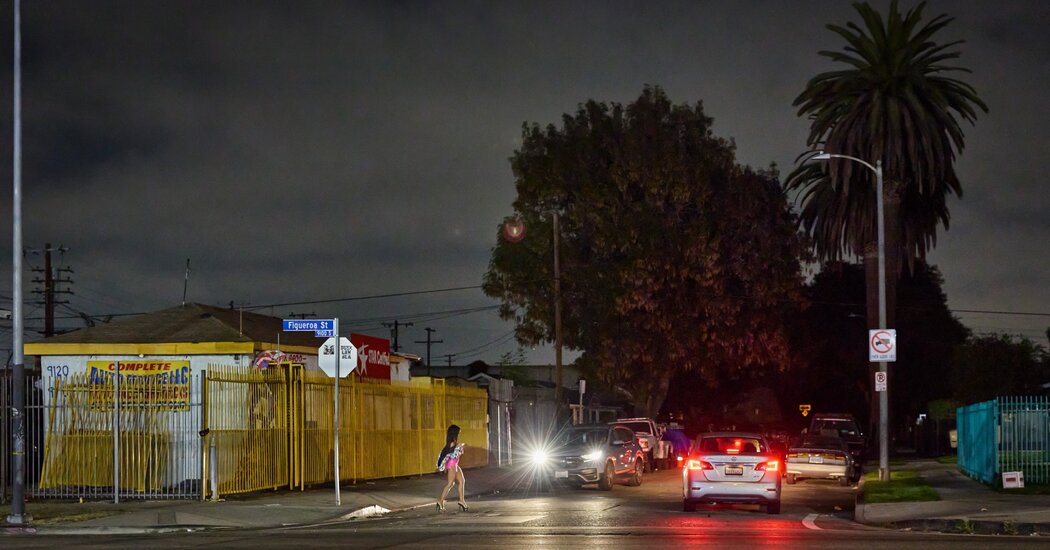
Los Angeles leaders are facing new pressure to confront the city’s human trafficking crisis after a detailed New York Times report exposed how children as young as twelve are being exploited along Figueroa Street, one of the country’s most notorious trafficking corridors. The story, which followed survivors, vice officers, and outreach workers on “the Blade,” revealed a system stretched to its breaking point, where traffickers operate openly, buyers line up in cars, and the same girls are “rescued” again and again because there’s nowhere safe for them to go.
The investigation painted a grim picture of a city that has let its safety net unravel. LAPD’s central human trafficking unit was disbanded in 2021 after budget cuts, leaving small divisional vice teams to handle hundreds of cases across South Los Angeles. One officer, 27-year-old Elizabeth Armendariz, now leads undercover “juvenile rescue ops” with a handful of colleagues, trying to find minors before traffickers move them again. The officers have become part counselor, part medic, part social worker, handing out snacks, fuzzy socks, and teddy bears between arrests.
More than half of the minors pulled from the Blade come from foster care, according to the report. Many are runaways who were first approached outside group homes by traffickers posing as friends or boyfriends. Once recovered, most are handed to the Department of Children and Family Services for placement, but three out of four flee within hours, often jumping from moving cars before they reach a shelter. Advocates say the lack of secure, trauma-informed housing and around-the-clock social workers means that even when girls are rescued, there’s no infrastructure to help them heal.
On this week’s LA Podcast, former Councilmember Mike Bonin reacted to the report and the department’s budget priorities. “For the LAPD, which gets an ungodly amount of taxpayer dollars compared to everything else . . . to be unable to trim a percent or two from their budget without cutting the human trafficking response is insane,” Bonin said. “It just shows how incredibly difficult it is to actually reimagine public safety and fix the way we budget and really channel money into a care first system that actually keeps people safe.”
The Times story centered on one survivor, Ana, who was first trafficked at 13 after bouncing between foster homes. She was later taken in by a small nonprofit, Run 2 Rescue, that provides housing, therapy, and education for four girls at a time. For a while she thrived, earning her GED, serving as student council vice president, and helping design bracelets for other survivors. But when she reconnected with her mother, she slipped back into the cycle, eventually returning to Figueroa at 19, emaciated and injured from years of violence. When she was found again this January, it was by the same outreach worker who had helped save her years earlier.
Advocates say Ana’s story is common and preventable. They’re urging city and county officials to rebuild a dedicated trafficking unit that includes mental health professionals and survivor advocates, and to guarantee stabilization beds so that every child recovered from the street has a place to go immediately. They also want stronger enforcement against the men who buy sex and the motels that profit from it, while protecting workers who report trafficking.
For many Angelenos, the Blade is an open secret. It’s a three-mile stretch of Figueroa where, night after night, girls in lingerie stand outside motels while luxury cars circle the block. It’s a short drive from USC, but another world entirely. The Times story and Bonin’s comments have reignited a question that Los Angeles keeps avoiding. Why, in a city with a $12 billion budget and the nation’s largest police department, rescuing children from traffickers still depends on a few underpaid officers and a handful of nonprofits?