
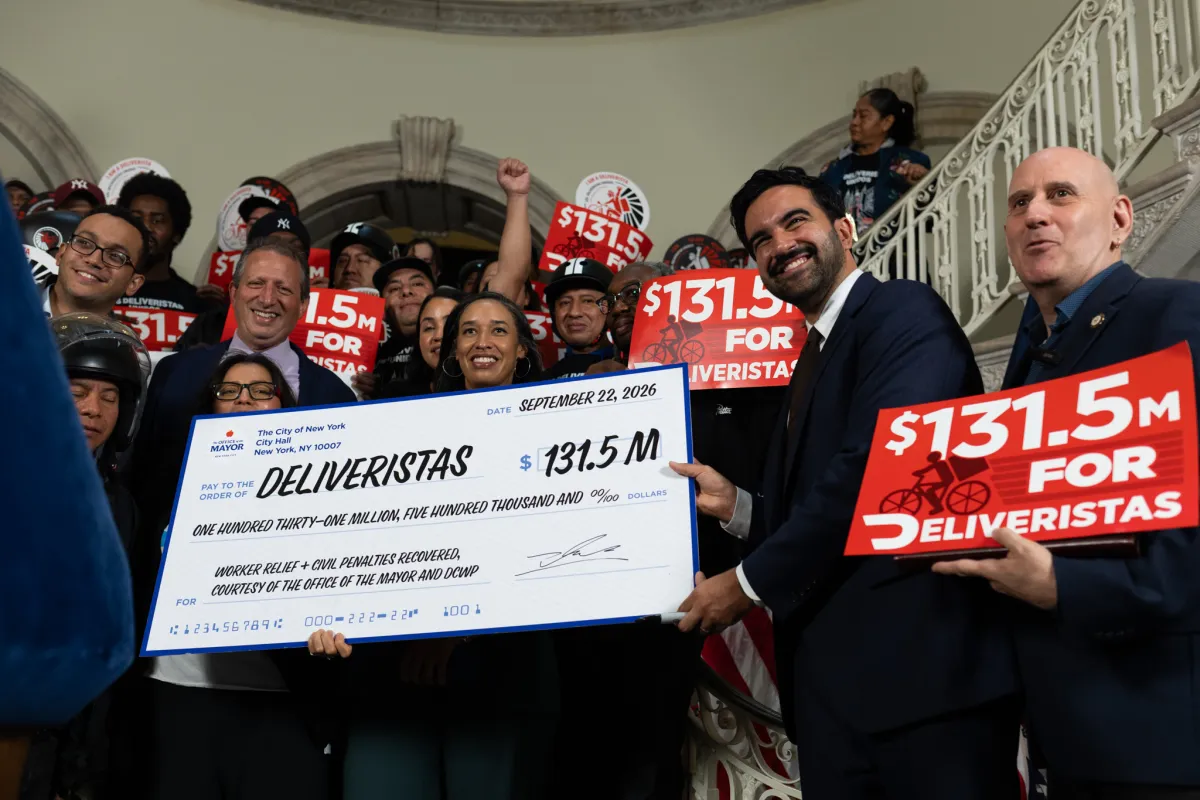
New York City Mayor Zohran Mamdani announced a win this week that is giving workers and their allies something to celebrate. DoorDash will pay $131.5 million to settle a city investigation into unpaid and late wages, with more than $115 million going to over 260,000 delivery workers. For workers accustomed to seeing wage theft go unpunished, the record settlement offers a glimpse of what government can accomplish when it treats stolen pay as something worth investigating.
Workers brought the first complaints, and New York investigators then obtained DoorDash’s pay records and uncovered violations affecting far more people than those who had come forward. The settlement requires the company to submit detailed pay data for three years, while workers will be able to share their own records with the city to help catch future violations. DoorDash acknowledged that workers were underpaid or paid late and said the mistakes were unintentional. The company spent about $1.4 million in last year’s mayoral election backing Andrew Cuomo and opposing Mamdani, and has now agreed to a settlement roughly 94 times that amount.
Years of labor organizing and a recent City Council vote suggest there’s an appetite to go after stolen wages in Los Angeles, too. In 2023, Councilmembers Hugo Soto-Martínez and Tim McOsker introduced a motion asking how LA could expand its power to investigate and recover stolen wages. They called LA the nation’s “wage theft capital,” citing an estimate that employers steal $1.4 billion from local workers each year. The city’s Office of Wage Standards can enforce its minimum wage and other local labor laws, but its authority does not extend to many overtime, break and late pay violations. Workers with those claims must rely largely on a state enforcement system that supporters say is failing them.
Nearly three years later, the council finally took up a plan to close that gap. On August 12, it voted 12 to 2 to advance a proposal to expand local enforcement of overtime, meal and rest break, and late pay violations. The proposal would give investigators subpoena authority, establish priorities for complaints and direct them to investigate industries where violations are common.
No new enforcement powers took effect with the recent vote, and the City Attorney must still draft an ordinance for the council to approve. But even that preliminary step met resistance from our councilmember, Traci Park, who was one of only two members to vote no. Park told the council that city departments were “stretched to the bone” and called the proposal a “false promise” because the bureau responsible for enforcing it has vacancies. The state already investigates wage theft, she argued, and should fund that work. She also complained that city analysts had not done enough to hear from business owners (i.e. the ones stealing the wages). McOsker responded that the state system was failing workers and pointed to steps the city had taken to retain its own investigators. Park voted against workers again as recently as September 8, when she opposed a separate proposal to extend predictable scheduling protections to fast food workers and develop paid training on their workplace rights.
This is the same Traci Park who describes public safety as a core responsibility of local government and promises more resources for LAPD. Asked at a March candidate forum whether she would increase the police budget, she answered, “I would absolutely increase the budget.” That same month she introduced a motion to move $50,000 from a CD11 account for additional homeless services into LAPD overtime. When police are short staffed, Park wants the city to spend more. When wage investigators are short staffed, she uses that shortage to argue against enforcement.