
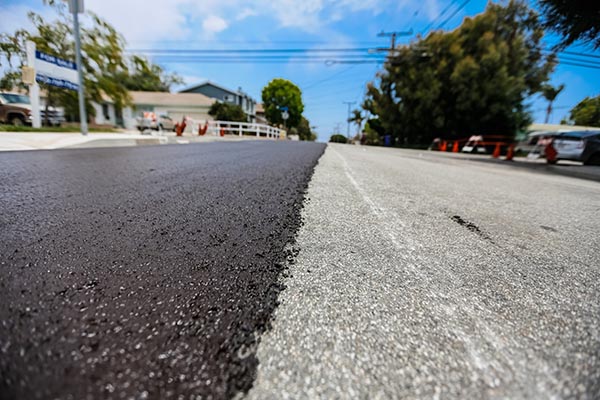
Los Angeles has quietly stopped repaving its streets, and the picture that is emerging makes the situation look less like bureaucratic slowdown and more like a coordinated attempt to avoid legal obligations the city does not want to meet. Public data shows that since July 1, LA has resurfaced zero lane miles. Instead, the city has shifted almost entirely to a new category called large asphalt repair, which allows StreetsLA to patch wide sections of roadway without triggering federal ADA requirements for accessible curb ramps. Under federal guidance from the Department of Justice and the Federal Highway Administration, any resurfacing that alters the usability of a street requires the city to upgrade curb ramps along the affected stretch. Maintenance activities like basic patching do not. For decades LA ignored these requirements, allowing a massive backlog to grow. Now, rather than begin the work that federal law requires, the city appears to be reclassifying resurfacing as maintenance and letting street conditions degrade to avoid the cost of ADA compliance.
A parallel pattern is playing out around Measure HLA, the voter approved initiative that requires the city to implement its own Mobility Plan when it makes changes to streets. Last week Streets For All sent a formal letter to Mayor Bass and the Board of Public Works accusing the city of improperly exempting major street projects from HLA and exposing itself to legal liability. The letter outlines five recent appeals in which residents challenged the city’s claim that these projects were simply restriping. Under HLA, restriping is exempt only when it is done alone. The moment a project includes any modification of at least one eighth of a mile of city right of way including new bike lanes, bus lanes, travel lane reconfigurations, added parking, new signage, or partial resurfacing the law requires the city to implement the corresponding Mobility Plan elements.
According to Streets For All, each appealed project involved substantial redesigns. On Hollywood Boulevard the city added miles of protected bike lanes, changed lane configurations, modified parking, added signage, and fully and partially resurfaced the roadway. On Roscoe Boulevard the work included ten miles of bus lanes, new shelters and seating, signal priority, and pedestrian improvements. Victory Boulevard saw more than a mile of new peak hour parking, signage changes, a new turn lane, and additional modifications. Mission Road and San Vicente Boulevard also included new bike lanes, lane reconfigurations, modified parking, and segments of resurfaced street. In every case the city argued these projects were exempt restriping despite clearly altering more than one eighth of a mile of roadway. HLA’s text makes no exception for this kind of work. The letter warns that by stretching the definition of restriping beyond recognition, the city is undermining the will of voters who supported HLA with a 66 percent majority in 2024.
Taken together, these patterns suggest a city steering around its legal responsibilities rather than confronting them. With ADA resurfacing triggers, the consequences fall hardest on people with disabilities who have long waited for basic access improvements. With HLA, the consequences fall on everyone who counts on safer streets and a coherent mobility network. LA is choosing workarounds instead of compliance, exemptions instead of upgrades, delays instead of transparency. Voters passed HLA to force the city to follow its own mobility plans when making street changes, precisely because these opportunities come up when the asphalt is already being moved and the cost to add improvements is low. By redefining resurfacing to dodge ADA requirements and redefining improvements to dodge HLA, the city is taking those opportunities away.