
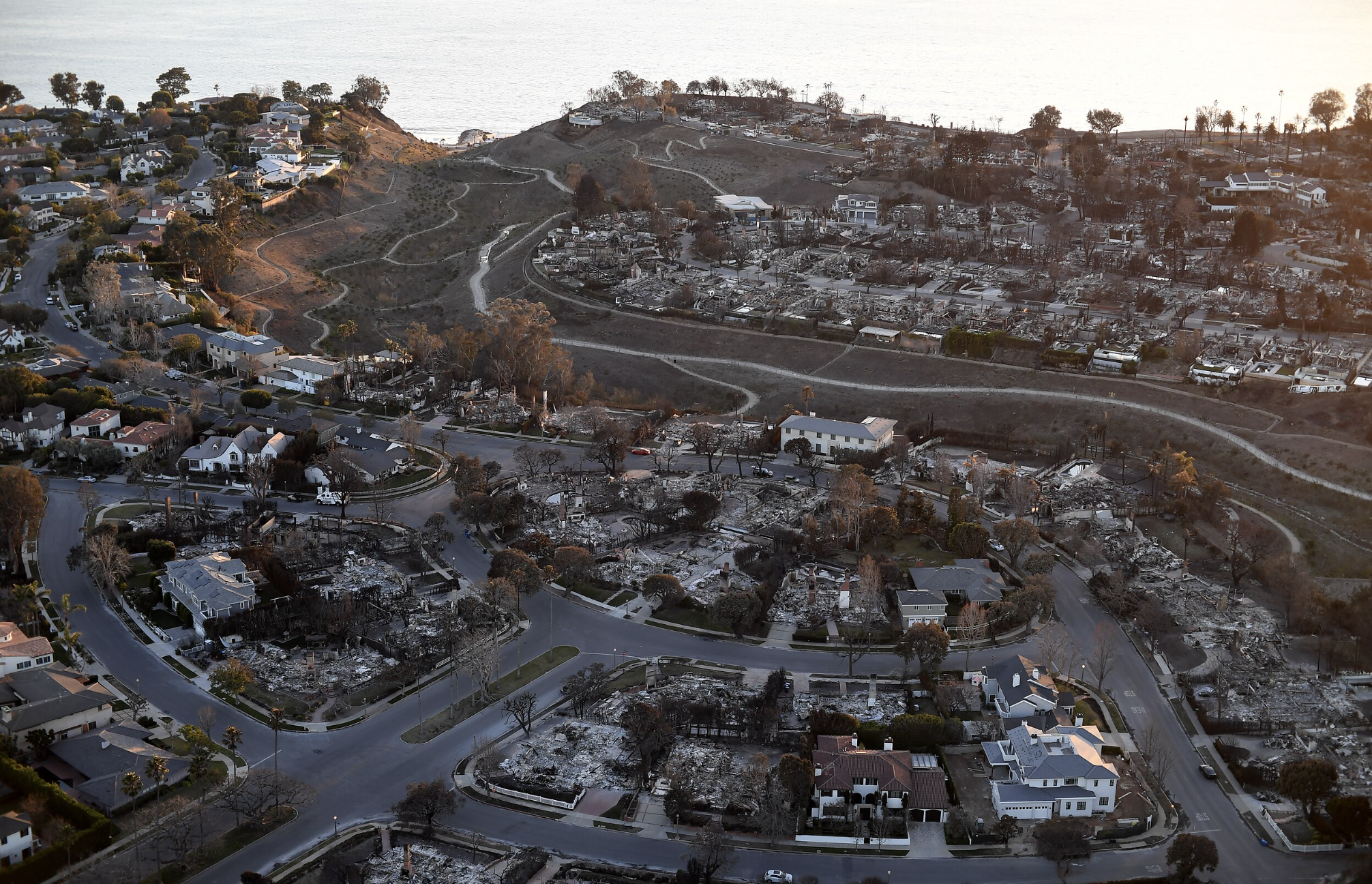
For months after the devastating Palisades fire, residents who lost homes and loved ones waited for a clear accounting of what went wrong. What they received, a Los Angeles Times investigation now shows, was a version of events that had been significantly softened behind closed doors.
According to records obtained by the Times, senior Los Angeles Fire Department officials revised and deleted key findings from the department’s after action report on the January 7 Palisades fire, which killed 12 people and destroyed thousands of homes. The changes consistently downplayed failures in leadership, preparation, and deployment decisions, particularly in the critical days and hours before the fire exploded under extreme Santa Ana winds.
The Times reviewed seven drafts of the report, including early versions completed by August. Those drafts included blunt language stating that LAFD leadership decisions did not align with department policy during red flag conditions. One draft said the department’s choice not to fully staff up and pre deploy available engines ahead of dire wind warnings was inconsistent with established procedures. In the final public report, that language was replaced with a claim that the department’s actions “went above and beyond” standard pre deployment guidelines.
Other edits removed or softened descriptions of operational failures. A section originally labeled “failures” was renamed “primary challenges.” References to violations of national firefighter safety guidelines were deleted. Passages noting that some crews waited more than an hour for assignments on the day of the fire were cut. Even aesthetic choices were debated, with handwritten notes in early drafts suggesting the cover image be changed from burning palm trees to something more “positive,” such as firefighters on the front line. The final report ultimately featured only the LAFD seal.
The most contentious revisions involved what happened before the Palisades fire ignited. Several drafts raised questions about the handling of a smaller New Year’s Day blaze known as the Lachman fire, which burned in the same area and, according to some firefighters, reignited days later. One draft described an LAFD captain calling Station 23 on January 7 to report that the Lachman fire had flared up again. That reference was removed in one draft, then partially restored in the final report, which still offers only a brief mention of the earlier fire.
Fire victims and former LAFD leaders told the Times that the report’s failure to fully examine the Lachman fire raises serious concerns. Weeks after the report’s release, the Times revealed that firefighters had been ordered to leave the Lachman burn site on January 2 despite warnings that the ground was still hot and smoldering. Complaints about that decision were known within the department for months but were not disclosed in the after action report.
Former LAFD Assistant Chief Patrick Butler, now fire chief in Redondo Beach, called the deletions a deliberate effort to hide the truth. He said removing references to violations of national safety standards was especially troubling, noting that those guidelines were written after firefighters died in the line of duty.
Mayor Karen Bass has said her office did not direct changes to the report. Her spokesperson told the Times that the report was written and edited by the Fire Department and that the mayor’s office only sought confirmation of factual issues such as weather conditions and budget context. After the Times reported on the Lachman fire revelations, Bass asked then interim Fire Chief Ronnie Villanueva to conduct a thorough investigation into the department’s handling of that earlier blaze. Fire Chief Jaime Moore, who began his tenure last month, has been tasked with commissioning an independent review.
The LAFD has declined to answer detailed questions about why the report drafts were altered, citing an ongoing federal court case involving a former Palisades resident charged with setting the Lachman fire. Villanueva did not respond to requests for comment.
Despite the edits, the final report still paints a grim picture of the department’s response. It describes disorganization, communication failures, and commanders who lacked basic knowledge of wildland firefighting tactics. A paperwork error meant that only a third of available state funded resources were pre positioned in high risk areas. When the fire broke out, the initial dispatch sent just seven engine companies, even though conditions called for 27. Engines arrived and waited without assignments as radio confusion spread and the staging area itself was eventually overtaken by flames.
The report includes 42 recommendations, and Chief Moore has said the department has implemented about three quarters of them. But for many Palisades residents, the central issue remains unresolved. If official reports are rewritten to soften accountability, it becomes harder to trust that the same mistakes will not be repeated.