
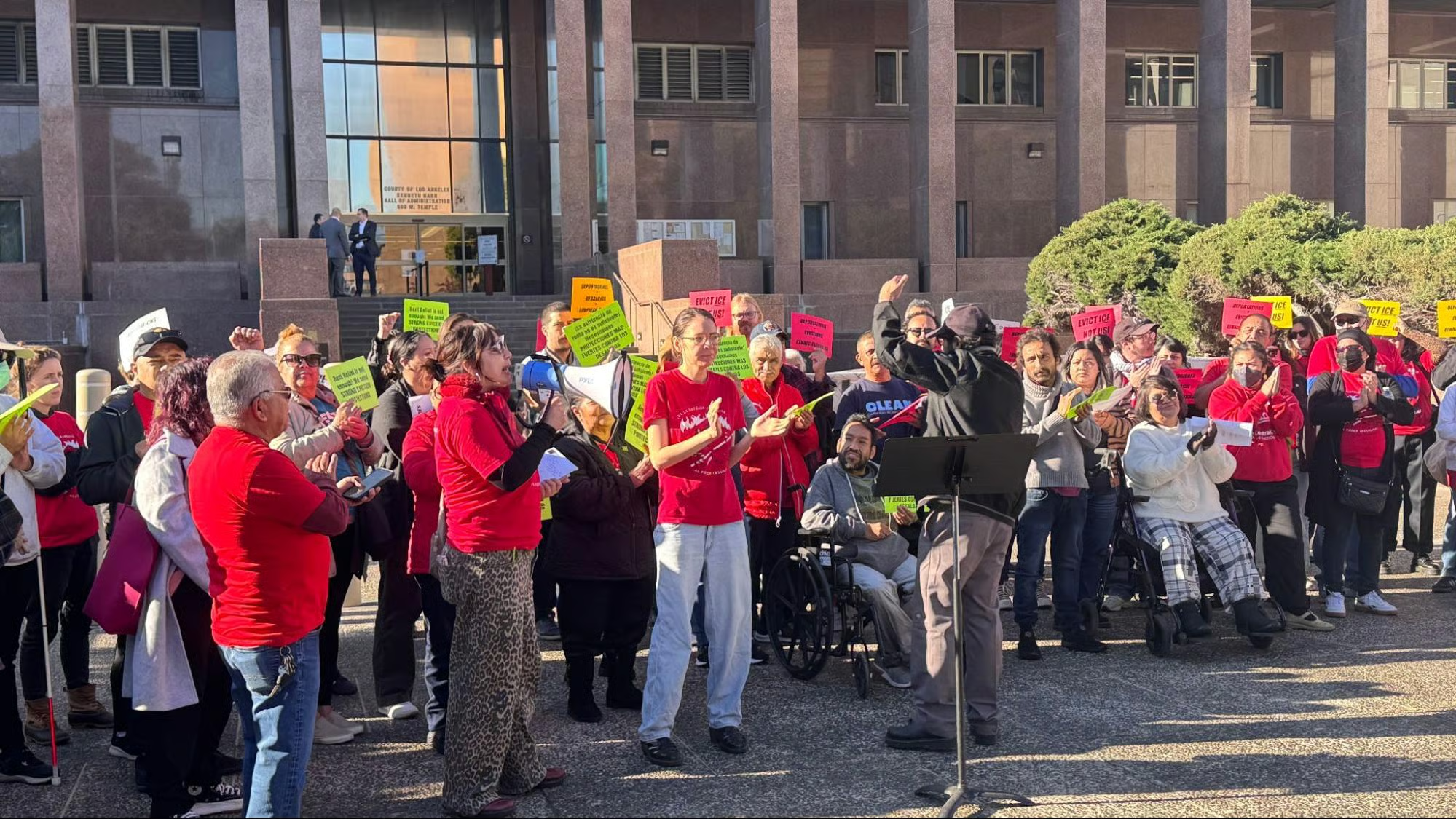
Los Angeles County leaders are finally acknowledging what immigrant tenants and housing advocates have been saying for months. ICE raids are not just tearing families apart. They are driving people out of their homes. This week, the County Board of Supervisors voted to advance an ordinance that would raise the amount of rent a tenant must owe before a landlord can pursue eviction from one month of fair market rent to two months in unincorporated areas of the county. In a county where fair market rent for a two bedroom apartment is well over $2,600, that change could mean the difference between temporary hardship and permanent displacement.
The move comes amid mounting evidence that federal immigration enforcement has manufactured an economic crisis for immigrant renters across Los Angeles. A December 2025 report from the Rent Brigade surveying immigrant tenants found that earnings collapsed by an average of 62 percent after the raids intensified, dropping from roughly $800 a week to just $300. One in seven respondents had already received an eviction notice, and 57 percent said they were considering self deportation because they could not keep up with rent. These are not isolated cases. They reflect a countywide pattern of income loss, mounting rent debt, and fear that keeps people from working, shopping, or even leaving their homes.
Supervisors including Hilda Solis and Janice Hahn framed the ordinance as a response to the economic fallout of the raids, while Lindsey Horvath pointed directly to the way ICE activity has destabilized families and local economies. When breadwinners are detained or too afraid to work, rent does not stop coming due. Under current rules, falling behind by just one month can trigger eviction proceedings, forcing tenants into court or out of their homes almost immediately.
Advocates argue that even this change does not go far enough. The same report documents tenants who endured months of lost income, repeated eviction notices, and utility shutoffs before ultimately leaving the country because they could not survive the combined pressure of ICE and the eviction system. Organizers have called on the county to raise the evictable rent threshold far higher, to treat rent debt accrued during the emergency as civil debt rather than grounds for eviction, and to halt no fault evictions that landlords can use to sidestep nonpayment protections. Without those measures, they warn, eviction protections remain fragile and easy to evade.
The limits of the current proposal are stark. It applies only to unincorporated areas, leaving renters in most cities, including Los Angeles, without any additional protection. Rent relief approved by the county has also been slow to materialize, and when it does, landlords control whether to apply. During the pandemic, most landlords refused rent relief and instead chose eviction, a pattern advocates say is repeating itself now. Without stronger interim protections, many tenants will be displaced long before any assistance reaches them.
Landlord groups have opposed expanding eviction protections, claiming they would harm small property owners. But the data shows who is actually bearing the risk. Tenants face homelessness, family separation, and permanent eviction records over relatively small amounts of rent debt, while landlords retain access to courts, capital, and eventual debt collection. As the report notes, homeowners are not foreclosed on for missing a single mortgage payment. Renters deserve at least the same margin for survival.