
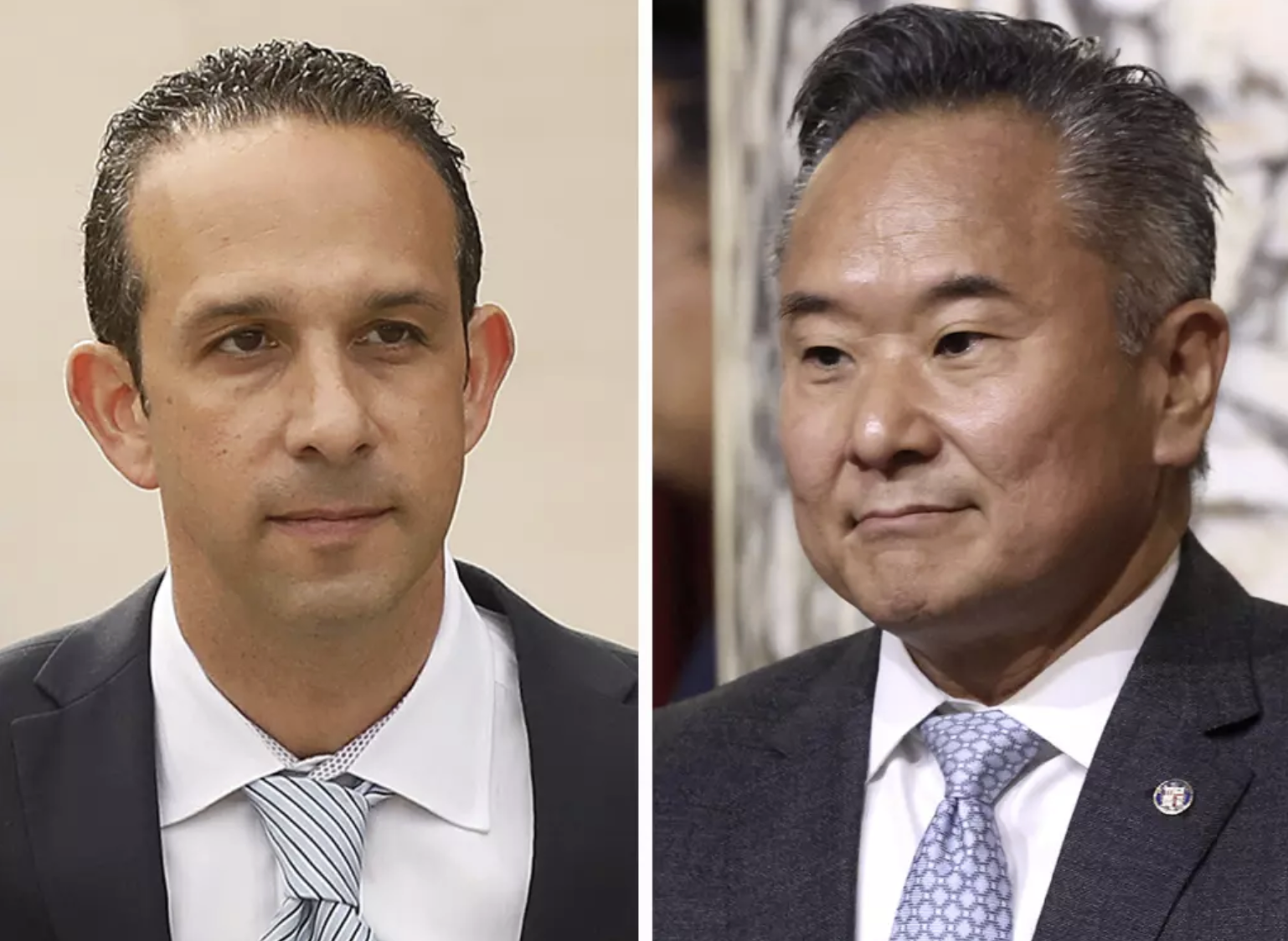
The Los Angeles City Ethics Commission has imposed the maximum penalty against Councilmember John Lee, finding him liable on all ten counts in a long-running ethics case involving undisclosed gifts, misuse of position, and deliberate concealment of violations from the public.
Following hours of public comment and commission deliberation, the Ethics Commission voted to reject key portions of an administrative law judge’s decision, adopt the Director of Enforcement’s findings in full, and impose a total fine of $138,124.32, the maximum allowed under city law. Commissioners concluded that Lee’s conduct was not merely a failure to file paperwork, but a pattern of affirmative actions taken to hide violations and gain advantage.
“It was hiding something. It was backdating the check,” one commissioner said during deliberations, rejecting arguments that Lee’s actions were passive or inadvertent.
The case stems from Lee’s tenure as chief of staff to former Councilmember Mitchell Englander and centers on a 2017 trip to Las Vegas, along with a series of expensive meals and entertainment provided by individuals seeking business before the city. According to the Ethics Commission’s findings, Lee accepted hotel accommodations, high-end dining, nightclub access, and $1,000 in casino gambling chips. These benefits exceeded the city’s gift limits and were never disclosed on required financial forms when Lee left city service or later ran for office.
The conduct at issue overlaps with a federal corruption investigation that resulted in prison time for Englander. In federal court filings, prosecutors referred to an unnamed “City Staffer B” who accompanied Englander on the Las Vegas trip, received gifts, and was later interviewed by the FBI. Multiple news outlets and court records have identified that staffer as John Lee. While Englander ultimately pleaded guilty to obstruction of justice and served a federal prison sentence, Lee was never criminally charged. Ethics Commission staff emphasized that the absence of federal prosecution does not determine ethical liability and that the city’s enforcement action exists to address misconduct that may fall short of criminal conviction but still violates public trust.
While an administrative law judge had previously found Lee liable for five violations related to accepting and failing to disclose gifts, the Ethics Commission rejected the judge’s narrower interpretation of misuse of position. Commissioners found that concealment itself constituted misuse of office because it distorted the electoral process and deprived voters and other candidates of material information.
“By concealing what one has done in terms of these gifts, there was an advantageous gain as well as a disadvantage that was incurred by other candidates,” a commissioner said.
Commissioners also emphasized Lee’s failure to cure the violations within the 30-day window allowed under ethics rules and pointed to evidence of intent, including the backdating of a reimbursement check well outside the cure period.
“Backdating a check is a very serious act. This is not a simple mistake. That is an affirmative act that is fraudulent,” one commissioner said.
Public reaction during the hearing underscored the stakes of the decision. Dozens of callers urged the commission to impose the strongest possible penalties, warning that leniency would reinforce cynicism about City Hall and ethical enforcement.
“The people of Los Angeles deserve ethical and honest government,” one caller told commissioners. “Please send a strong message of maximum accountability in your findings.”
Supporters of Lee also spoke at length, praising his responsiveness, community involvement, and willingness to intervene on behalf of local organizations. Several framed those actions as evidence that the ethics case was politically motivated or a misuse of public resources. Commissioners rejected that framing, underscoring that the provision of constituent services does not excuse ethical violations and can itself raise concerns when public power is used to generate loyalty or political support. The commission stressed that ethical enforcement cannot hinge on whether an official is well liked or effective at delivering favors, but on whether public office was used in ways that undermine transparency, fairness, and public trust.
That dynamic was raised explicitly during public comment by a caller who declined to give their name, citing fear of retaliation. Referencing the wave of supportive testimony from organizations that have benefited from Lee’s intervention, the speaker warned against conflating service with accountability.
“If I had the power to give something to the YMCA, I’m sure they would call in to support me too, but I’m not a councilmember,” the caller said. “All of these features in support are just another misuse of power, really, if you think about it.”
During the penalty phase, the Ethics Commission’s Director of Enforcement urged commissioners to impose the maximum fine, citing the seriousness of the violations, their repeated nature, and Lee’s lack of credibility and remorse during testimony. Commissioners framed the penalty as a deterrent rather than a symbolic sanction, warning that low fines risk becoming a routine cost of doing business for powerful officials.
“When fines are so low that they can be made in the normal course of business, they don’t have that deterrent effect,” one commissioner said.
After further discussion, the commission voted unanimously to adopt the Director of Enforcement’s recommendation on all counts and impose the maximum penalty. In closing the item, the chair emphasized the scale of the review, noting that commissioners had examined thousands of pages of evidence before reaching their decision. The ruling places John Lee among a growing list of Los Angeles councilmembers in recent years to face serious consequences for ethics violations.