
At first glance, Westchester can feel politically settled. The same neighborhood groups dominate public meetings. Yard signs and Nextdoor threads often repeat the same themes about safety, traffic, and preserving “neighborhood character.” But look a little closer, and something is shifting.
You see it in conversations at parks and schools, in new housing advocates organizing locally, in residents questioning surveillance and policing, and in public demonstrations that draw crowds far more diverse than the audiences at formal neighborhood meetings. The loudest voices still shape the public narrative, but they no longer represent everyone, and increasingly, they may not represent the direction the neighborhood is moving.
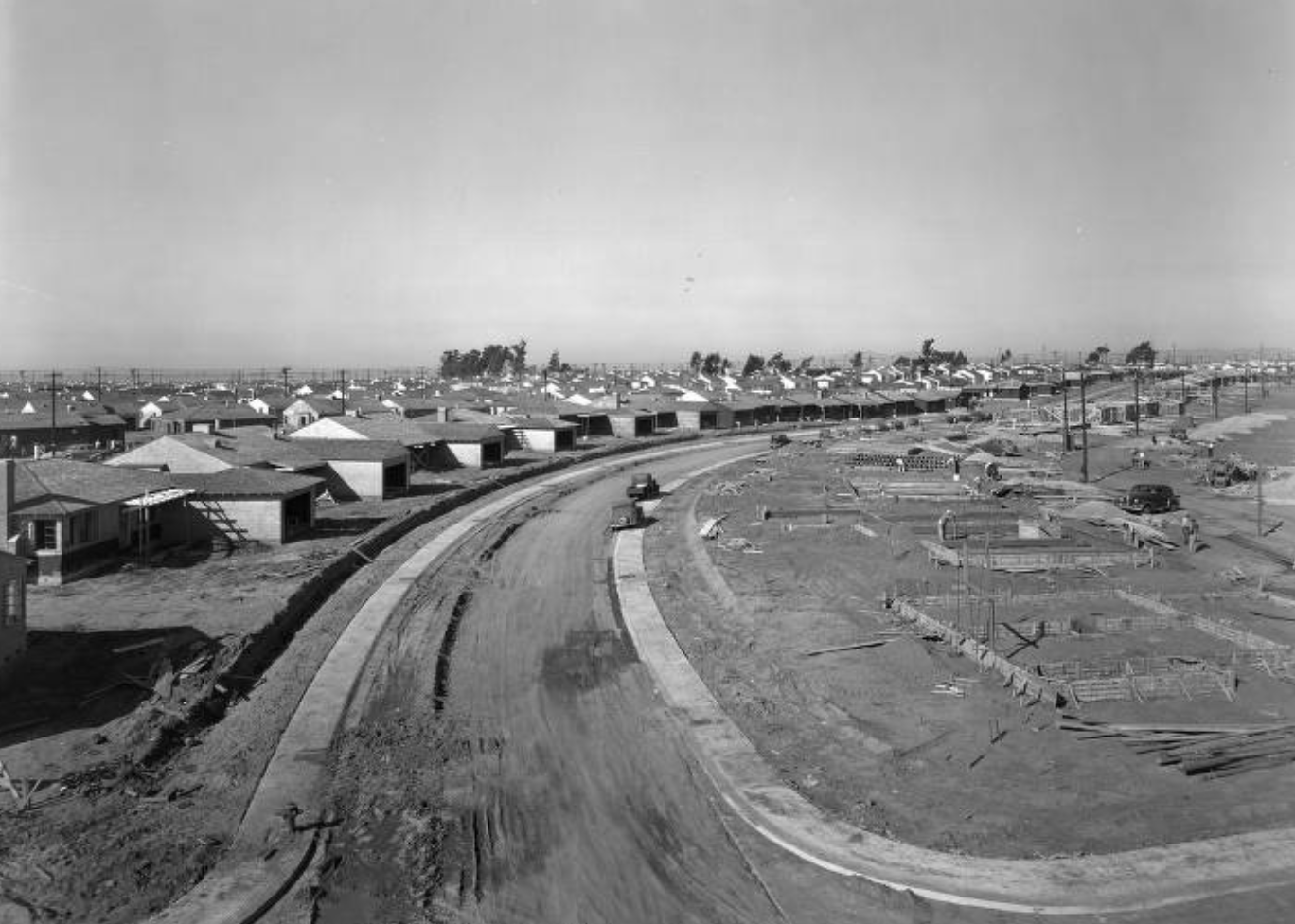
To understand why these shifts matter, it helps to understand Westchester’s history. Like much of LA, Westchester was shaped by policies that explicitly determined who could live where. Restrictive covenants barred non-white residents from buying homes in parts of the neighborhood. Banks reinforced those patterns through redlining, steering investment into white suburbs while starving Black and brown neighborhoods of credit.
Those covenants did more than exclude people directly. They often included limits on the number of homes that could be built on a parcel, preventing apartments or affordable housing from being constructed. Historians and housing advocates have documented how these density restrictions were frequently used to keep large numbers of people of color out of predominantly white neighborhoods and in some cases, language barring non-white residents still appears in property records today, even though it can no longer be enforced.
These were not just discriminatory laws. They were planning tools that shaped land use, housing supply, public investment, and policing patterns and determined who accumulated wealth and who was excluded from it. Although those laws are gone, the structures they created remain visible in the debates happening today in neighborhoods across the Westside.
Housing is one of the clearest examples. For decades, zoning rules that restricted apartments and multi-family housing helped preserve racial and economic separation. Today, opposition to new housing is usually framed in terms of traffic, density, or neighborhood character, but the effect is often the same. Preserving single-family zoning keeping lower-income residents, who are disproportionately Black and Latino, from living in high-opportunity neighborhoods.
Homelessness debates reflect the same dynamics. Calls to “clean up” public spaces or remove people from parks often ignore the structural causes of homelessness, which are deeply tied to housing discrimination and displacement. In Los Angeles, Black residents make up a dramatically disproportionate share of the unhoused population, a direct legacy of exclusion from housing and wealth-building opportunities.
The same patterns appear in discussions about policing and surveillance. Expanding enforcement and monitoring systems has historically fallen hardest on communities of color, even when those policies are framed as neutral public safety measures. “Neighborhood watch” organizations and today’s Ring camera networks that feed data to federal immigration enforcement are not built to find lost dogs, but to target people of color in the neighborhood. And debates about public space, including who belongs in parks, who uses trails, who is seen as a neighbor and who is seen as a threat, have always been entangled with race and class in Los Angeles.
In Westchester today, many of these conversations are carried forward by homeowners’ associations and organized resident groups that dominate public meetings and neighborhood messaging. At a recent town hall hosted with the Kentwood Home Guardians, the room was dominated by older homeowners, with little of the generational or racial diversity that now exists in the broader community. Conversations inside the meeting reflected strong opposition to housing, support for enforcement-heavy approaches to homelessness, and concerns about public spending that often centered on policing and safety.
These organizations play an outsized role in shaping how the neighborhood is represented to elected officials. They send letters, organize meetings, and amplify specific talking points, creating the impression that their positions reflect the consensus of the community.
But many residents are beginning to question that assumption. Some are raising concerns about transparency and governance within the organizations themselves, including calls to restructure or even dissolve long-standing groups that no longer reflect the neighborhood’s diversity. Others are pushing back on specific issues.
Westchester Park offers one example. During the pandemic, a large encampment there became a focal point for frustration and fear. Outreach teams eventually moved dozens of people indoors through coordinated housing efforts, and over time the encampment diminished. Today, some residents who speak up at meetings say the conversation has shifted in a troubling way, from responding to a real crisis to repeatedly targeting the one or two people who may still be sleeping nearby. They argue that continuing to call for enforcement under those circumstances feels less like solving a problem and more like harassment and cruelty.
Housing debates are also changing. Westchester is no longer only a neighborhood of longtime homeowners. Younger families have moved in after being priced out of Santa Monica and other Westside neighborhoods, and many of them see the housing shortage as a direct threat to their ability to stay in Los Angeles. Local groups advocating for affordable housing and more inclusive land-use policies are gaining visibility, challenging the assumption that opposition to housing represents the majority view.
Questions about public space are shifting as well. The closure of the Bluff Creek Trail, a public pathway connecting Westchester to Playa Vista, has drawn criticism from residents who see it as an example of private interests limiting access to shared space. And at recent meetings, discussions about city spending have increasingly turned to concerns about surveillance and policing, with some residents questioning whether expanding monitoring systems and police budgets is the best use of public funds, or whether those policies repeat patterns that have historically harmed marginalized communities.
Taken together, these conversations suggest that Westchester is in the early stages of a political shift. The institutions and voices that shaped the neighborhood for decades still hold influence, but they are no longer the only voices, and are increasingly being challenged by residents who see the connections between today’s debates and the city’s history of exclusion.