
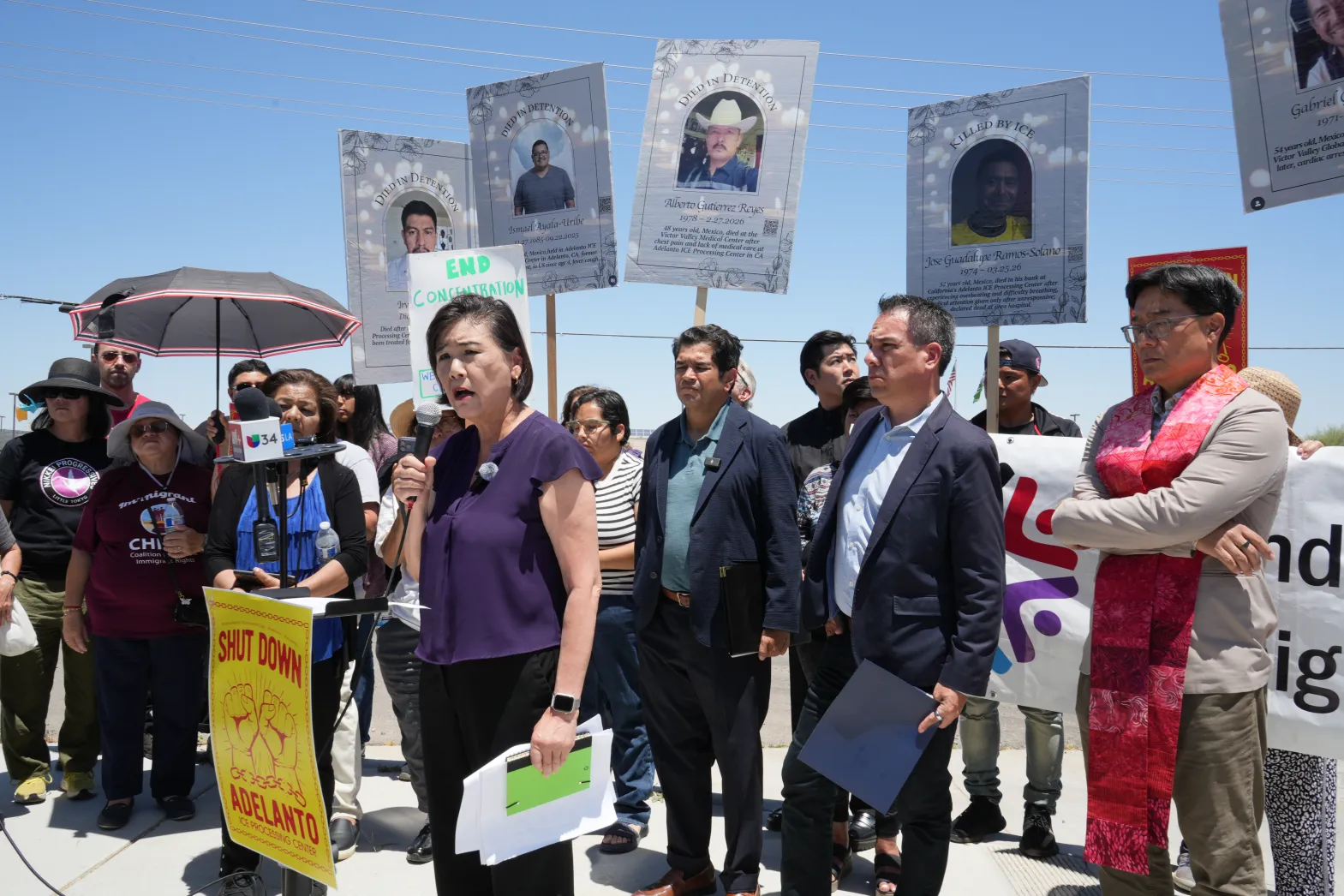
A growing hunger strike at the Adelanto ICE detention complex is drawing renewed scrutiny to conditions inside one of Southern California’s largest immigration detention facilities, where detainees and advocates allege inadequate medical care, unsafe living conditions, prolonged detention, and the use of solitary confinement.
The strike began in May at the Desert View Annex, a facility adjacent to the Adelanto ICE Processing Center, and has since spread. Advocacy groups estimate that dozens of detainees are participating, while recent reports indicate support for the action has expanded to additional housing units within the complex.
Participants say they are protesting a range of conditions, including limited access to medical care, concerns about food and water quality, prolonged detention without timely hearings, and what they describe as retaliatory treatment against those who speak out.
The hunger strike comes amid mounting legal and public scrutiny of Adelanto. In January, a coalition of legal organizations including Public Counsel, CHIRLA, and Immigrant Defenders Law Center filed a federal lawsuit alleging detainees are being denied adequate medical care, nutrition, sanitation, and basic humane treatment. The lawsuit also challenges the facility’s use of prolonged solitary confinement.
Those allegations are not new. Earlier this year, California Attorney General Rob Bonta’s office reported problems at Adelanto that included inadequate access to drinking water, insufficient medical care, and conditions that failed to meet federal detention standards, according to reporting by LA Public Press.
One issue receiving particular attention is the facility’s use of isolation.
According to an analysis of ICE data by LAist, Adelanto ranks among the ten ICE detention facilities in the country with the highest use of solitary confinement relative to its population. The number of detainees placed in isolation increased sharply after federal immigration enforcement expanded in Los Angeles during 2025.
ICE policy permits the use of segregation for disciplinary reasons, medical issues, suicide watch, protective custody, and hunger strikes. But advocates and former detainees argue that solitary confinement is frequently used in ways that function as punishment inside a civil detention system where individuals are not serving criminal sentences.
Several hunger strike participants and advocates have expressed concern that people involved in the current protest could face isolation or transfers to distant facilities. Immigration rights groups have long argued that such practices can disrupt legal representation and family contact while discouraging detainees from reporting conditions inside detention centers.
Federal officials and GEO Group, the private corporation that operates Adelanto under contract with ICE, have disputed many of the allegations. Department of Homeland Security officials told the Los Angeles Times that detainees receive meals, water, and medical care consistent with federal standards and denied claims that conditions are inadequate.
For immigrant rights advocates, however, the hunger strike represents a warning sign.
“Hunger strikes are what people do when every other option has been taken away,” one attorney told L.A. TACO in reporting on the protest. Participants say they are continuing the action to draw attention not only to conditions inside Adelanto, but to a broader immigration detention system that has expanded rapidly during the Trump administration’s mass deportation campaign.
The outcome of the strike remains uncertain. But as detainees continue risking their health to protest conditions, Adelanto has once again become a focal point in the debate over immigration detention, private prison contracts, and the treatment of immigrants held in federal custody.