
A sweeping federal housing proposal advanced by the Trump administration is raising alarm across Los Angeles, where advocates warn the policy could destabilize mixed-status immigrant families and increase displacement in communities already facing intense housing pressure.
The U.S. Department of Housing and Urban Development is proposing to eliminate rental assistance for households that include undocumented family members, reversing a long-standing policy that allowed eligible residents, including U.S. citizen children, to receive prorated housing support. The proposal is being advanced as part of a broader push to tighten immigration-related eligibility across federal benefit programs. Under existing rules, mixed-status families already receive reduced subsidies because assistance is calculated only for eligible household members, meaning many households pay higher effective rents while relying on partial support to remain housed.
California sits at the center of the potential fallout. The state is home to more than one-third of mixed-status households receiving federal housing assistance, and thousands of families in Los Angeles could face housing instability if the rule is finalized. Because Los Angeles County contains one of the nation’s largest immigrant renter populations, the impact would likely be felt acutely in high-cost neighborhoods where even small subsidy losses can trigger eviction or overcrowding.
On the Westside, federally assisted housing exists in forms that are often less visible but deeply important to housing stability. Section 8 voucher holders are scattered across Mar Vista, Venice, Del Rey, Palms, and Westchester, while project-based affordable developments and senior housing rely on federal subsidies that mixed-status families use to remain housed. Advocates say removing prorated assistance would not only affect residents inside subsidized buildings but also private-market renters whose vouchers help them remain in otherwise unaffordable neighborhoods.
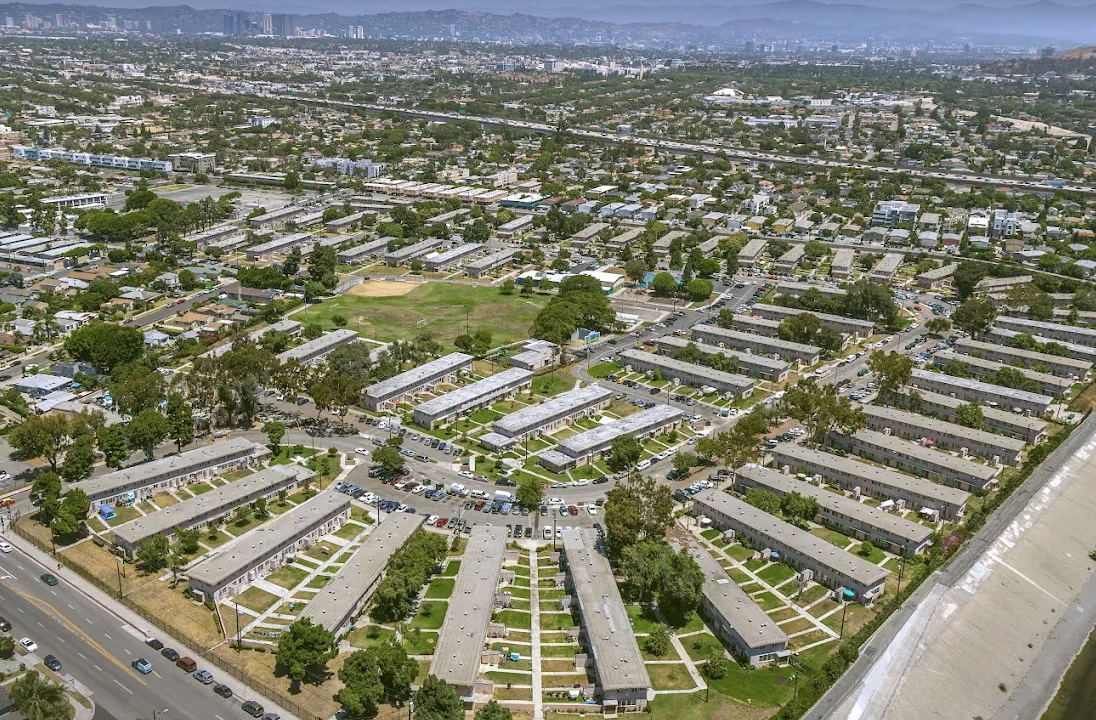
One of the clearest local examples is Mar Vista Gardens, the large public housing community operated by the Housing Authority of the City of Los Angeles that houses hundreds of low-income families and relies heavily on federal funding streams subject to HUD rules. Residents there include immigrant households and mixed-status families who depend on stable subsidy calculations to remain housed.
Housing providers and legal advocates warn the proposal is unfolding alongside intensified federal verification efforts. HUD has instructed public housing authorities to strengthen immigration eligibility checks and warned agencies they could face sanctions if documentation is not verified within tight timelines. The verification push has generated concern that housing authorities will be pressured to collect or share additional household data, creating fear among immigrant tenants and discouraging families from seeking assistance even when they qualify.
The proposal echoes a controversial effort pursued during Trump’s first administration in 2019, when HUD attempted to bar mixed-status families from federally assisted housing entirely. That earlier rule was projected to displace tens of thousands of households, including large numbers of citizen children, and was ultimately withdrawn after widespread opposition from housing authorities, local governments, and child welfare advocates who warned it would increase homelessness without expanding housing availability.
For Los Angeles, the timing is particularly fraught. The region continues to face rising rents, post-pandemic eviction pressures, and ongoing homelessness challenges, with immigrant households disproportionately represented among low-income renters. On the Westside, where affordable housing opportunities are scarce and displacement often means relocation far from jobs, schools, and support networks, even partial subsidy losses can result in families doubling up, leaving the area, or entering homelessness.
Advocates also warn the proposal could compound fears already present in immigrant communities following recent enforcement activity and public debates around data sharing between agencies. That chilling effect could undermine local homelessness prevention efforts, particularly outreach to families who may avoid applying for assistance out of concern that seeking housing support could expose relatives to immigration consequences.
The rule remains in the federal comment process and would likely face legal challenges before implementation. But housing providers say uncertainty alone is already creating anxiety among tenants and complicating outreach across Los Angeles.