
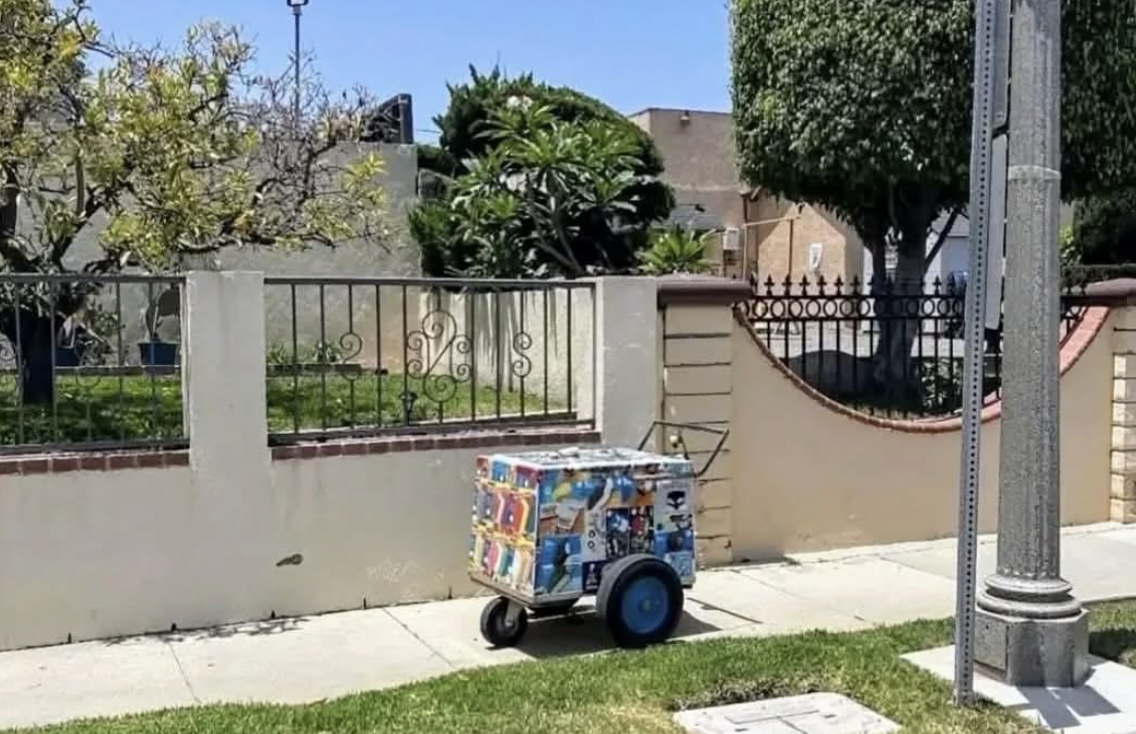
A year after federal immigration agents began pulling vendors from their carts across Los Angeles, Westside street vendors have not recovered. The raids that swept the region last summer have slowed, but the fear they created has not lifted, and the vendors who sell fruit, raspados, agua fresca, and prepared food along the area’s commercial corridors continue to report sharp and sustained losses.
The damage shows up along the same corners. Vendors who work near the Home Depots on Jefferson and in Mar Vista, Playa Vista, and Marina del Rey describe a customer base that has largely vanished. The day laborers who once bought a meal after a shift are not being hired, so they no longer stop. The gardeners and nannies who used to pause at a fruit stand are out of work or staying home. Drivers pull in for gas and then leave as quickly as they can rather than linger on the street. Vendors near gas stations describe buying merchandise they can no longer move and throwing away what does not sell. Some report their revenue has been cut by more than half, and in the worst cases by as much as three-quarters.
Rising prices have deepened the squeeze. Across the Westside, customers have pulled spending back to necessities, saving what little they can for rent that keeps climbing. The effect is visible in the smallest adjustments in vendors’ schedules and work habits. Vendors who once finished by mid-afternoon now must stay out until sundown, and some who once employed a helper now work alone, unable to cover the wage, and struggle to arrange childcare as a result. Families describe choosing between bills in months when the income no longer stretches to cover all of them, and many are on the verge of losing their housing. The strain reaches beyond the stand itself, into households where children’s schooling and basic stability now hang on sales that have collapsed.
The danger has not ended, but the rent does not pause for a raid, so most vendors keep working. They describe a routine that has become common across the area: listening for word that immigration agents are nearby, staying home when they hear it, and going out when they do not. Many describe leaving fully stocked carts behind on the days the risk feels too high, accepting the loss of merchandise over the risk of being detained and separated from their children. Others say they go out afraid because there is no alternative, returning home each day under a level of stress they had not known in years, and in some cases decades, of vending on the Westside.
Community Power Collective organizer Sergio Jiménez told The LA Local in June that the downturn cannot be separated from years of compounding instability for immigrant vendors, and that many have adapted by working shorter hours, carrying less merchandise to limit their losses, and relying on networks that warn one another when enforcement is near.
What makes recovery harder is that the system meant to bring vendors into the legal economy still does not meet them where they are. Officials have made real progress on cost, with the City of Los Angeles cutting its annual vending permit from $541 to roughly $27 in 2024. In January, the county and city launched a $2.8 million program to give away more than 280 health-code-compliant carts and subsidize permit fees, waiving the county’s $604 registration certificate for the first two years and covering most of the cost of the required food-operation permit. But the carts are awarded only after a vendor has secured every necessary permit, and they are prioritized for vendors already closest to compliance, which leaves those furthest behind at the back of the line. These are often the vendors who have been pushed out of work entirely by the raids.
The gap becomes clear the moment a vendor is offered real work. The Mar Vista Voice Westside Vendor Buyout recently tried to connect a Oaxacan food vendor with a private catering event on the Westside. The host wanted to hire him, but the county’s requirements for selling at the site proved impossible to satisfy. The vendor would have had to document his setup and the amenities at the event and secure a restaurant willing to sign on as the licensed kitchen where he would prepare the food. He could not clear those steps even for a one-day emergency permit, and the host hired someone else. The episode was a reminder that even a vendor with a willing customer and paying work can be shut out by a permitting process built for storefronts rather than sidewalks. This has prompted the Buyout to look harder at how to help vendors navigate those requirements before the next opportunity is lost.
Since last June the Westside Vendor Buyout has worked with over fifty vendors, providing direct grants and connecting them to private catering events so they have a way to keep earning when the sidewalk is too dangerous to work, placing vendors in 83 catering jobs to date. The fund operates alongside partners including Community Power Collective, filling a gap that the city and county programs, for all their recent progress, have not closed.