
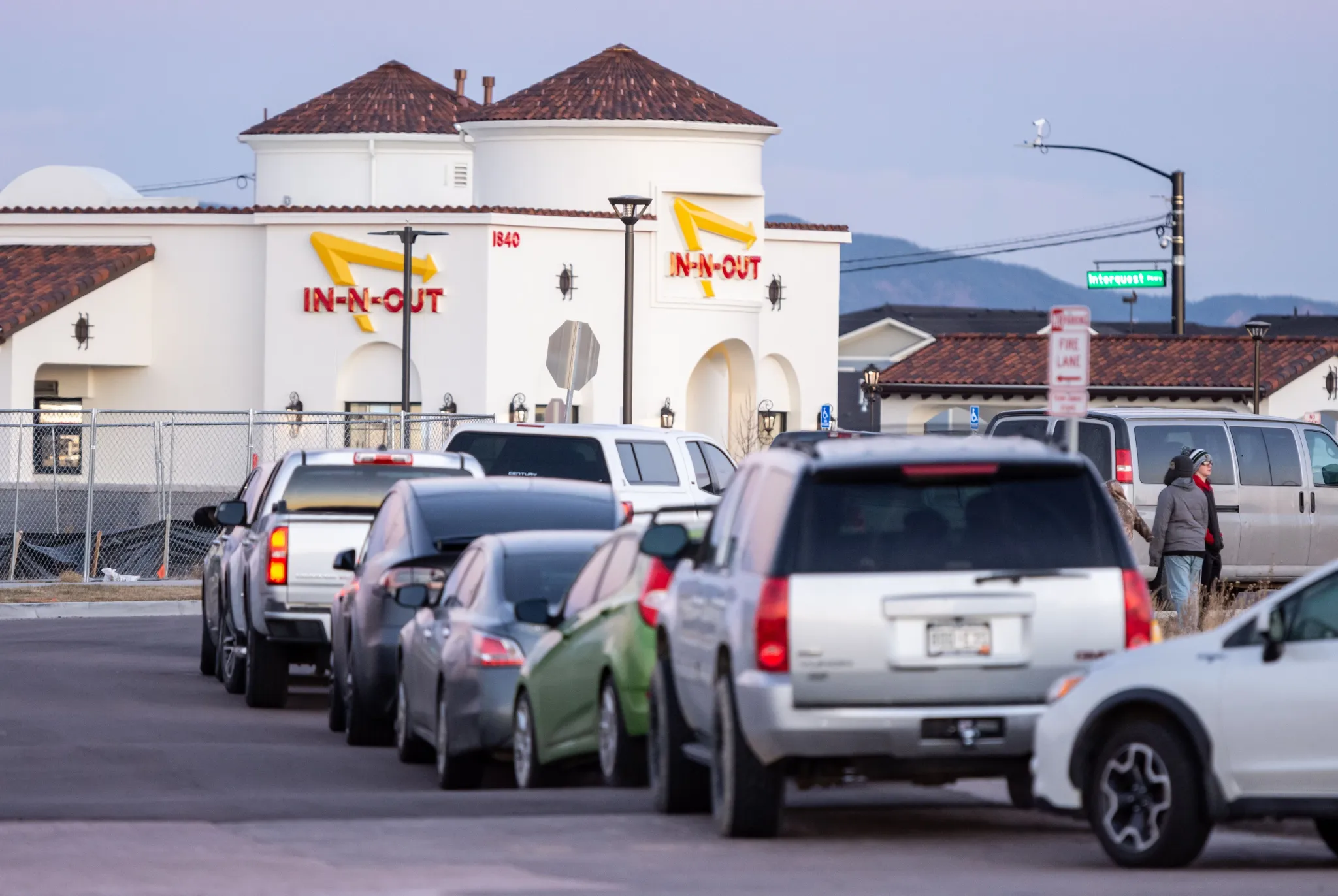
The Culver City Council voted Monday night to extend its moratorium on new drive-through restaurants for another 10 months and 15 days, keeping the ban in place while city staff prepares a permanent ordinance that could make Culver City one of a growing number of California cities to prohibit new drive-throughs altogether. The measure passed 4-0, with Councilmember Dan O’Brien recusing himself because of his role with the Culver City Chamber of Commerce. Existing drive-through restaurants would not be affected.
The debate began with a proposal for a new In-N-Out Burger next to a park and elementary school, but city leaders say the controversy is about far more than a single restaurant. At its core is a broader question of whether Culver City should continue approving car-centric development while pursuing a more walkable, climate-friendly future.
For decades, drive-throughs have been treated as a routine part of suburban commercial development. Increasingly, however, cities are viewing them through a different lens, and asking whether infrastructure built around long lines of idling cars is compatible with goals like safer streets, cleaner air, more housing, and walkable commercial districts.
The shift has been gradual. San Luis Obispo adopted one of the country’s earliest citywide prohibitions on new drive-through businesses in 1982, a policy it reaffirmed decades later. More recently, Minneapolis banned new drive-throughs citywide, while cities including St. Paul, Atlanta, Spokane and Edwardsville have pursued restrictions tailored to downtowns, transit corridors or pedestrian-oriented districts. Rather than an isolated experiment, Culver City’s proposal places it within a growing national movement to rethink one of the defining features of automobile-oriented development.
Vice Mayor Bubba Fish said the proposal grew out of concerns raised by residents.
“Hundreds of residents reached out about this In-N-Out,” Fish told Mar Vista Voice. The proposed restaurant sits adjacent to Blanco Park and El Rincon Elementary School, where neighbors expressed concerns about increased traffic, air pollution and pedestrian safety.
As Fish researched the issue, he discovered that many cities had already begun moving in the same direction.
“I was shocked at how much pollution drive-throughs generate, how much traffic they generate, and how they’re just unsafe for pedestrians and anyone who’s not driving a car,” he said. “I looked at other cities with drive-through bans and thought, this feels like something we can do.”
The rationale extends beyond traffic. Urban planners increasingly argue that drive-throughs consume valuable land with vehicle stacking lanes, curb cuts and surface circulation that prioritize moving and storing cars over creating active commercial streets. Each driveway creates another conflict point where pedestrians and cyclists cross vehicle traffic, while long queues of idling cars contribute localized air pollution.
Fish sees the ordinance as part of that broader transition.
“I think cities all over the country are making the shift away from car-centric design to people-centric design,” he said. “We’re never going to get out of our traffic nightmare, out of our climate crisis, or create a more affordable city unless we start building our cities around people.”
He also argued that continuing to approve new drive-throughs would undermine Culver City’s General Plan 2045, which calls for a more walkable and accessible city.
“Drive-throughs are great if you’re a multinational fast food chain. They’re not great if you happen to be a neighbor who has to live next to one,” Fish said. “We spent all this time and money on our General Plan 2045, and to think that we wouldn’t honor the promises we made is hard to imagine.”
Supporters of drive-through restaurants have argued they provide an important service for older adults, parents with young children and some people with disabilities. Fish rejects the notion that accessibility should be defined primarily through automobile access.
“Drive-throughs are the antithesis of access. It’s access only for those who drive,” he said, noting that many Californians do not drive because of age, disability or economic circumstances. Instead, he pointed to sidewalk improvements, ADA curb ramps, safer crosswalks, walk-up windows and curbside pickup as ways to improve accessibility without expanding auto-oriented development.
The ordinance now heads to the Planning Commission before returning to the City Council for final consideration.