
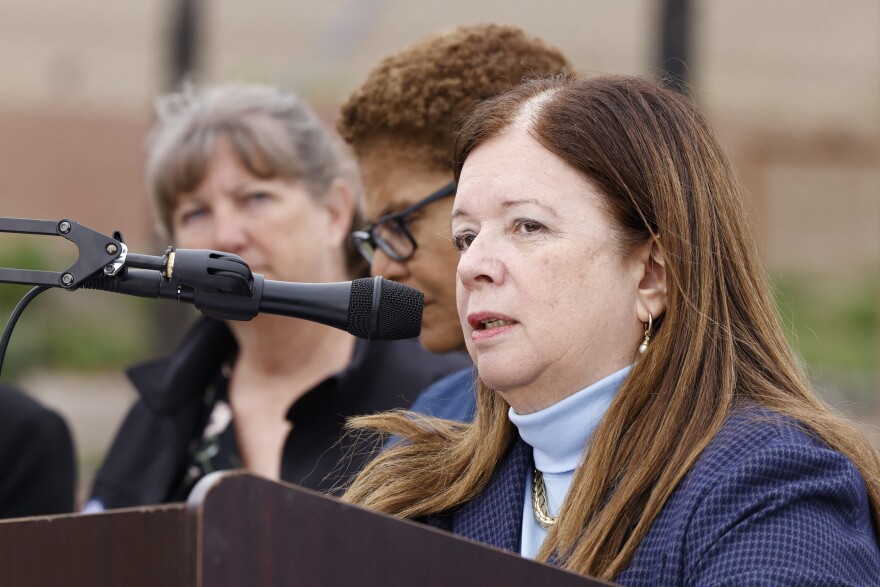
City Attorney Hydee Feldstein Soto made a fundraising call in August that has now become the focus of new questions about her judgment and oversight. The person she contacted was not just a potential supporter. He was a neurosurgeon preparing to testify against the city in a major LAPD crash lawsuit that would settle for $18 million only days later.
According to filings in the case, Feldstein Soto called Dr. Andrew Fox on August 16 and asked him to contribute to her political campaign. Fox was on the plaintiffs’ witness list, had already been questioned by city attorneys, and was still waiting for the city to pay him several thousand dollars in deposition fees. The plaintiffs’ attorney told the court the call put Fox in a difficult position just as he was preparing testimony on the catastrophic injuries suffered by two elderly brothers who were struck by an LAPD officer driving 55 miles per hour.
In a sworn declaration, the attorney said the outreach risked interfering with the plaintiffs’ access to unbiased expert testimony. Six workdays after he notified the court, Feldstein Soto’s office brought the matter to the City Council in closed session. Councilmembers agreed to settle before Fox could testify.
A spokesperson for Feldstein Soto’s office said the settlement had nothing to do with Fox. Her campaign manager said the call was routine and that Feldstein Soto did not know he had a role in the case or that the city still owed him money. He also could not say whether the campaign screens fundraising lists to avoid contacting people tied to active litigation. A retired judge noted that conflict checks are simple to run and would prevent this kind of situation. With the scale of the city attorney’s work, he said it is reasonable to expect better internal safeguards.
The episode adds to a broader pattern of internal turmoil and controversy around Feldstein Soto’s leadership. A judge recently refused to toss a retaliation lawsuit brought by a longtime prosecutor who says she was fired after raising ethical concerns about office conduct, including pressure to drop cases against donors and alleged improper behavior toward staff. That ruling allows the whistleblower’s claims of retaliation and discrimination to move forward, after she described a workplace she said was influenced by personal and political considerations rather than legal judgment. Other former employees have filed similar claims, and outside critics have faulted the office for aggressive legal actions against journalists, efforts to weaken public-records laws, and costly use of outside firms without council approval.