
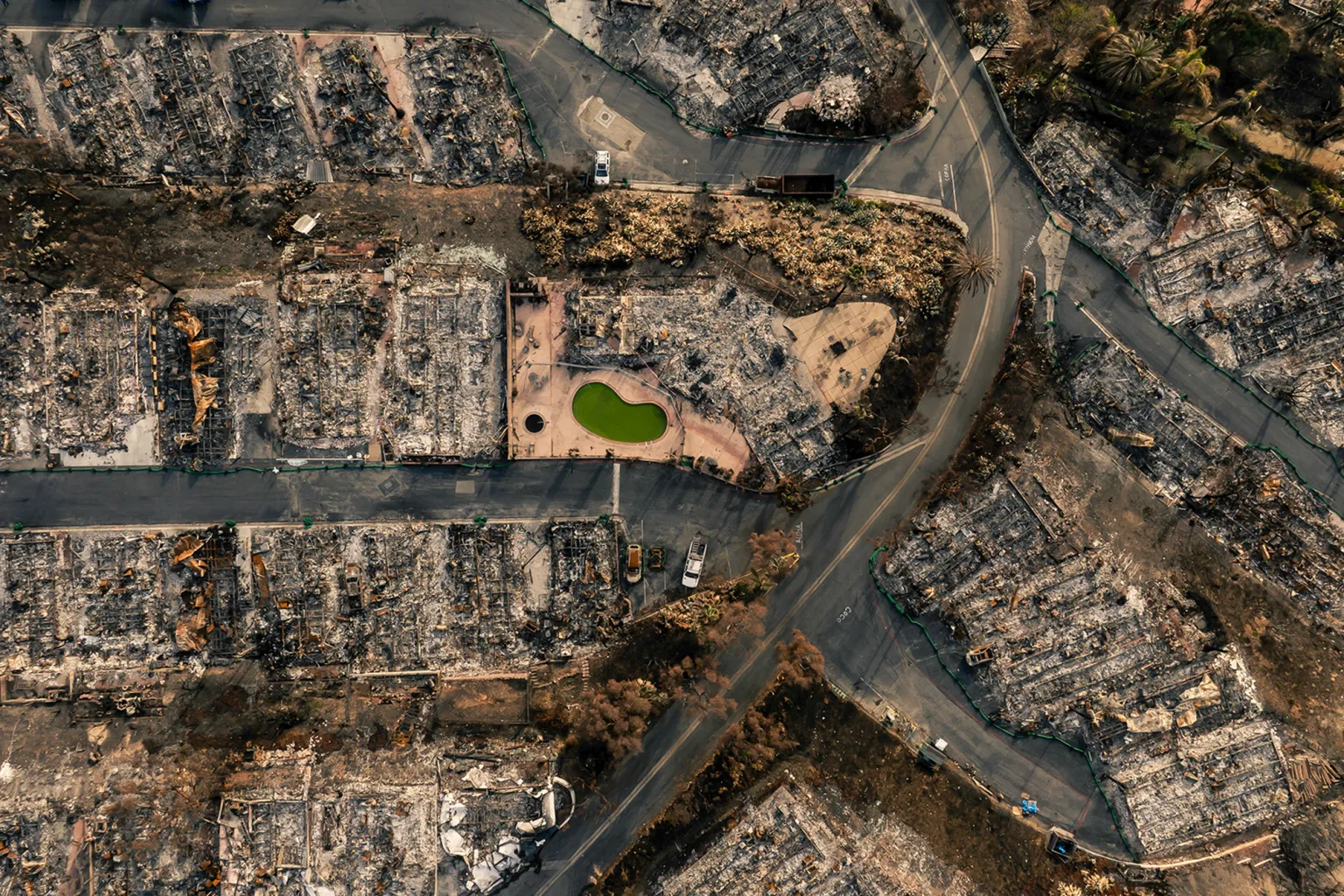
The burned remains of the Pacific Palisades Bowl Mobile Estates sat untouched for more than a year after the 2025 Palisades Fire, long after nearly every other property in the burn zone had been cleared. Now the reason may be coming into focus. The owners of the property are marketing the site for sale, pitching the fire-damaged land as a redevelopment opportunity and raising fears among displaced residents that their community may never be rebuilt.
Before the fire, the Palisades Bowl was home to roughly 170 manufactured homes perched on a hillside above Pacific Coast Highway near Temescal Canyon. For decades it served as one of the few places in Pacific Palisades where middle- and working-class residents could afford to live. Residents owned their manufactured homes but rented the land beneath them, with many families living there for decades under rent-controlled lot leases.
That community was wiped out in January 2025 when the Palisades Fire destroyed every home in the park. Hundreds of residents were displaced overnight. Many assumed the site would eventually be cleared and rebuilt so that they could return. Instead, the property sat largely untouched for more than a year.
While most of the Palisades burn zone quickly moved into debris removal and rebuilding, the mobile home park became one of the only major sites still awaiting cleanup. According to a City Council motion introduced by Councilmember Traci Park in December, debris removal had been completed on 4,487 parcels, roughly 99.8 percent of the properties affected by the fire, leaving just 11 sites uncleared. The Palisades Bowl was one of them.
The lingering debris raised environmental concerns. City officials warned that burned materials sitting on the hillside above Pacific Coast Highway and nearby waterways could pose risks to health and the environment if winter rains washed toxins into storm drains and the ocean. In October 2025 the Los Angeles Board of Building and Safety Commissioners declared several uncleared sites public nuisances, including the Palisades Bowl.
Part of the delay stemmed from a dispute over federal disaster cleanup. FEMA denied the property access to its Private Property Debris Removal program, determining the park did not qualify under the agency’s criteria for “rare and exceptional cases.” That decision left responsibility for clearing the site with the property owners, and cleanup did not begin until early 2026.
Now, as heavy equipment finally arrives to remove the debris, a new development suggests why rebuilding never appeared to be moving forward. Marketing materials circulated to investors describe the burned property as a “blank canvas for redevelopment” and promote it as “ideally positioned for a transformative residential or mixed-use project.” The materials frame the site primarily as a development opportunity rather than a community that once housed hundreds of residents.
Former residents say the pitch is misleading. Under current zoning and coastal land-use rules, the types of projects suggested in the marketing materials would not be allowed. The property is currently zoned for low-density single-family housing or reconstruction of the existing mobile home park. Multifamily or mixed-use development would require significant zoning changes approved by the Los Angeles City Council.
Residents say they repeatedly tried to engage with the owners about rebuilding the park or even purchasing the property themselves so the community could return. Those efforts, they say, received little response.
The uncertainty is compounded by changes in California law that affect mobile home parks destroyed in disasters. In recent years the state created an exception allowing tenancies in mobile home parks to automatically terminate after a disaster unless the owner chooses to rebuild. That means the decision about whether residents can return largely rests with the landowner, and many former residents fear they will be permanently displaced.
Local officials say they want the community rebuilt. Park has said debris removal is finally underway after litigation and FEMA denials left the site untouched for more than a year, and that city leaders are still working to create a pathway home for former residents. Whether that happens may ultimately depend on who buys the land and what they plan to do with it.
The fight also highlights a broader pattern in how housing crises have played out on the Westside. Just a few miles away, hundreds of tenants at Barrington Plaza in West Los Angeles faced one of the largest mass evictions in city history after the owner of the 712-unit rent-controlled complex tried to remove hundreds of units from the rental market for renovations. Housing advocates argued the city had tools it could use to challenge the evictions, but those steps were largely not taken. The dispute went to court, where a judge later ruled that the landlord had misused the Ellis Act and that the planned eviction of hundreds of tenants was illegal. Both cases involve the potential loss of large amounts of relatively affordable housing in Council District 11, a high-resource area where affordable housing is already in extremely short supply.