
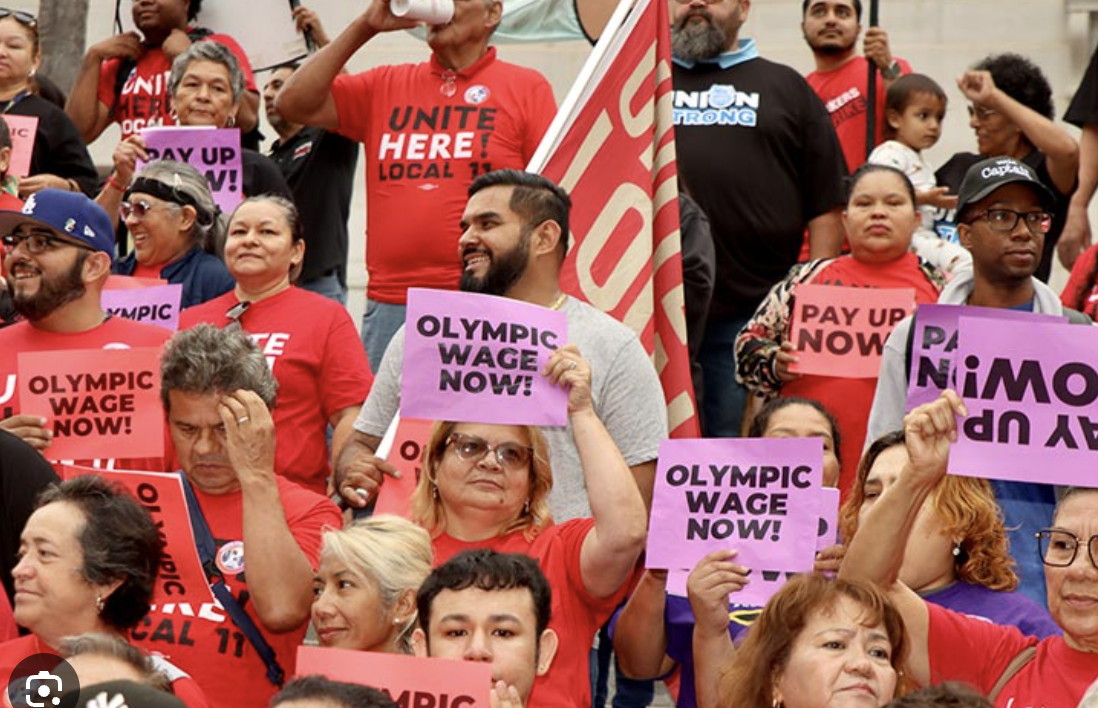
Los Angeles hotel and airport workers spent more than two years fighting for the Olympic wage. They organized across the city, testified repeatedly at City Hall and pushed through intense opposition from powerful business groups. When the City Council approved a clear schedule to raise wages to thirty dollars an hour by 2028, and when a well funded industry referendum effort to repeal that law failed, workers believed they had secured a hard won and democratic victory.
Now that victory is under threat from inside City Hall itself, with Mayor Bass leading the way.
Earlier this month, City Council President Marqueece Harris Dawson introduced a motion that would delay the final Olympic wage increase until 2030 and weaken required healthcare contributions for some airport workers. The proposal would reopen a wage deal that has already taken effect and that workers have already begun to rely on in their household budgets.
Reporting in the Los Angeles Times has made clear how this rollback effort came together. Stuart Waldman, president of the Valley Industry and Commerce Association, said Mayor Karen Bass personally arranged meetings between him and Harris Dawson that led to the motion. Waldman described Bass as instrumental in making the proposal happen and said business interests appreciated her involvement.
For workers, that admission has been devastating.
The Olympic wage was not symbolic. It was designed to address the reality facing thousands of hotel housekeepers, baggage handlers, cabin cleaners and airport concession workers who struggle to afford rent, food and transportation in one of the most expensive cities in the country. Many work full time jobs that still leave them on the edge of displacement. The phased wage schedule gave workers predictability and a clear path toward financial stability as Los Angeles prepares to host the Olympic Games.
Instead of defending that outcome, city leadership is now attempting to rewrite it.
Airport workers rallied outside City Hall after the motion was introduced, saying it would lower their wages and reduce healthcare benefits while giving financial relief to airlines and other large corporations. Unite Here Local 11 and SEIU United Service Workers West have warned that the proposal would cost airport workers without employer provided healthcare tens of thousands of dollars over time. Those losses would come directly out of workers’ ability to pay rent, support their families and remain housed in Los Angeles.
Labor leaders say the process has been as troubling as the substance. The Olympic wage survived a repeal attempt, went into effect, and workers began receiving raises. Yet instead of respecting that outcome, the mayor helped facilitate a backroom process to weaken the law at the request of a business lobby that has long opposed worker protections.
Waldman leads the Valley Industry and Commerce Association, one of the most influential anti labor groups in Los Angeles. VICA opposed the Olympic wage and supported Rick Caruso in the last mayoral election. In his interview with the Times, Waldman made clear that undermining the wage was a key reason he now supports Bass. He openly credited her for reopening a deal that workers believed was settled.
This has created a sharp contrast between rhetoric and reality. As Bass launches her reelection campaign, she has framed the upcoming election as a fight between working people and economic elites. But for the hotel and airport workers who organized for the Olympic wage, her actions tell a different story. They are watching their own mayor help roll back a law that was passed to improve their lives.
Yvonne Wheeler, president of the Los Angeles County Federation of Labor, who attended Bass’ campaign launch, called the proposal shameful. Councilmember Hugo Soto Martinez, a co sponsor of the original wage ordinance, has also opposed the delay. Still, the motion is moving forward.
For workers, this moment has clarified a painful reality. Even when labor wins at City Hall and defeats corporate repeal efforts, those victories remain fragile. Without elected leaders willing to stand firm, gains can be quietly eroded through private negotiations that exclude the people most affected.