News

At WRAC, a Split Crowd Signals a Tightening CD11 Race

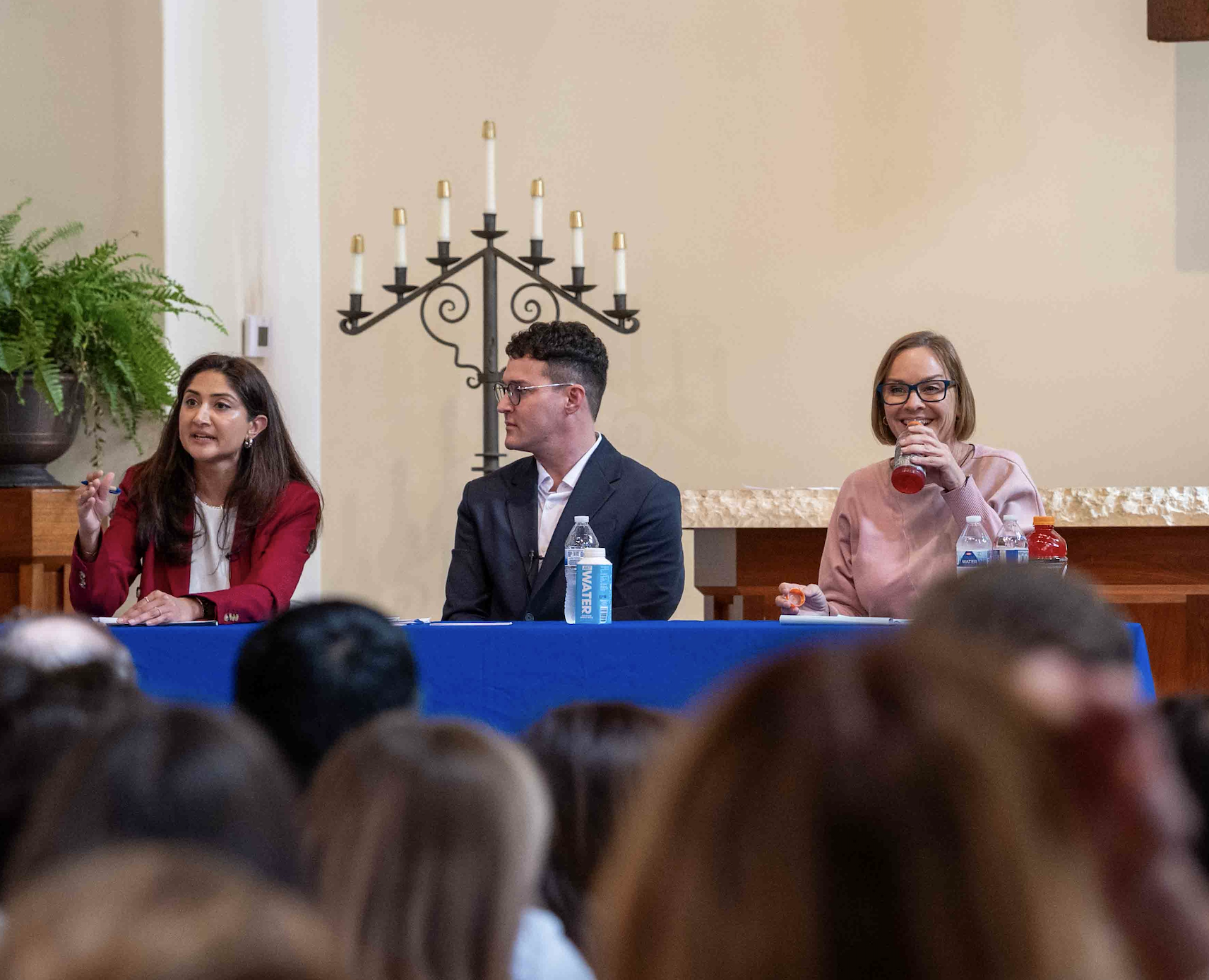
More than halfway into the Westside Regional Alliance of Councils forum at First Lutheran Church in Venice, the moderator stopped the debate and asked a pointed question.

But Traci, will you continue saying that Faizah is Mike Bonin’s lawyer?”

The moment crystallized the central tension of the 2026 CD11 race. Incumbent Councilmember Traci Park is still campaigning as though she is running against her predecessor. But Mike Bonin has been out of office for more than three years, and Park is now the incumbent. No matter how many times she repeats the lie about her opponent, Park owns the record and represents the status quo.

From her opening statement forward, Park repeatedly urged voters to “walk back in time” to 2020, 2021 and 2022, recalling encampments at parks and intersections and presenting her tenure as a corrective. “You guys all remember what our council district looked like,” she said, invoking tents at parks and major corridors.

It is a message that worked in 2021. But the context she invokes was shaped by pandemic-era stay-at-home orders, shuttered shelter capacity, and economic collapse, when encampments ballooned and visible homelessness dominated public debate. That was the emergency of the moment.

Today, while homelessness remains a massive and unresolved crisis, the emergency confronting many Westside families looks different. Federal immigration raids are targeting neighborhoods across LA, and immigrant families are navigating fear, uncertainty, deep housing and food insecurity, and the risk of detention and family separation. And yet at a two-hour Westside forum, not a single question was asked about ICE activity, immigrant protections, or sanctuary policy.

The question before voters now is not what Bonin did during a once-in-a-generation pandemic. It is what Park has done, and how she is responding to the emergencies of today.

Housing was the clearest place where the narrative and the record diverged, and where the philosophical divide between the candidates was most stark. Throughout the forum, Park claimed that thousands of units are being delivered and that CD11 is building substantial housing. “We have thousands of units in the pipeline,” she said, pointing to developments underway across the district. But affordable housing projects take years to entitle and finance. Malik emphasized that the units currently under construction were approved or funded before she took office, and some of the most consequential housing actions during her tenure have moved in the opposite direction. “[Traci] cannot claim housing under policies that she has actively opposed . . .and housing that has been built under her predecessor.”

Under Park’s watch, the Bridge Home interim housing site was closed. She presided over the illegal mass eviction at Barrington Plaza, displacing hundreds of rent-stabilized tenants in one of the Westside’s largest apartment complexes. And she has been a central opponent of the Venice Dell project, a 120-unit affordable development that has cleared approvals but remains stalled amid political resistance.

Malik, by contrast, grounded her housing argument in her professional record. “I’ve spent my career fighting for affordable housing . . . fighting for universal just cause protections, and I recently helped champion lowering rents for renters all over Los Angeles,” she said during the debate, referencing her work as a public-interest housing attorney. The distinction was unmistakable. Malik has helped craft tenant-protection measures that Park has opposed or resisted, including strengthened just-cause eviction protections and anti-displacement safeguards. Where Park attempted to take credit for projects in the pipeline, Malik pointed to structural reforms designed to prevent people from falling into homelessness in the first place. “Our affordability crisis is driving our homelessness crisis, our eviction crisis is driving our homelessness crisis . . . We have to get to yes in this district,” she said.

Malik strongly supported building Venice Dell. “If we are concerned about homelessness on our streets, we need to build affordable housing projects like Venice Dell,” she explained, arguing further that years of delay have only driven up costs. She also countered Park’s claim about the Bridge Home shelter, arguing that the city could have kept it open.

Wineberg also supported seeing the Venice Dell project through, adding, “It’s already been approved. We are having a housing crisis. So why are we continuing to fight this? Because it doesn’t look good at the end of your street?” Park called it a “boondoggle” and promoted the alternative “Lot 701” site, which Malik argued is not financially or legally feasible. The project has become a proxy for the broader housing fight on the Westside: build affordable housing on public land, or continue to defer.

On SB 79, which would allow denser housing near transit, Park cast herself as defender of “local control” against Sacramento mandates, stating, “We don’t need a mandate to get it done, we’re doing it.” Malik countered that housing affordability and homelessness are inseparable, and that transit-oriented growth with planning is necessary, not optional. Park invoked “mandates” again in opposing the highly popular safe streets Measure HLA, arguing that it “has unfortunately eliminated the flexibility to engage directly with communities about what kinds of safety communities make sense and where those should go.”

Policing revealed another political fault line. Asked about LAPD funding, Park said, “obviously, LAPD’s budget and its resources and staffing are not anywhere near where they should be . . . I would absolutely increase the budget.” She claimed the department is “dangerously critically low” on officers and must be rebuilt. “Our response times are unacceptable,” she said, pledging continued support for expanding police ranks. She went further, making clear that expanding the force is only part of her strategy. “The conversation always is, how do we get more police? We know that we got the staffing challenges and recruitment issues, so we are invested in as many smart supplements to go with LAPD as we can, including the technology as well as our other forcing services.”

That reference to “smart supplements” and technology is not abstract. Park has championed expanding Real Time Crime Centers, automated license plate readers (ALPRs), Flock cameras, and other surveillance infrastructure across the Westside. She has also supported controversial technology acquisitions, including robotic policing tools like the so-called “robot dog”. Civil liberties advocates have raised concerns that these systems amount to mass surveillance, disproportionately impacting communities of color and immigrant neighborhoods, while offering limited evidence that they meaningfully reduce crime.

In practice, Park’s public safety framework is not just about hiring more officers. It is about building out a technology-driven enforcement architecture: more police, more cameras, more data collection, and more monitoring. For critics, that raises fundamental questions about privacy, oversight, and whether expanding surveillance is a substitute for investing in the housing and social infrastructure that prevent crime in the first place.

Malik noted that nearly half of the city’s discretionary budget already goes to LAPD, crowding out investment in housing, youth programs, infrastructure and mental health care, the very systems that prevent crime. “Forty-six percent of our discretionary budget goes to LAPD,” she said. “Only 8% of the calls received are for violent crime.” She argued for expanding unarmed crisis response so police are not dispatched to mental health calls.

Park attempted to frame unarmed response as part of her public safety record. But her emphasis remained on enforcement. She began by claiming that she has housed “hundreds” of people, which drew audible pushback from the audience, and then said the district must ensure that when outreach fails, there are “consequences.” That logic surfaced again during the homelessness exchange.

“One of the things that have been baked out of our local policy . . . is that we no longer have a binary choice between accepting help and consequences for not accepting help,” Park said, advocating for forced, long-term residential care focused on sobriety recovery.

Malik rejected the framing, noting that the term “service resistant” is a misnomer. “We’re finding that [the shelter and services] people are being offered are not necessarily what they need,” so when people refuse services, we have to ask why. Enforcement-heavy approaches, she argued, shuffle people from block to block without reducing homelessness.

Park defended the expansion of 41.18 enforcement zones, invoking the image of kids stepping over needles on their way to school. But critics note that encampment sweeps, vehicle tows and sanitation-police operations are expensive and do not create housing. They move visible poverty out of sight without resolving it. The fiscal argument surfaced again during discussion of homelessness spending. All three candidates called for accountability. But the debate did not linger on the substantial cost of repeated sweeps and police deployments, expenditures that do not produce permanent housing.

Taken together, the themes of the afternoon painted a broader ideological picture. Park’s approach, including more police, warning about needles and disorder, restoring “consequences,” and prioritizing sobriety-based residential facilities, reflects a punitive framework that treats poverty and instability as threats to be controlled rather than conditions to be addressed. The invocation of children stepping over needles, the disdain fr harm reduction, and the insistence on coercive leverage all mirror a national political playbook that widens inequality by criminalizing its symptoms. For critics, the subtext was unmistakably Trumpian: more police, more enforcement, more carceral treatment, and fewer structural solutions to housing and poverty.

The Palisades fire hung heavily over the forum. Jeremy Weinberg, who lost his home, pressed Park on fire department funding and preparedness. “When you cut the budget in May of 2024 for the fire department, why did you do that? When there was a fire on January 1, why didn’t you follow up on that? You said you weren’t part of pre-deployment,” he said, questioning coordination and response. Park defended her votes and endorsed a proposed half-cent sales tax for fire services, arguing the department is critically understaffed. Both Wineberg and Malik opposed regressive sales taxes, and Malik called for climate resilience planning that includes renters and vulnerable residents.

Through it all, Park returned to the same refrain: the district is safer and more orderly than it was in 2021. But that comparison grows thinner with time.

WRAC is often generally considered friendly terrain for Park. The alliance is composed of Westside neighborhood councils that tend to be dominated by older, white homeowners and long-time property owners. Their agendas frequently center on public order, encampments, parking, traffic, land use resistance and opposition to density. “Local control” arguments and enforcement-first messaging typically resonate in these rooms. The venue itself underscored that dynamic. First Lutheran Church has a long and controversial history in Venice politics, including early anti-vehicle dwelling signage and heated neighborhood council meetings during the height of the homelessness wars. It is not a neutral civic hall, but part of the institutional landscape that shaped Westside resistance politics. In other words, this was about as friendly a setting as Park is likely to encounter outside of her own campaign events.

And yet the afternoon did not unfold as a coronation. The crowd was visibly split, and applause lines landed unevenly. There were moments of audible frustration directed at the councilmember. At the close of the debate, a chant of “Faizah, Faizah” broke out, and some Park supporters appeared stunned by the intensity of the reaction.
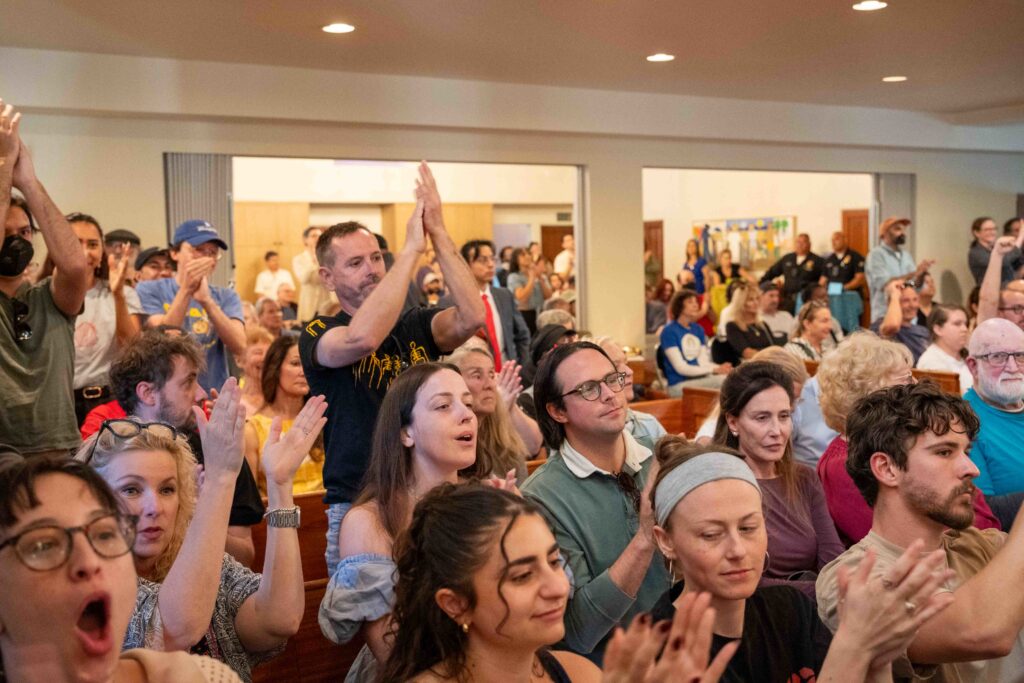
If WRAC is supposed to be a safe space for the incumbent, Sunday suggested that even there, the race is not settled.

Search

Subscribe to the Dispatch