
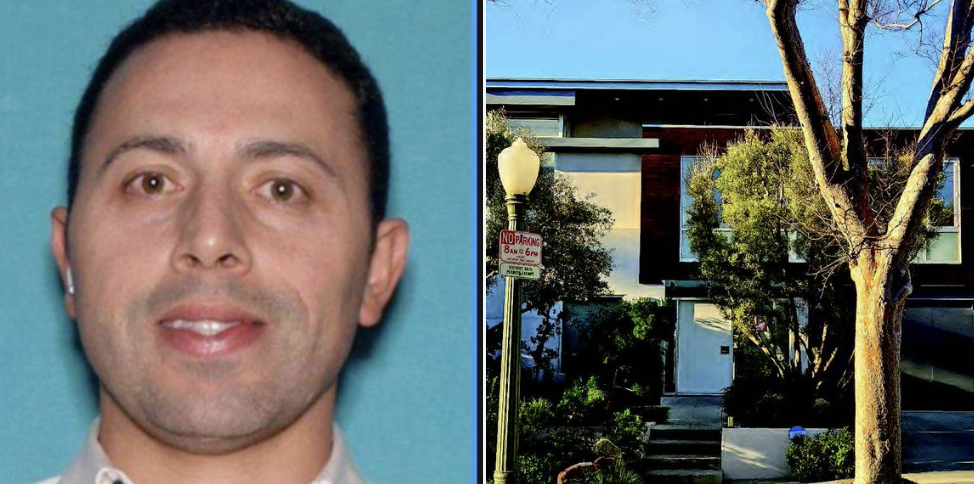
Federal prosecutors have arrested Alexander Soofer, executive director of the nonprofit Abundant Blessings, charging him with fraudulently obtaining roughly $23 million in public funds intended for homelessness services in Los Angeles.
According to a federal criminal complaint unsealed this week, Soofer allegedly billed the City of Los Angeles for services that were not fully provided at an Inside Safe hotel site, including food for residents, while diverting public money for personal use. The arrest follows a months-long investigation that began after concerns were raised about conditions and contract compliance at the site.
That investigation originated with a complaint that an Inside Safe provider was serving residents ramen at every meal, despite being paid to provide nutritious food. The allegation was submitted to the City Controller’s Fraud, Waste, and Abuse Unit, which conducted an on-site visit, interviewed residents and staff, and found the complaint had merit. The Controller’s office said the investigation led to corrective action to ensure meals were provided in accordance with the contract and was later referred to federal law enforcement, culminating in Soofer’s arrest.
The case has intensified scrutiny of Los Angeles’s homelessness contracting system, which relies heavily on nonprofit providers to operate shelters, interim housing sites, and hotel placements under programs like Inside Safe. The city spends billions of dollars each year on homelessness services, yet multiple audits over recent years have documented persistent failures in contract monitoring, verification of service delivery, and enforcement when providers fail to comply.
For unhoused residents and mutual aid groups involved with Inside Safe, the Abundant Blessings case reflects problems they say were visible from the program’s earliest months. A community audit conducted by the Inside Starving Coalition and allied organizations surveyed residents across multiple Inside Safe motel sites and documented widespread service failures. The audit found that more than two thirds of respondents said no one from Inside Safe had worked with them to secure permanent housing. Nearly half reported receiving no social services at all. More than a third said they did not know who their case manager was, citing high turnover and poor communication.
Food access and quality emerged as one of the most acute issues. Two out of three respondents reported becoming sick from food served at Inside Safe sites, with some describing meals as expired, inedible, or incompatible with religious dietary restrictions. Organizers noted that in some cases, sites initially provided no food at all, even after residents were relocated far from their support networks. They argue the ramen complaint that triggered the Abundant Blessings investigation was not an outlier, but emblematic of broader failures that went unchecked.
Those failures unfolded alongside a prolonged fight over oversight of Inside Safe itself. City Controller Kenneth Mejia repeatedly sought to audit the mayor’s signature homelessness program, arguing that independent scrutiny was essential given the scale of spending and the program’s reliance on outside contractors. Those efforts were blocked or narrowed, with the Mayor’s office and City Attorney Hydee Feldstein Soto maintaining that the city charter does not allow the controller to conduct performance audits of mayoral programs without the mayor’s consent. Mejia and others have disputed that interpretation, pointing to charter language authorizing performance audits of city programs.
The dispute eventually drew the attention of U.S. District Judge David O. Carter, who initiated a court-overseen audit after learning that the city’s independently elected controller had been prevented from reviewing Inside Safe. At a January hearing, Carter called the situation “ridiculous,” warning that the court-ordered review might be the only independent audit of Los Angeles homelessness spending in decades. Rather than allowing the Controller’s office to conduct the work at no additional cost, the city relied on outside firms, adding millions in expenses while limiting internal oversight.
Against that backdrop, the Abundant Blessings case has sharpened criticism that Inside Safe expanded rapidly while accountability lagged behind. Advocates argue that if independent auditing had not been obstructed, problems flagged early by residents and mutual aid groups, including food quality, missing services, and contractor noncompliance, could have been identified and corrected before escalating into a federal criminal case.