
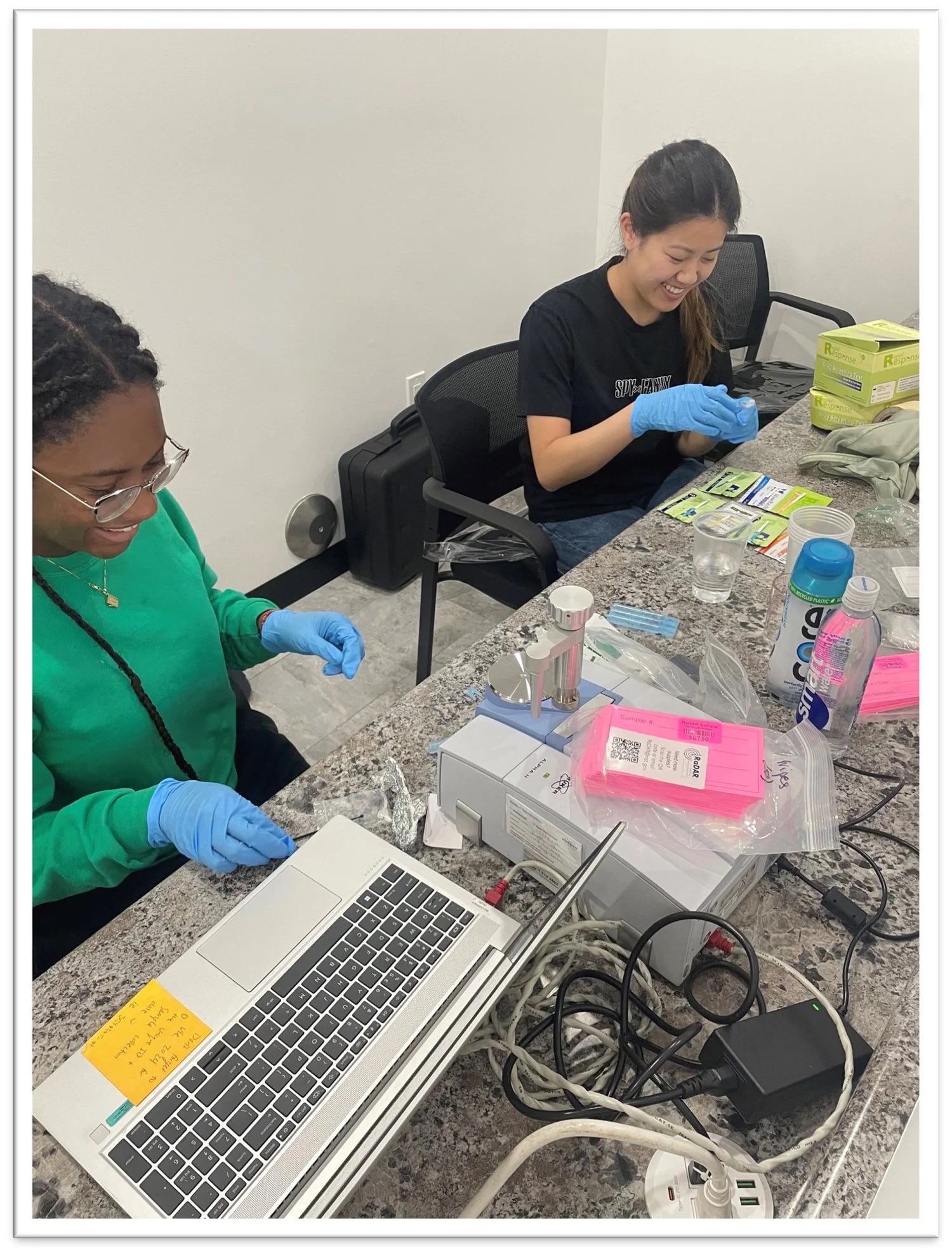
California quietly made a major shift in how it responds to drug use this year, making it easier for people to access life-saving harm reduction tools in an increasingly dangerous and unpredictable supply environment. As of January 1, 2025, Assembly Bill 2136 makes it legal for people to test their drugs through community-based programs and protects them from arrest or prosecution for doing so. It also legalizes the equipment used for testing and creates clear protections for the organizations providing these services. The law reflects a growing consensus among researchers and public health officials that the current drug supply is fundamentally different from what it was even a few years ago, and far more dangerous.
Across the country, studies have documented an increasingly volatile and unpredictable illicit drug market. Substances are frequently contaminated with compounds that are far more potent or harmful than expected, including synthetic opioids and tranquilizers not intended for human use. These additives often cannot be detected by sight, smell, or taste. Even small changes in potency can dramatically increase the risk of overdose. At the same time, new contaminants have been linked to severe and unfamiliar health effects, including deep tissue wounds and long-term organ damage. The result is a landscape where people are taking unknown risks, so the idea that someone can reliably judge what they are using has become outdated. Without accurate information, people are left to guess, and those guesses are often fatal.
Community-based drug checking programs are designed to close that knowledge gap. These programs allow individuals to bring in a tiny sample of a substance and have it analyzed on the spot. Using tools like infrared spectroscopy and low-cost test strips, technicians can identify the likely contents of a sample within minutes. While the results are not perfect, they provide a critical layer of information that did not previously exist.
That information can change behavior in ways that save lives. If a sample contains an unexpected contaminant, or a substance known to increase overdose risk, a person can choose to use less, avoid mixing with other substances, use with others present, or not use at all. These programs also function as an early warning system, alerting public health agencies and harm reduction organizations to new and dangerous compounds in local drug supplies, so they can respond quickly.
AB 2136 removes one of the biggest barriers to expanding these services. Before the law passed, drug checking often existed in a legal gray area, with both providers and participants at risk of being charged under paraphernalia or possession laws. The new law explicitly excludes testing equipment from those definitions, grants immunity to people using or providing drug checking services, and requires programs to protect participant privacy by not sharing identifying information with law enforcement.
Even with these protections in place, access remains uneven. Community-based drug checking services are beginning to expand in Los Angeles, but there are currently no regular sites on the Westside. At the same time, mutual aid groups are already working to translate these legal changes into tools people can actually use. Organizers with Palms Unhoused Mutual Aid are distributing wallet-sized cards that explain participants’ rights under California law and provide critical information if they are stopped by law enforcement. The cards state that individuals participating in authorized syringe exchange programs cannot be prosecuted for possessing materials deemed necessary to prevent disease, overdose, or injury.
They also list what those materials include, from syringes and fentanyl test strips to glass pipes, sterile water, and naloxone. These are supplies that public health agencies have explicitly recognized as essential to reducing harm. On the back, the cards include resources that can be accessed immediately, without navigating a system or filling out paperwork, like phone numbers for legal aid organizations, crisis lines, and overdose prevention support. This is the kind of information that can make a difference in a moment of crisis.