
On Tuesday, Lineage filed an application with the Los Angeles Department of Building and Safety to rebuild its Boyle Heights cold-storage warehouse, even as nearby residents continue to live with the fallout from the fire that devastated the facility and triggered one of LA’s most significant recent environmental disasters. The application does not authorize construction, but it begins what could become a lengthy permitting process involving LADBS and multiple city and regional agencies before any reconstruction could proceed.
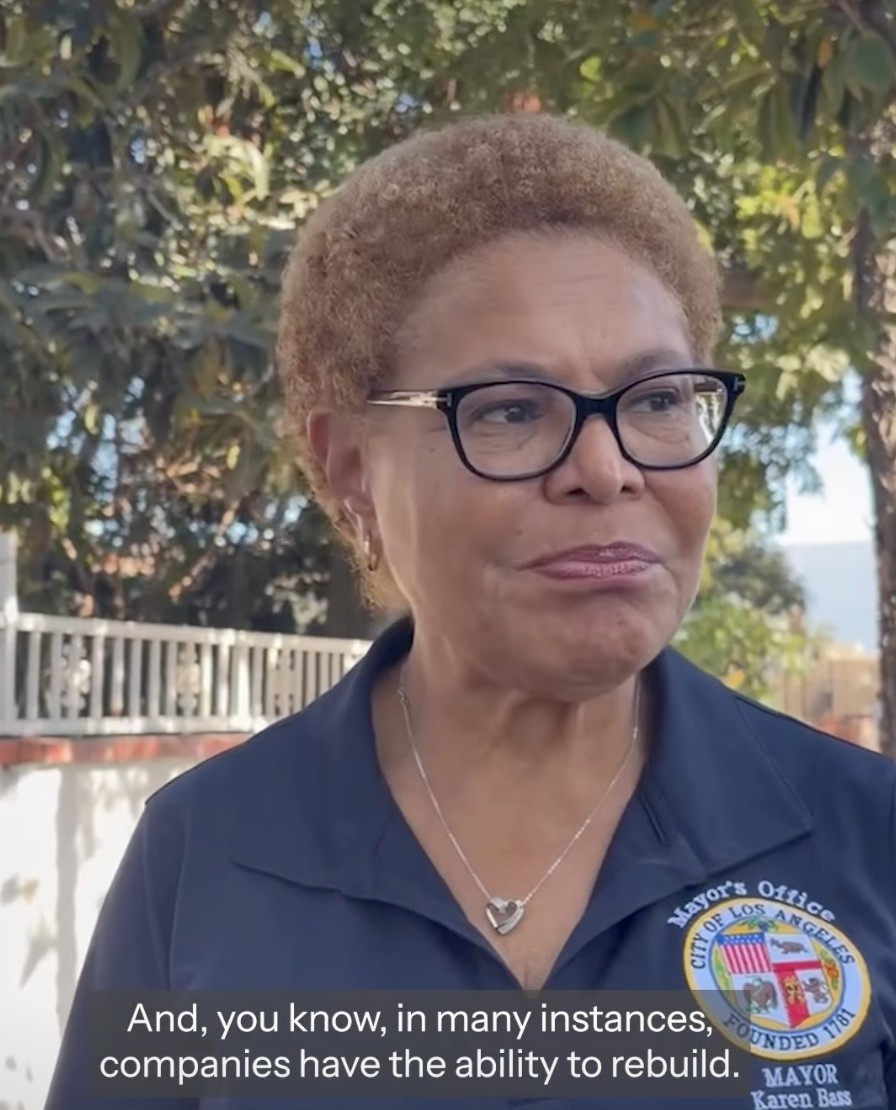
The filing drew immediate outrage. For many Boyle Heights residents, it confirmed their fears that Lineage intends to resume operations despite weeks of demands that the company clean up the disaster it created and leave the neighborhood for good. Community members condemned the application as an attempt to move toward rebuilding while residents continue to endure the fire’s environmental and public health impacts. Mayor Karen Bass called the filing “a slap in the face” to Boyle Heights families, saying she “can’t believe they would even think about starting the rebuilding process while they haven’t cleaned up the mess they’ve created.” Councilmember Ysabel Jurado likewise called the application “outrageous,” arguing that rebuilding “is not even a conversation I am prepared to have” while residents are still living with the consequences of the disaster.
The application marks a political turning point, forcing into the open the question that’s been hovering over the disaster from the beginning: should Lineage ever be allowed to return to Boyle Heights? It’s still unclear whether Bass or Raman will get behind banning Lineage for good. What’s more, neither candidate is leading with the broader structural critique that residents have been pushing since the fire broke out.
For weeks, as they endured smoke, overpowering stench, rats, flies and mounting health concerns, Boyle Heights community members have pushed a critique that goes far beyond one warehouse or one company. They are asking why hazardous industrial facilities keep landing in working-class communities of color, why those neighborhoods are expected to absorb disproportionate environmental risk, and why disasters like this one get treated as isolated failures rather than the predictable outcome of environmental racism. That structural framing has not made its way into the mayoral race.
Both Mayor Karen Bass and her challenger, Councilmember Nithya Raman, have instead kept the conversation on the terrain of governance. Their focus is on who responded well, who responded badly, and what authority the city does or doesn’t have. These are important questions, but they keep the debate centered on the city’s response instead of the conditions that produced the disaster.
Asked what Los Angeles would actually do to prevent Lineage from rebuilding, Bass said her administration was still determining what legal authority it possessed. “We’re working on a new executive order now. Our lawyers are working on that to see exactly what we can do.” She acknowledged that companies often have the legal ability to rebuild, but added that Lineage had not been “good stewards” and “good citizens” of the community. It’s a telling formulation. Even as public anger in Boyle Heights and beyond increasingly targets the outsized power of massive corporations and the systems that enable them, Bass is talking in terms of corporate citizenship, as if the problem were Lineage’s manners rather than the arrangement that let a facility like this exist in Boyle Heights in the first place.
That is what makes the Lineage fire more than a local land-use dispute. It is rapidly becoming a defining issue of the 2026 mayoral race. On a recent episode of the LA Podcast, former Councilmember Mike Bonin argued that moments like this require leaders willing to articulate a broader vision about corporate power, environmental justice and government accountability rather than simply managing the emergency. “A crisis demands leadership,” Bonin said. Co-host Alissa Walker made the related point that Bass often governs “more as if she was still in a legislature rather than an executive.” In moments of crisis, Walker argued, Los Angeles needs leaders willing to “speak as though they did have the centralized authority” residents expect from a mayor, even while legal questions remain unresolved.
That’s exactly the opening Nithya Raman has not yet claimed. She certainly hasn’t ignored the disaster. She criticized Bass’s emergency response, argued that residents weren’t given honest information about the health risks they faced, questioned why mandatory evacuations were never ordered, called for answers about whether Lineage’s crisis consultants shaped the city’s messaging, and argued the fire exposes broader failures in emergency management. Those are substantive critiques, and they’re sharper than anything Bass has offered on the subject. But they’re still critiques of process.
Raman has spent her opening attacking how Bass managed the disaster, but hasn’t said whether she believes Lineage should be allowed back in Boyle Heights at all. And she has not made the case, as residents themselves have, that the fire is a symptom of who gets to make land-use decisions and who bears the risk when those decisions go wrong. It’s a clear opening for her to make the structural argument residents have already been making, and to demand that Lineage never return. Whether she seizes it, and whether either candidate stops arguing over response times long enough to adopt that framing, may say as much about this election as any vote on Lineage’s permit.