
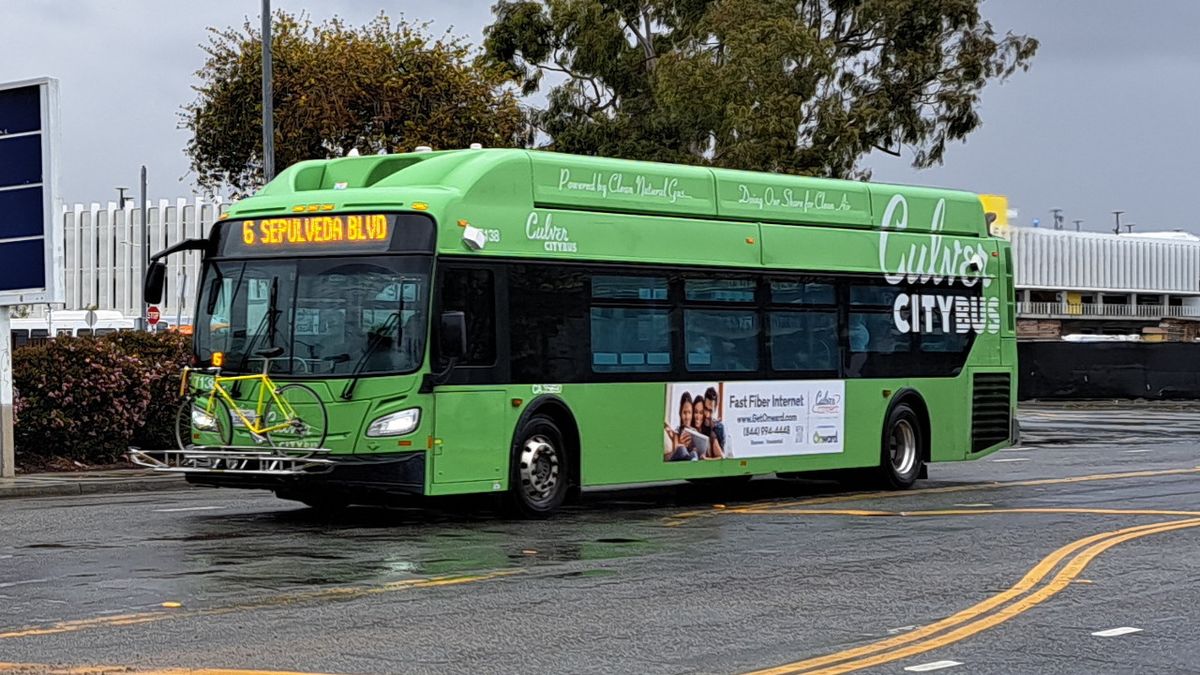
On November 9, the Culver City Council approved conceptual plans for Sepulveda Connects, a major transportation project that will bring dedicated bus lanes, protected bike lanes and pedestrian safety improvements to a 2.3-mile stretch of Sepulveda Boulevard between Venice Boulevard and Slauson Avenue.
The project includes 1.8 miles of dedicated bus lanes, 1.2 miles of protected bike lanes connecting the Culver Boulevard and Ballona Creek bike paths, enhanced pedestrian crossings and neighborhood traffic-calming measures. Approximately 6,700 passengers rely on bus service along the corridor each weekday.
The Council’s approval followed an extensive community engagement process, including public design workshops and meetings with residents of surrounding neighborhoods. Local transit and cycling advocates mobilized throughout the process. They encouraged residents to attend workshops and advocate for protected bike lanes along Sepulveda. While earlier discussions contemplated locating dedicated cycling infrastructure on adjacent streets, the approved design creates a much-needed north-south cycling connection along Sepulveda itself.
Just four days before the vote, LA City Councilmember Traci Park sent a letter to all five Culver City councilmembers urging them to delay approval of the project. Park devoted the bulk of her letter not to the transportation impacts of the project, but to the possibility that improved public transit might lead to the construction of more housing on the Westside.
Under SB 79, California’s new transit-oriented housing law, qualifying transit stops can unlock greater residential development capacity on surrounding properties. Park identified three intersections along Sepulveda Boulevard, at Venice, Washington and Slauson, where the proposed bus lanes could establish qualifying transit stops.
“SB 79 eligibility zones could extend into Los Angeles City Council District 11, potentially affecting residential, commercial, and industrial properties,” Park wrote.
Park asked Culver City to defer approval until the two cities could determine whether the proposed transit improvements would trigger SB 79, map potentially affected properties and conduct additional outreach to Los Angeles residents, businesses and neighborhood councils.
Park also raised concerns about the potential diversion of traffic onto residential streets in CD11. The approved design, however, maintains at least two general-purpose travel lanes in each direction throughout the corridor, primarily repurposing existing parking to accommodate dedicated bus lanes.
Park’s intervention underscores how opposition to new housing on the Westside translates into opposition to public transit improvements. Rather than welcoming investments in public transportation that could support the development of more housing, Park is citing the potential for housing development as a reason to delay those very investments.
Despite Park’s objections, safe streets advocates packed the Culver City Council chambers to urge councilmembers to move forward with the project. Construction is anticipated to begin in spring 2027.