
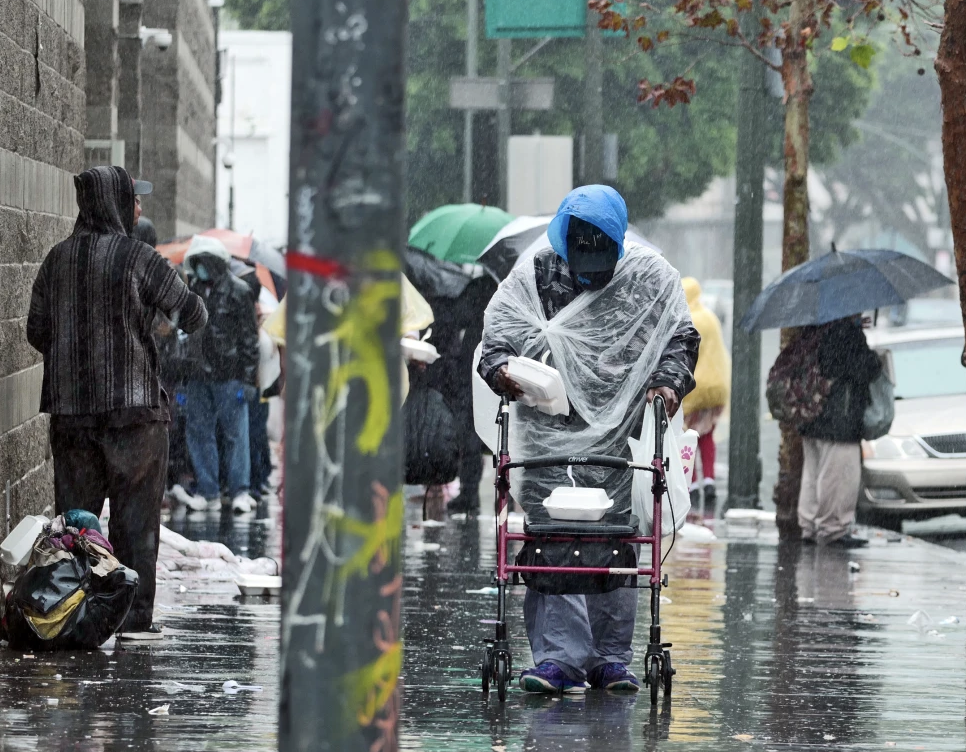
Los Angeles County will open just 46 additional emergency shelter beds on November 1, with another 60 beds scheduled to open later in the month. Not one of those beds is on the Westside, where thousands of people experience homelessness and many have nowhere to go to escape winter rain and cold. The staggeringly small rollout raises serious questions about how much the county is willing to do to protect people sleeping outdoors. This utter abandonment of our most vulnerable neighbors becomes even more glaring when compared with the resources Los Angeles devotes to sheltering animals.
The 2026–27 Winter Shelter Program, now administered by the County’s Department of Homeless Services and Housing (HSH), runs from November 1 through March 31. According to an October 30 announcement sent to homeless service providers, the first 46 beds will be split between two locations: 35 in Palmdale and 11 in Whittier. The Palmdale shelter will operate only from 5pm to 7am, meaning people will have to leave each morning. Another 20 beds are tentatively scheduled to open in Pasadena on November 12, while 40 beds are planned for an unidentified location in central LA later in November. More beds are expected in Long Beach, but the county hasn’t said how many, where they’ll be located, or when they’ll open.
The beds are supposed to be low-barrier, meaning people can walk in without a referral through the Homeless Management Information System. The program provides meals, showers, restrooms, hygiene supplies, case management, and connections to housing resources. Most sites are expected to operate around the clock. These are basic services that can make an enormous difference for someone living outdoors, but the number of beds being offered is minuscule compared with the need.
According to the 2026 Greater Los Angeles Homeless Count, approximately 73,000 people experience homelessness across the county, including roughly 49,000 who are unsheltered. The 46 beds opening November 1 could accommodate fewer than one in every thousand people currently sleeping outdoors. Even if all 106 identified beds open as planned, that’s room for only about two out of every thousand unsheltered residents. And in a county that stretches across more than 4,000 square miles, where those beds are located matters enormously.
This year’s rollout also looks much smaller than in previous years. The Los Angeles Homeless Services Authority (LAHSA), which previously administered the program, reported 335 seasonal winter shelter beds during the 2025–26 season, including 249 beds at five sites in South Los Angeles. None of those South LA sites appear in the October 30 announcement. If the 106 beds currently identified turn out to be the full program, that would mean a roughly 68 percent drop in capacity. HSH has not yet confirmed whether more sites will reopen or whether additional beds are still in the works.
For the Westside, the announcement offers nothing. Service Planning Area 5, which includes Venice, Mar Vista, Santa Monica, Culver City, and surrounding communities, has no identified winter shelter beds. The county has long acknowledged that the Westside has far too few interim housing beds for the number of people living outdoors. In documentation supporting the West LA Armory interim housing project, the county blamed the shortage on high land costs and geographic challenges, while also pointing to neighborhood opposition as a major obstacle. The same document cited 5,042 unsheltered residents in SPA 5 back in 2020, showing just how long this problem has gone unaddressed.
With El Niño conditions potentially bringing especially intense storms to Southern California this winter, the lack of shelter will have devastating consequences. People sleeping outdoors face heavy rain, flooding, cold temperatures, and dangerous conditions in encampments, often with nowhere to escape the elements. Winter shelter isn’t a substitute for permanent housing, but it can keep people safe while longer-term solutions remain out of reach. For people on the Westside, the county’s newly announced program offers no additional local shelter at all.
The numbers become even harder to understand when we look at the resources Los Angeles puts into sheltering animals. The City of Los Angeles operates six municipal animal shelters year-round, including the West Los Angeles Animal Shelter on Pico Boulevard. Together, those facilities took in more than 48,000 animals during fiscal year 2025, providing food, medical care, sanitation, and shelter while working to reunite animals with their owners or find them new homes.
According to an October 21 performance audit released by City Controller Kenneth Mejia, Los Angeles budgeted $33.7 million for animal shelter operations and care in fiscal year 2025, including direct spending and indirect costs such as employee benefits and facilities. That figure doesn’t include unrelated functions like animal control enforcement and licensing. It also leaves out spending by LA County’s separate Department of Animal Care and Control, which operates seven additional shelters, along with other municipal and regional animal shelter agencies across the county.
To put that spending in perspective, the City of Los Angeles has proposed paying human winter shelter operators $89 per bed per night for the 2026-27 season. At that rate, the $33.7 million the city budgeted for animal shelter operations in fiscal year 2025 would cover approximately 2,500 emergency shelter beds for people throughout the entire five-month winter season. That’s nearly 24 times the 106 seasonal beds currently identified in the county’s winter shelter announcement. It’s not a perfect apples-to-apples comparison, since the animal shelter budget includes indirect expenses that may not be covered by the human shelter reimbursement rate, and opening new facilities can involve additional costs. But it gives a sense of the resources local governments already put toward providing shelter and basic care.
And even that level of spending on animal shelters is widely considered inadequate. Mejia’s audit documented severe overcrowding, chronic understaffing, and conditions that put animals, employees, and volunteers at risk. The city’s six shelters have 737 dog kennels and 340 cat kennels, but at the height of overcrowding, they were operating at more than twice their dog kennel capacity and more than four times their cat kennel capacity. Animals were housed in shared kennels and temporary crates placed in hallways. Dogs sometimes went days or even weeks without being walked, contributing to physical and psychological deterioration. In 2024, the state cited and fined the city’s Harbor Animal Shelter for failing to address overcrowding that led to attacks and injuries among employees.
The Controller found that the city simply hasn’t provided enough staff or resources to maintain humane conditions. In fiscal year 2026, the department had 75 animal care technicians assigned to daytime animal care, compared with an estimated minimum need of 90 based on kennel capacity alone. During recent budget negotiations, proposed cuts threatened to leave only three shelters operating and eliminate funding for animal food and medical supplies. Those cuts were ultimately reversed, but the audit warned that the system remains severely underfunded.
Animal welfare advocates have been sounding the alarm about these conditions for years, demanding more funding, better staffing, improved medical care, and safer living conditions for animals in city custody. And they’re right to do so. The Controller himself emphasized that the city has a legal obligation to provide humane care to animals in its shelters and called on elected officials to make the investments needed to meet that obligation.
But think about what those demands say about the standards we apply to human beings. We recognize that keeping a dog in an overcrowded kennel without enough exercise, medical care, or attention is unacceptable. We expect the government to provide animals with food, water, sanitation, and a safe place to sleep. When those standards aren’t met, people demand action, and government auditors investigate whether the city is doing its job.
Meanwhile, tens of thousands of people experiencing homelessness in Los Angeles sleep outdoors without any shelter at all. They’re exposed to rain, cold, extreme heat, illness, and violence, often without reliable access to drinking water, toilets, or showers. Conditions we recognize as unacceptable for animals are routinely tolerated, and sometimes actively imposed, on human beings in this city. Instead of guaranteeing people a safe place to sleep, our representatives continue to enforce laws restricting where unhoused residents can sit, lie, or sleep, even when they have nowhere else to go. And they continue throwing away whatever shelter and belongings unhoused people have left.
This isn’t an argument that Los Angeles spends too much caring for animals. The Controller’s audit makes clear that animal shelters need more resources, not fewer. And of course, the city and county spend far more on year-round homelessness services, interim housing, and permanent housing programs than they do on seasonal winter shelter alone. But none of that changes the fact that tens of thousands of people remain outdoors, and the county’s winter shelter announcement offers almost nothing to protect them from the coming winter.
The contrast is especially stark on the Westside, where the city maintains a permanent animal shelter but the county has announced no additional winter shelter beds for people. The West LA Animal Shelter has dedicated staff, facilities, and an ongoing operating budget. But someone sleeping outdoors in Venice, Mar Vista, or Westchester has no guarantee of a safe place to go when a winter storm hits.
In its October 30 announcement, HSH said it was still working with the City of Los Angeles to explore ways to expand winter shelter capacity within city limits. It offered no explanation for the tiny number of beds announced, the apparent reduction from last year’s program, or why the Westside has been left out entirely.