
Raz Chowdhury spent years looking after people living outside in Koreatown. Friends remember him finding tents, tarps and clothing for neighbors, helping volunteers understand who needed supplies and creating a sense of safety in encampments along Sixth Street, Wilshire Boulevard and Manhattan Place. One volunteer called him the mayor of the area.
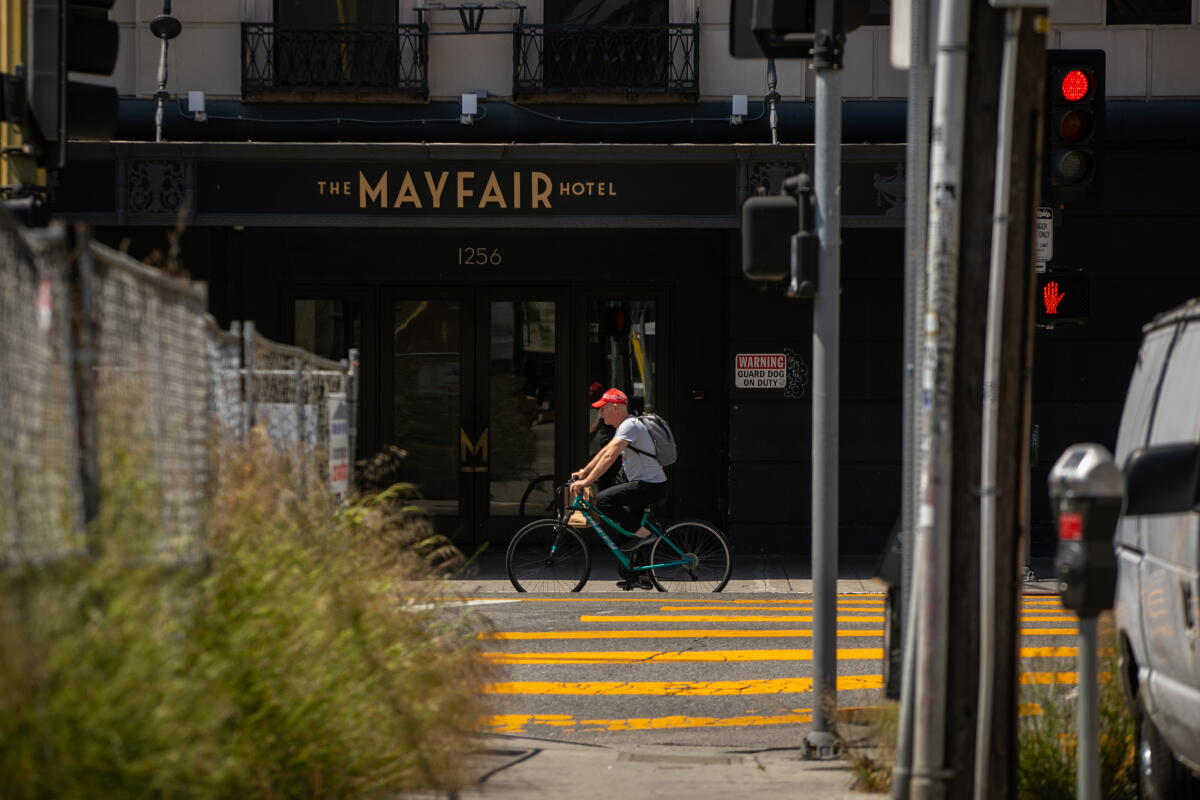
On June 25, Chowdhury was among 31 people moved indoors during an Inside Safe operation at Wilshire and Manhattan Place, according to Mayor Karen Bass’ office. On July 2, the 45-year-old was found dead in a hotel room on the 1200 block of West Seventh Street. Ktown for All identified the hotel as the Mayfair in Westlake, which the city uses for interim housing.
Part of what makes Chowdhury’s death so deeply troubling is that it’s not an anomaly. Since Inside Safe began in December 2022, LAHSA has listed 126 participants as deceased, or an average of one every ten days. These deaths raise urgent questions about what safety means after someone is moved behind a motel door and whether the city is providing the care and connection needed to keep people alive. Those questions are especially pressing because Inside Safe is billed as a safety intervention. The program moves people from encampments into hotels or motels, where contracted providers are supposed to offer services and case management while participants seek permanent housing. Bass’ office says it does not disclose where individuals are placed after an operation, a policy that protects privacy, but also blocks any outside scrutiny of conditions and follow-up care.
And the program’s history provides ample reason for scrutiny. An LA Times analysis of LAHSA data found that, as of December 2025, approximately 40% of people who had entered Inside Safe were back in unsheltered homelessness. The average interim-housing stay had reached 362 days, despite a program model intended to move participants into permanent housing within 90 days and limit motel stays to six months.
Participants have also described major gaps in the services that would make it more likely that motel placements become a pathway to housing. A survey of 56 residents across nine Inside Safe motel sites found that more than two-thirds said no one had worked with them to find permanent housing, nearly half said they had received no social services and three out of four said they had never been offered mental-health services. Participants described being moved far from their neighborhoods and support networks while restrictive rules made some sites feel more like jails than places of care.
The latest citywide outcomes continue to show how far a hotel placement can be from a stable home. LAHSA’s report through July 31 showed that 6,406 people had entered interim housing through Inside Safe. About 1,750 remained there, including 289 people at the Mayfair. Another 1,802 people, or more than one quarter of those who entered the program, had returned to homelessness. These statistics show why the city must measure more than how many tents disappear on the day of an operation.
Experiences at another motel-based homelessness program reveal the dangers at two extremes: intrusive monitoring that strips people of privacy and inadequate care that leaves them isolated. At Culver City’s Project Homekey, residents alleged abusive and dehumanizing conditions, including welfare checks every two hours that disrupted sleep and worsened anxiety. On the permanent-housing side of the same property, participants alleged that the body of a resident who died from a fentanyl overdose went undiscovered by staff for five days.
The answer is not simply more surveillance. A credible program needs people-centered systems of care, including medical and behavioral-health assessments. There should be consistent case-management relationships with clear procedures when someone misses appointments or becomes unreachable. And the city should report how often staff make contact, how quickly permanent-housing applications move, why people leave and what happens after they do.
Chowdhury’s friends also point to a less measurable loss. He lived within a network of people who knew him, relied on him and noticed when something was wrong. Hotel placement can provide a locked door and relief from the street, but it also separates people from those relationships. Service providers should ask participants who they depend on, help them remain connected and treat community ties as part of safety rather than an obstacle to clearing a sidewalk.
At a memorial where Chowdhury’s encampment once stood, friends placed flowers beside a small tribute. Planters now line the sidewalk. The city can count the location as cleared, but that tells us almost nothing about whether the people who lived there became any safer.