
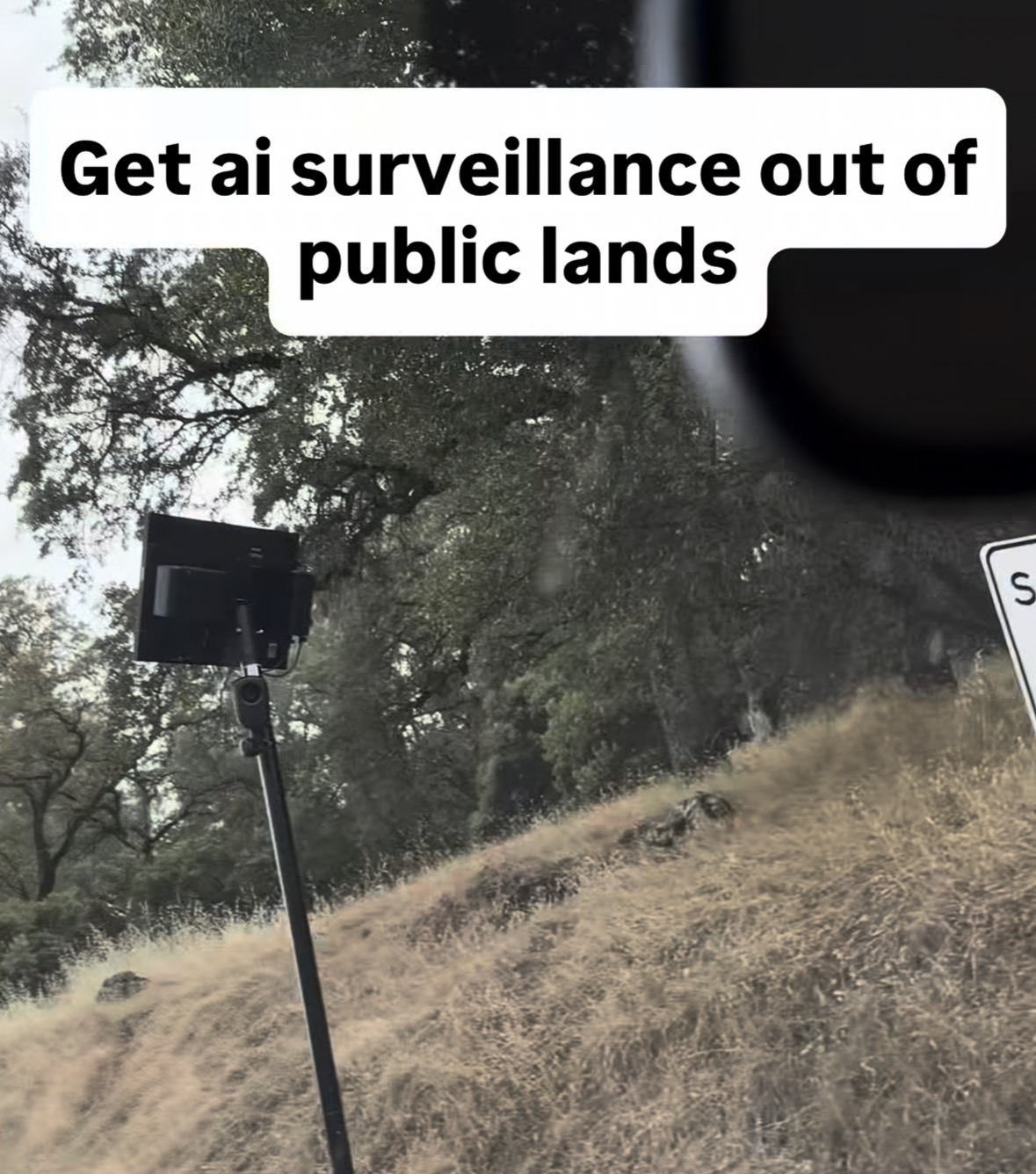
You may (or may not) be surprised to learn that you are being surveilled by Flock Safety cameras even when you visit state parks in Southern California.
A spokesperson for California State Parks – the state agency responsible for managing California’s 280 state parks and 15,000 campsites – confirmed that Flock Safety began to install and manage automated license plate reader (ALPR) cameras on State Parks property in late 2024.
Flock cameras have eyes on visitors at every state park in Los Angeles County. Drive past the entrance kiosk at Malibu Creek State Park and a solar-powered Flock camera records your license plate and other identifying features of your vehicle as you hand over your registration fee.
As you hike to catch a view of the Los Angeles skyline at Baldwin Hills Scenic Overlook near Culver City, a Flock camera tracks you.
Two Flock cameras are pointed at the parking lot at the Los Angeles State Historic Park, one of the few state parks located in close proximity to downtown Los Angeles, surveilling visitors who are there to relax, recreate, and exercise.
By this point, the ubiquity of Flock cameras and other ALPRs is well documented. So is their insidiousness when law enforcement has access to view and share collected data. Marketed as a tool to reduce crime, ALPRs rely on artificial intelligence to track and record enormous amounts of data from passersby, regardless of criminal status. In the hands of government agencies, ALPRs become a tool of mass surveillance used by law enforcement for warrantless searches, wrongful arrests, and, for some cops, stalking of former romantic partners.
Audits of multiple law enforcement agencies have revealed that data collected by ALPRs has been shared across state and federal agencies, including Immigration and Customs Enforcement (ICE). Flock says it does not sell or share data to third parties, but recent changes to terms and conditions in Flock’s contracts suggest otherwise.
Last month, Mar Vista Voice reported on a new contract between Flock Safety and the Los Angeles Police Department (LAPD) that proposed to tighten Flock’s ability to sell or share data collected by ALPRs. The new contract arose after public outcry and organizing against LAPD’s initial contract with Flock. Instead of dismantling the mass surveillance network created by ALPRs, LAPD assured Angelenos that reform would resolve their concerns. Not so.
In Council District 11 alone, thirty-nine Flock cameras have continuous eyes on Mar Vistans. We can thank Councilmember Traci Park, who directed $450,000 of discretionary funds for the acquisition, installation, and maintenance of ALPRs without approval from the community.
Public protest against ALPRs is producing initial returns. In Santa Barbara, public outcry against mass surveillance led the city council to terminate its contract with Flock Safety. As previously reported by Mar Vista Voice, the LAPD let its contract with Flock Safety expire after concerns about LAPD’s sharing of data with other agencies. Unfortunately, in both of these cases, the government entity is considering new contracts that would continue reliance on private ALPRs to surveil the public.
Now, mass surveillance has come to our state parks.
California is the most biologically and geographically diverse state in the nation. State Parks operates to protect these resources, as well as the cultural heritage and activities of California Indians.
The mission of California State Parks is to “provide for the health, inspiration and education of the people of California by helping to preserve the state’s extraordinary biological diversity, protecting its most valued natural and cultural resources, and creating opportunities for high-quality outdoor recreation.” State Parks asserts it is “honored to provide access to parks and open spaces and contribute to a healthier and richer quality of life for Californians.”
Conducting mass surveillance on visitors cuts directly against State Parks’ mission. The health, inspiration, and education of Californians is inhibited, not provided for, by collecting and sharing the images, features, timestamps, and location data of every single visitor. The presence of Flock cameras is likely to have a chilling effect on the public’s desire to visit state parks, not create opportunities for outdoor education. Protection of natural resources is not furthered by collecting the personal data of every single visitor to state parks.
Open spaces are no longer open when the government is watching you and recording your every move. A healthier and richer quality of life is achieved not by conducting mass surveillance, but by ensuring Californians are free from unwanted government intrusion into their lives.
California State Parks has yet to respond to a Public Records Act request seeking records related to its contracts with Flock Safety.