
“Enclosures have appropriately been called a revolution of the rich against the poor.”
— Karl Polanyi, The Great Transformation
In The Great Transformation, the Hungarian historian Karl Polanyi located the origins of modern market capitalism not in the natural evolution of trade, but in a deliberate and often violent legal transformation: the enclosure of England’s commons. For centuries, vast stretches of English farmland had been held and worked communally, with tenants, freeholders, and even the landless entitled to graze animals, gather fuel, and farm shared strips of land under customary rules enforced by manorial courts. Land was a shared, public space.
Enclosure dismantled that system. Beginning in the 12th century, the process accelerated through arrangements among landlords and was ultimately formalized and vastly expanded by Parliament, which passed enclosure acts in the 18th and 19th centuries that fenced off common land, consolidated small farms into large private holdings and stripped ordinary people of rights they and their ancestors had exercised for generations.
The enclosure movement did not involve a conquering army. Instead, it proceeded incrementally, through the force of law. The effect was to clear the way for the market economy and the industrial society that followed, all at the cost of the dispossession and immiseration of much of the population. Perhaps just as importantly, enclosure changed the way people understood their world. No longer would land constitute a shared space that benefitted the community. Instead, land became a commodity whose societal benefits, if any, were of secondary importance.
It’s tempting to think of the enclosure movement as a historical episode that is distant from the world of today. But in many ways these forces remain as active as ever.
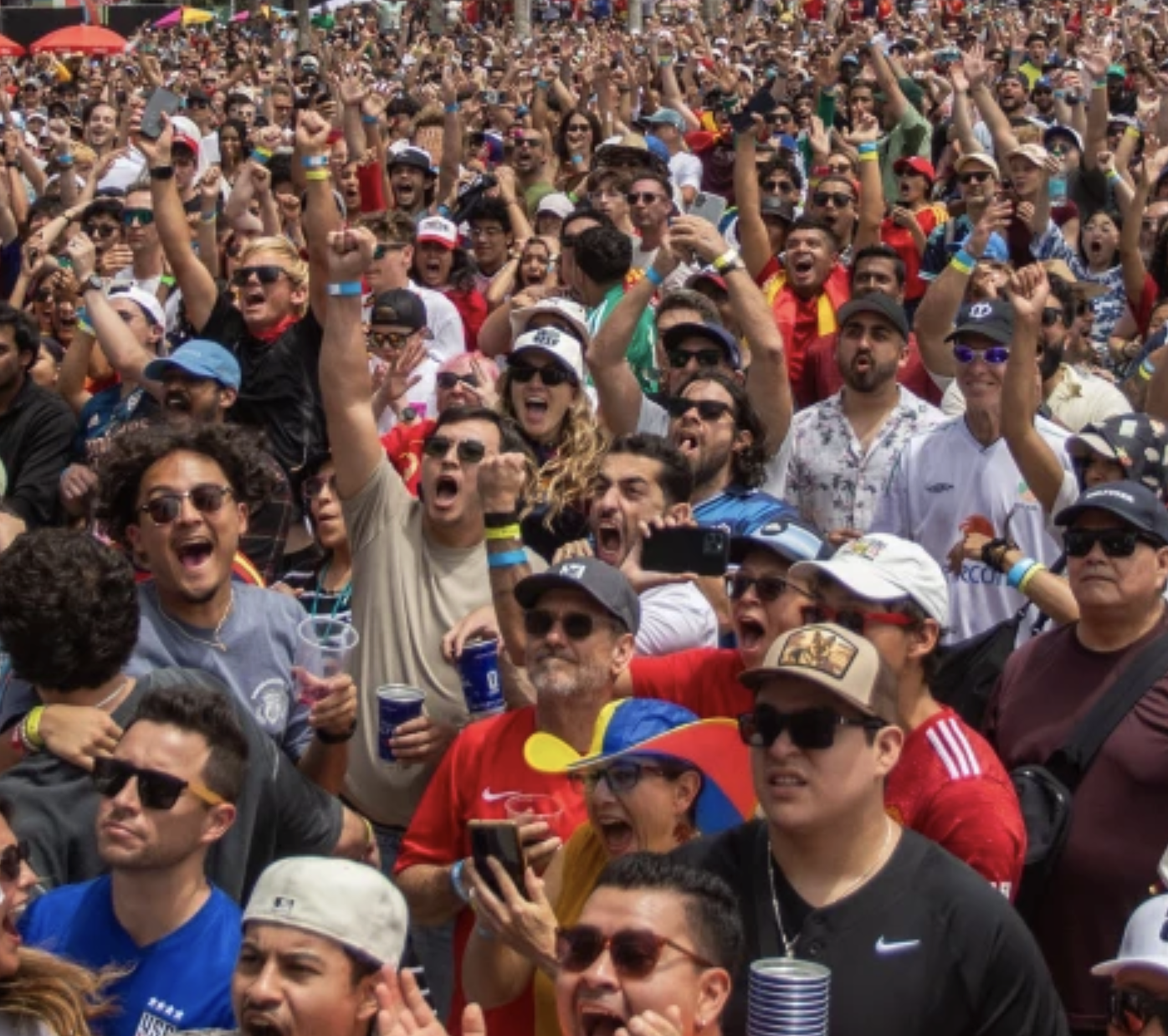
One of the more poignant recent local examples is the Venice Beach FIFA World Cup Fan Zone that took place last month. A brief summary of the FanZone Debacle™ based on reporting from LAist:
- The Venice Beach FIFA Fan Zone had originally promised the public a free block party and viewing area in Windward Plaza, near the beach in Venice on July 10 and 11
- The area was largely inaccessible to the public for the week leading up to the events
- When people came to the Fan Zone, the only viewing screens were inside a fenced-off – ahem, enclosed – area where tickets cost from $15 to $125 per person
- People who had expected a free public viewing area were unable to participate in the festivities. As one Venice Chamber of Commerce member told the Los Angeles Recreation and Parks Commission, “The park was effectively unavailable to the community for more than a week. The free public, public elements described in the report simply did not materialize.”
Apologists have noted that the FanZone Debacle™ was due in large part to the original organizer withdrawing ten weeks before the event and the LAPD blocking plans for street screenings. But the reality is much simpler: public space was enclosed for private benefit. Thus, not unlike the dynamic ticket pricing that FIFA organized and which inured to the benefit of the wealthy, what should have been a free, public celebration of the “people’s game” turned into yet more commodified “fun.”
City officials have since acknowledged the problems with the Fan Zone and promised a post-event review before the 2028 Olympics, framing the episode as a test run for larger events to come. But the gap between what was sold to the public and what was delivered was stark: public space was closed off to the community for over a week in exchange for amenities that, in the end, were never open to the public. Where there is money to be made, you can be sure that private interests and their government backers will prioritize profit over the public. This was true in pre-industrial England and it remains true to this day.
As Los Angeles looks ahead to the 2028 Olympic Games, Mayor Karen Bass has proclaimed that the Games present an opportunity to “reimagine our infrastructure.” It is a phrase worth pausing on. Whose infrastructure, and for whose benefit?
If the FanZone Debacle™ is any indication, one answer is increasingly clear. “Reimagining” public space too often means enclosing it.