
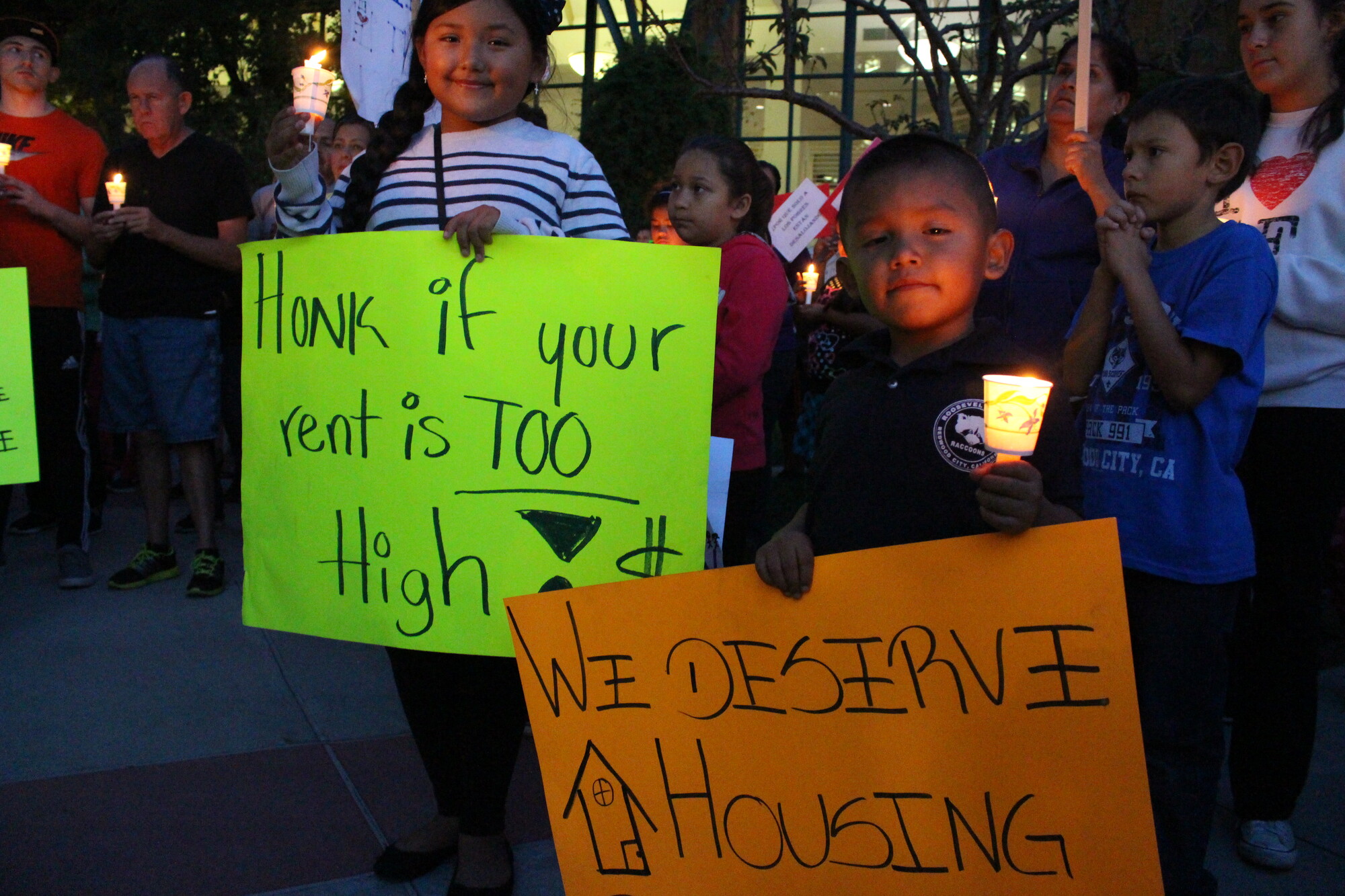
Many Southern California landlords will be allowed to raise rents by as much as 8.7% beginning August 1, an increase from the current 8% limit and another blow to tenants already struggling with the region’s extraordinary housing costs.
The new ceiling applies to many apartments covered by California’s Tenant Protection Act, also known as AB 1482. That law permits annual rent increases of 5% plus inflation, up to a maximum of 10%. Because the inflation rate used for Los Angeles and Orange counties rose to 3.7%, the allowable increase will rise to 8.7%. The cap in Riverside and San Bernardino counties will increase from 7.5% to 8.1%.
An 8.7% increase would add $174 to the monthly cost of a $2,000 apartment, or more than $2,000 over the course of a year. For a tenant already paying $2,500, it could mean another $217.50 every month.
Tenants in apartments covered by stronger local rent stabilization laws will generally retain those protections. In the city of Los Angeles, for example, the current limit for units covered by the Rent Stabilization Ordinance is 4%. But many tenants live in buildings too new to qualify for Los Angeles rent control while old enough to fall under the weaker state law. Most single-family homes and condominiums also remain exempt when they are not owned by corporations.
This did not have to happen. California lawmakers had an opportunity to strengthen the state cap through AB 1157, introduced by Assemblymember Ash Kalra. The bill would have limited annual increases to 2% plus inflation or 5%, whichever was lower. It also would have extended protections to additional renters and made the statewide law permanent rather than allowing it to expire in 2030.
Under that proposal, the upcoming increase in Los Angeles and Orange counties could not have exceeded 5%. Instead, AB 1157 was defeated in the Assembly Judiciary Committee in January after intense opposition from the landlord lobby. It received only four of the seven votes needed to advance. California lost an opportunity to protect renters, and tenants will now pay the price.
The formula behind the increase is especially perverse. Housing is itself one of the largest components of the Consumer Price Index used to measure inflation. Shelter accounts for more than one-third of the index, and Los Angeles shelter costs rose another 2.8% over the year ending in June, according to the Bureau of Labor Statistics. In other words, rising housing costs help push inflation upward, and that higher inflation is then used to justify raising housing costs again.
Renters are being punished for the fact that rent is already too high. Their housing costs rise, those increases contribute to inflation, and the state responds by granting landlords permission to impose even larger increases. The formula turns the affordability crisis into its own feedback loop.
The additional 5% built into state law is not an inflation adjustment. It is a guaranteed increase on top of inflation. Tenants’ wages do not automatically rise by inflation plus 5%. Social Security recipients, minimum-wage workers and families relying on fixed incomes receive no comparable protection. Yet state law assumes landlords should be entitled to increases that can reach nearly 9% in a single year.
California’s existing cap is frequently described as an anti-rent-gouging law, but an increase that can force a tenant to find hundreds of additional dollars every month is not meaningful protection. It can mean taking a second job, cutting food or medical expenses, moving children out of their schools, doubling up with another family or losing a home altogether.
Rent stabilization is homelessness prevention. By allowing increases far beyond what many households can absorb, California is permitting landlords to push more people toward displacement while spending billions of dollars trying to respond to homelessness after it occurs.
AB 1157 would not have solved California’s housing crisis. But it would have prevented some of its worst consequences. Its defeat demonstrates once again that California’s housing policy protects the income expectations of property owners more reliably than it protects renters’ ability to remain housed.