
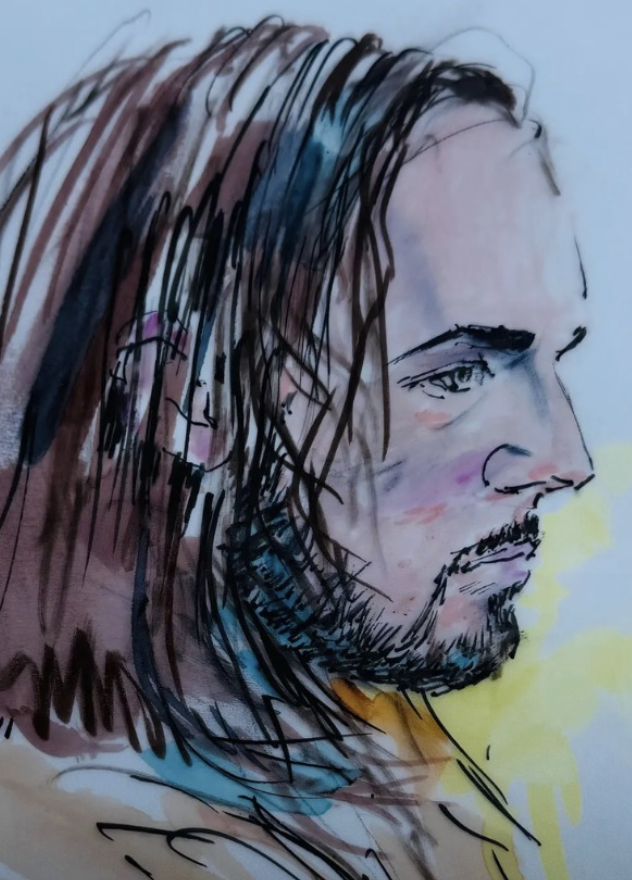
A federal judge declared a mistrial last week after jurors deadlocked 10-2 in favor of acquitting Jonathan Rinderknecht, the man accused of setting the New Year’s Day brush fire that prosecutors say later reignited into the devastating Palisades Fire. First Assistant U.S. Attorney Bill Essayli said prosecutors intend to retry the case and secure convictions on all counts.
Much of the coverage has focused on the jury split and the lack of direct evidence tying Rinderknecht to the fire’s ignition. Less attention has gone to another feature of the trial, how heavily the government leaned on Rinderknecht’s political and economic grievances to establish motive.
Prosecutors never presented direct evidence that Rinderknecht started the earlier blaze. Instead, they placed him at the scene and presented a digital trail meant to show he was motivated by a desire to take revenge on society. That digital trail included his interest in Luigi Mangione, a Reddit search about billionaires, and extensive ChatGPT conversations, including one in which he asked why he was “so angry all the time,” and others involving AI-generated fire imagery. One juror who voted to acquit dismissed the ChatGPT evidence in interviews after the trial, saying she talks to the chatbot regularly herself and felt prosecutors were using it to disparage his character.
The jury didn’t buy it. Multiple jurors told reporters the government simply hadn’t proven he set the fire, with one calling a retrial a waste of taxpayer money and another suggesting prosecutors had settled on a convenient scapegoat.
The trial concluded within days of the sentencing in the Prairieland case out of North Texas, where prosecutors leaned on defendants’ politics to lock them up for a combined 450 years, thanks to a new Trump executive order that vastly expands the government’s ability to treat political ideology as grounds for a terrorism charge.
That order, issued in September 2025, designated “antifa” a domestic terrorist organization. It didn’t just express an opinion, but actually gave federal prosecutors a formal legal hook to treat leftist ideology itself as evidence of terrorism. The Prairieland case was the first test of that legal hook. Eight defendants connected to a July 2025 protest outside an ICE detention center in Alvarado, Texas were sentenced on June 23 to terms ranging from 30 to 100 years. Prosecutors leaned on the antifa designation to secure material support to terrorism charges, and pointed to defendants’ choice to wear black clothing and use encrypted messaging as supporting evidence.
The most striking sentence went to Daniel Sanchez-Estrada, who wasn’t present at the protest at all. He was convicted of obstruction for moving a box of antifascist zines after the protest and received 30 years. He was convicted of conspiracy to corruptly conceal documents for moving a box of zines and literature at his wife’s direction after her arrest. Press freedom advocates noted that the literature said nothing about the protest or the shooting that occurred there.
Civil liberties groups have warned this marks a dramatic and unconstitutional expansion of terrorism law, one that risks converting protected political literature, encrypted messaging habits, and clothing choices into courtroom evidence of criminal intent. What the Prairieland case makes explicit is that this expansion now has an executive order behind it. What’s troubling in reading these two cases together is that the practice of putting a defendant’s politics on trial was already normalized enough that prosecutors reached for it with or without legal cover, and now they have a policy that expressly authorizes it.
The part that should concern every reader, regardless of what you think about Rinderknecht’s guilt or the Prairieland verdicts, is that none of the beliefs prosecutors treated as evidence of a criminal mind are unusual anymore. They’re closer to the norm.
Resenting concentrated wealth while rent eats half your paycheck isn’t a fringe pathology. It’s the ordinary condition of most working people in Los Angeles right now. Distrust of billionaires isn’t a warning sign a prosecutor should be allowed to wave in front of a jury. It’s a stance shared by a majority of Americans across party lines, and it shows up in national polling every year. Anger at an economic system that produces record corporate profits alongside record homelessness isn’t evidence of a fire starter or a terrorist. It’s the reason democratic socialist candidates keep winning elections in cities like New York and Colorado and building coalitions here on the Westside.
When federal prosecutors present a defendant’s economic grievances, protest literature, or social media habits as proof of a criminal mindset, they aren’t identifying an outlier. They’re describing a huge and growing share of the country, the people struggling to make rent, the people who show up to protests, the people who talk to their Uber driver about inequality because it’s on everyone’s mind. If holding a widely shared belief is enough to make a jury believe you’re more capable of arson or terrorism, then the label isn’t targeting extremism. It’s just targeting the mainstream, using the loudest, most punishable case available to make the rest of us think twice before we say what we actually believe out loud.