
Los Angeles officials have spent the past year celebrating a historic drop in violence. Homicides citywide fell 19% in 2025, and elected officials, from the mayor to city councilmembers who ran on public safety, have been quick to claim credit.
A major new investigation published this week by LAist and The LA Local complicates the story. Reporters Agya K. Aning, Alain Stephens, and Jared Bennett analyzed a decade of LAPD crime data and found that at least 278 unhoused Angelenos have been shot and killed since 2015, and that while homicides overall declined last year, fatal shootings of unhoused people held steady.
The disproportion is staggering. According to the investigation’s analysis of LAPD homicide data, unsheltered people made up roughly 16% of all murder victims in the city from 2015 through 2025, despite being less than 1% of the population. Brian Levin, founder of the Center for the Study of Hate and Extremism at Cal State San Bernardino, told the outlets that unhoused people face arguably the highest victimization levels of anyone in society.
And here is the finding that should reframe every neighborhood Facebook thread and Nextdoor panic about encampments. In killings of unhoused people, 83% of suspected shooters were housed, according to the investigation’s analysis of LAPD records. The dominant story of this violence is not homeless-on-homeless crime. It is housed people killing their unhoused neighbors.
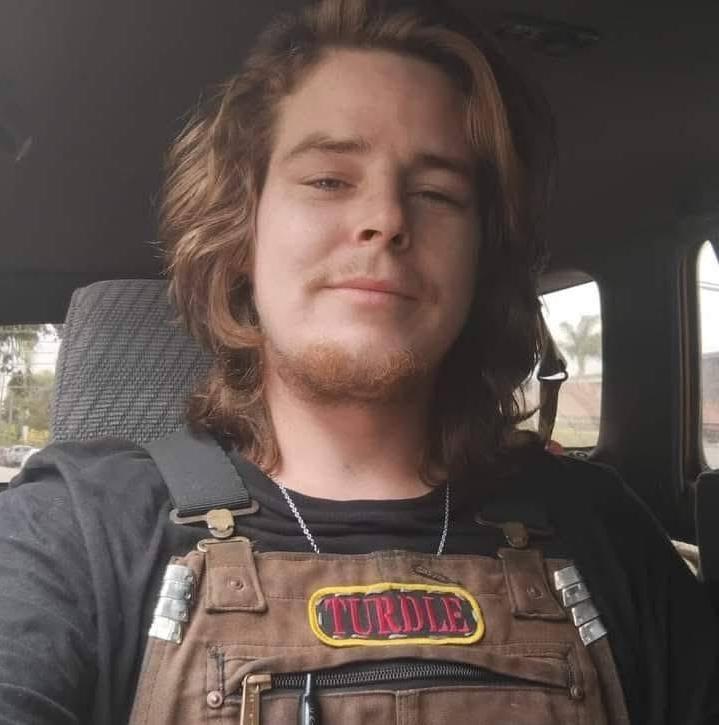
Westsiders don’t need to look far for a face to put on these numbers. On April 2, 2025, Zackery Melton, known to nearly everyone in Venice as Turdle, was shot and killed at Westminster Dog Park on Pacific Avenue. He was 28. He died because he did what friends say he always did, stepping in when someone needed protecting.
According to trial coverage and witness accounts, Melton intervened in an argument between a woman and a registered sex offender with prior human trafficking convictions who had a documented history of violence toward her. The man left the park, retrieved a gun from his apartment nearby, returned, and shot Melton in the head. Melton’s friends found him in the parking lot, where he died in their arms. Last month, after a 16-day jury trial, the shooter was convicted of first-degree murder and seven other counts. His sentencing is scheduled for June 18, where Melton’s family will deliver victim impact statements.
Melton’s mother, Karen Webb, has spent the year since his death fighting to make sure her son is remembered as more than a category. LAist published a full profile of Turdle’s life this week as a second installment of the investigation. Webb told reporters she felt compelled to change the narrative, because her son was so much more than his housing status.
But even this rare story of accountability carries an uncomfortable lesson. Melton’s killing was solved in part because of how detectives saw him. His father told reporters that investigators vowed to close the case because his son had died protecting a woman, telling the family that Zackery was “one of us.” That kind of effort is the exception. Roughly half of the fatal shootings of unhoused people in the investigation’s dataset went unsolved. The unhoused victims whose stories read as heroic can get the full weight of a homicide investigation, but the rest go unsolved.
The investigation also raises serious questions about whether we can trust the numbers at all. When reporters cross-referenced LAPD records against L.A. County Medical Examiner death records, they found roughly two dozen fatal shootings of unhoused people from 2024 and 2025 that simply do not appear in LAPD data. Among the missing were a 69-year-old man shot six times in an alley near the 105 and 110 interchange, and a 15-year-old boy shot seven times, mostly in the back, in a drive-by. The gaps coincide with the department’s 2024 transition to a new federal crime-reporting system, and with a sudden, remarkable jump in the department’s reported arrest rate for these killings, from 48% of cases cleared in 2023 to 100% in 2024 and 2025. The LAPD did not respond to the outlets’ requests for comment on either the missing deaths or the arrest-rate change.
Even the medical examiner’s records aren’t comprehensive. The office estimates about 20% of deaths among the county’s unhoused population are never reported to it. And the LAPD’s own killings of unhoused people are not reflected in the dataset at all. When the official record of who is dying, and whether anyone is held accountable, gets murkier at the exact moment the statistics start looking better, something is off.
Court records and sources in the investigation describe a recurring figure, the self-styled vigilante who targets unhoused people precisely because they see them as disposable. The examples keep accumulating, and the details are grim. A man sentenced to 82 years for hunting unhoused people in Pico-Union, described by the court as a borderline serial killer. A 69-year-old double amputee shot while sleeping in his wheelchair. A suspect who allegedly killed three unhoused men over 72 hours in 2023. A Sylmar man, awaiting trial, who police say had vented online about homelessness and corrupt politicians before allegedly shooting a 29-year-old who lived in an RV outside his building.
Andy Bales, who ran the Union Rescue Mission for nearly two decades, told the outlets that vigilante activity has risen alongside the unhoused population itself. Advocates interviewed in the piece drew a direct line from political and media rhetoric that demonizes unhoused people to the violence that follows. Jeremy Rosenprinz of Ktown For All described how marginalizing and demonizing people sets off a certain kind of person who comes to believe that harming them is a community service.
Mar Vista has its own history here. Accounts shared with Mar Vista Voice by longtime neighborhood council participants describe how, in the years before the pandemic, a private Facebook group organized around several residential streets in the neighborhood, started by a local business owner with sitting neighborhood council board members among its participants, became a gathering place for exactly this kind of escalation. Members discussed going out in the evenings to confront unhoused people, some went out armed with baseball bats and, in at least one case, a gun, and in one incident described to us a man was beaten with a bat for urinating beside a drugstore. He was not unhoused. One board member posted videos about confronting unhoused residents and circulated invitations to private monthly meetings with a hand-picked group of neighbors. In late 2019 a private security firm founded by an LAPD officer began patrolling Mar Vista streets at night, at one point telling a resident to move along from behind his own home. The group was eventually taken offline, but the people involved did not retreat from public life. Some moved into formal neighborhood governance, where decisions about outreach, services, and enforcement priorities get shaped.
That is what makes the investigation’s findings land so hard here. The line between a Facebook group and a funeral is shorter than this neighborhood wants to believe, and the people who walked up to that line in Mar Vista were not anonymous trolls. They were business owners and Mar Vista Community Council Board members, the kind of people who sit at the front of the room at community meetings and speak on behalf of the neighborhood.
Meanwhile, an LAPD commander, the department’s own homeless coordinator, told the investigation she sees no trend or pattern of weapons being pulled on unhoused people. Numerous people living outdoors told the same reporters that having a gun pulled on them is a regular occurrence. The district attorney’s office doesn’t track victims’ housing status at all.
Turdle’s friends called him their big brother outside. He was the 16th unhoused person shot and killed in Los Angeles in 2025. The investigation suggests there were others that year whose deaths never even made it into the official count. We owe them all more than a statistic, and more than a press conference about falling crime.