
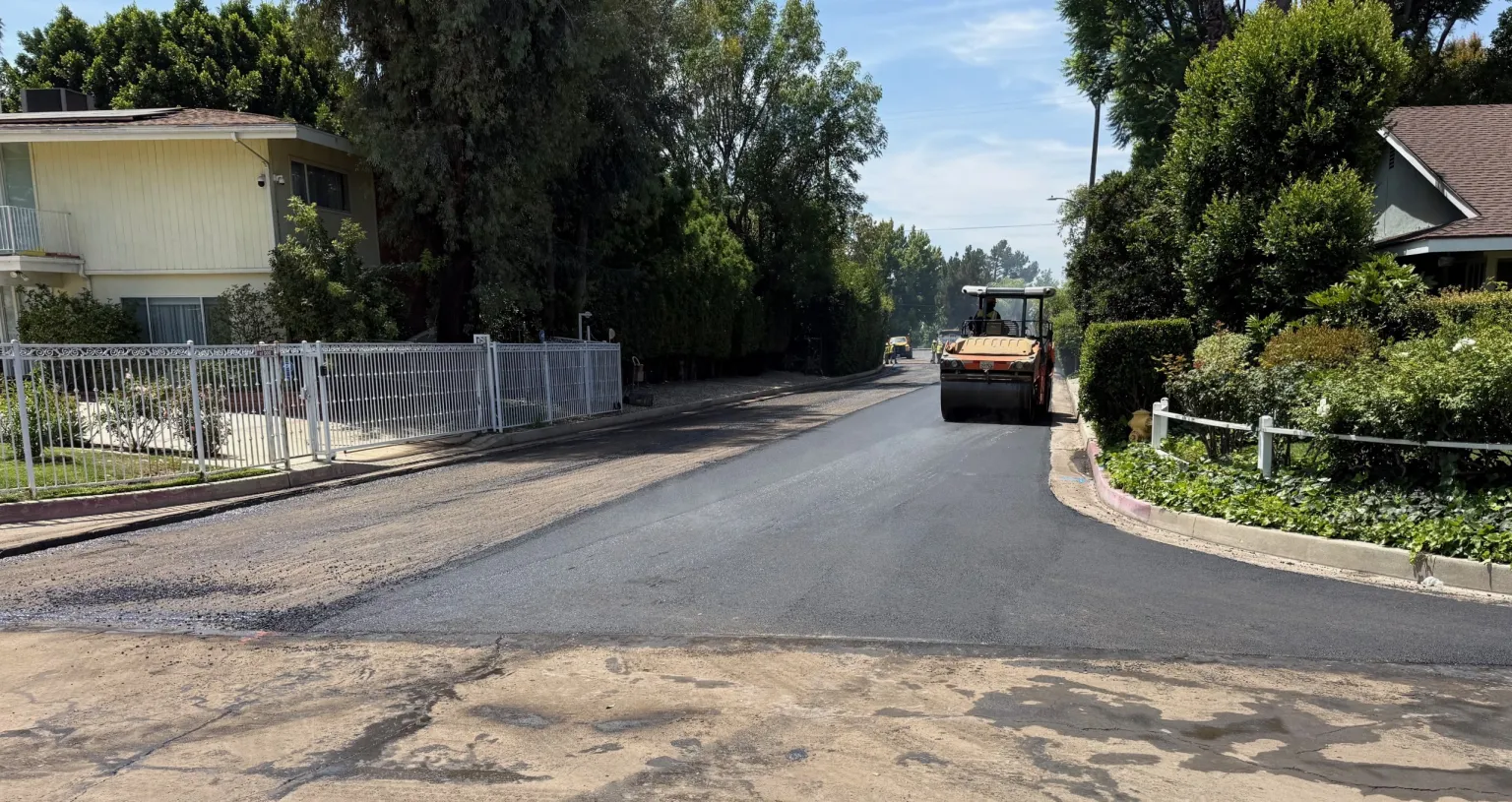
This article by Joe Linton originally appeared in StreetsBlogLA, and is republished here with his permission. (Disclaimer from Joe: As a Streetsblog Editor, I do not claim to be a neutral observer here. Outside of my Streetsblog reporting, I have repeatedly challenged the city’s Measure HLA inaction. I am fighting for HLA in court and at the Board of Public Works. I don’t have a financial stake in this, but am an interested party in Measure HLA matters.)
In an apparent attempt to avoid complying with accessibility and multimodal requirements, L.A. City is now repaving streets in well-off suburban neighborhoods. Many of these streets are already in good condition.
What does it take to get L.A. City to change which streets it repaves?
In 2024, nearly two-thirds of L.A. voters passed Measure HLA, requiring the city to make streets more multimodal, more inclusive. Since HLA became law, the city has been scrambling to find ways to not follow HLA.
Some of the city’s loophole strategies are legal. Some appear not to be. All of them are supporting the city’s deadly car-centric status quo and undermining nascent efforts toward a balanced multimodal transportation system.
In the last month or so, the city appears to have decided that the way it can get around HLA – and around disability access laws – is to only repave streets without sidewalks.
This practice is making the city less equitable, because streets without sidewalks are nearly all in relatively well-off neighborhoods. City repaving is currently focused on many hillside areas including Bel Air, Holmby Hills, Mount Washington, Pacific Palisades, and Studio City. The city is also resurfacing sidewalk-less streets in other car-centric suburban neighborhoods including Northridge, Toluca Woods, Valley Village, Valley Glen, and Woodland Hills.
The Tortured Road To Today’s Inequitable Resurfacing
Street repaving projects involve multiple city departments. The city Department of Public Works Bureau of Street Services (StreetsLA) is responsible for streets’ asphalt and concrete material itself. StreetsLA’s “PPP” Pavement Preservation Program does the work of repaving – removing the top layer of worn asphalt and replacing it with a new layer. (StreetsLA also does a lot more than that, but that’s another story.)
After StreetsLA repaves a street, the city Transportation Department (LADOT) is responsible for designing and installing the striping.
Prior to HLA, the StreetsLA PPP repaved a mix of small and large streets. There are other factors, but the main criteria for repaving was the condition of the street: is the asphalt cracked and/or suffering from potholes? If so, it’s time to repave.
In April 2024, Measure HLA took effect. HLA requires the city to install planned bus/bike/walk/accessibility improvements during repaving projects at least 1/8 mile long. The planned improvements are from the city’s Mobility Plan 2035, approved in 2015. The Mobility Plan maps out locations (specific street segments) where the city will install improvements (for example, bus lanes).
The Mobility Plan and HLA leave most city streets unchanged. Only on designated network streets (for example streets on the Bike Lane Network) is the city required to install planned improvements. Mobility Plan network streets tend to be larger streets, mainly arterials. Most smaller residential streets require no changes under the Mobility Plan and HLA.
Recapitulating the HLA timeline (see more details at this earlier SBLA post), right after HLA took effect, StreetsLA shifted what streets it repaved. The city quietly paused repaving streets that would trigger HLA. This meant that, for about 15 months, the city continued to repave streets, but avoided many arterials, instead favoring smaller streets.
StreetsLA, generally working with City Council, decides which streets to repave. Though that shift to small streets undermined street safety and voter intent (and pavement condition on most larger streets), it is a legal way for the city to largely avoid HLA.
On July 1, 2025, StreetsLA shifted its PPP work dramatically. StreetsLA quietly stopped fully resurfacing streets, instead doing costly ineffective partial resurfacing, termed “large asphalt repair” (LAR). Most city “LAR” projects have been under 660 feet, so legally under the HLA threshold.
Starting in early February 2026, advocates began filing appeals urging the city to install HLA upgrades on multiple recent LAR projects where LAR exceeded 660 feet. To date, the city has not responded to any of these appeals.
In mid-March, StreetsLA resumed some resurfacing. At the time PPP work included a mix of LAR (mostly on larger streets), full curb-to-curb resurfacing (mostly on smaller streets), and a few other things (for example, some grant-funded resurfacing that the city asserts is exempt from HLA, because the grant was awarded prior to HLA).
In early April, I filed a lawsuit asserting that it is illegal for the city to use LAR (and other loopholes) to avoid following HLA.
Then, around late April and early May, StreetsLA PPP work shifted again.
For nearly all of May, and continuing right now, StreetsLA is only resurfacing streets without sidewalks.
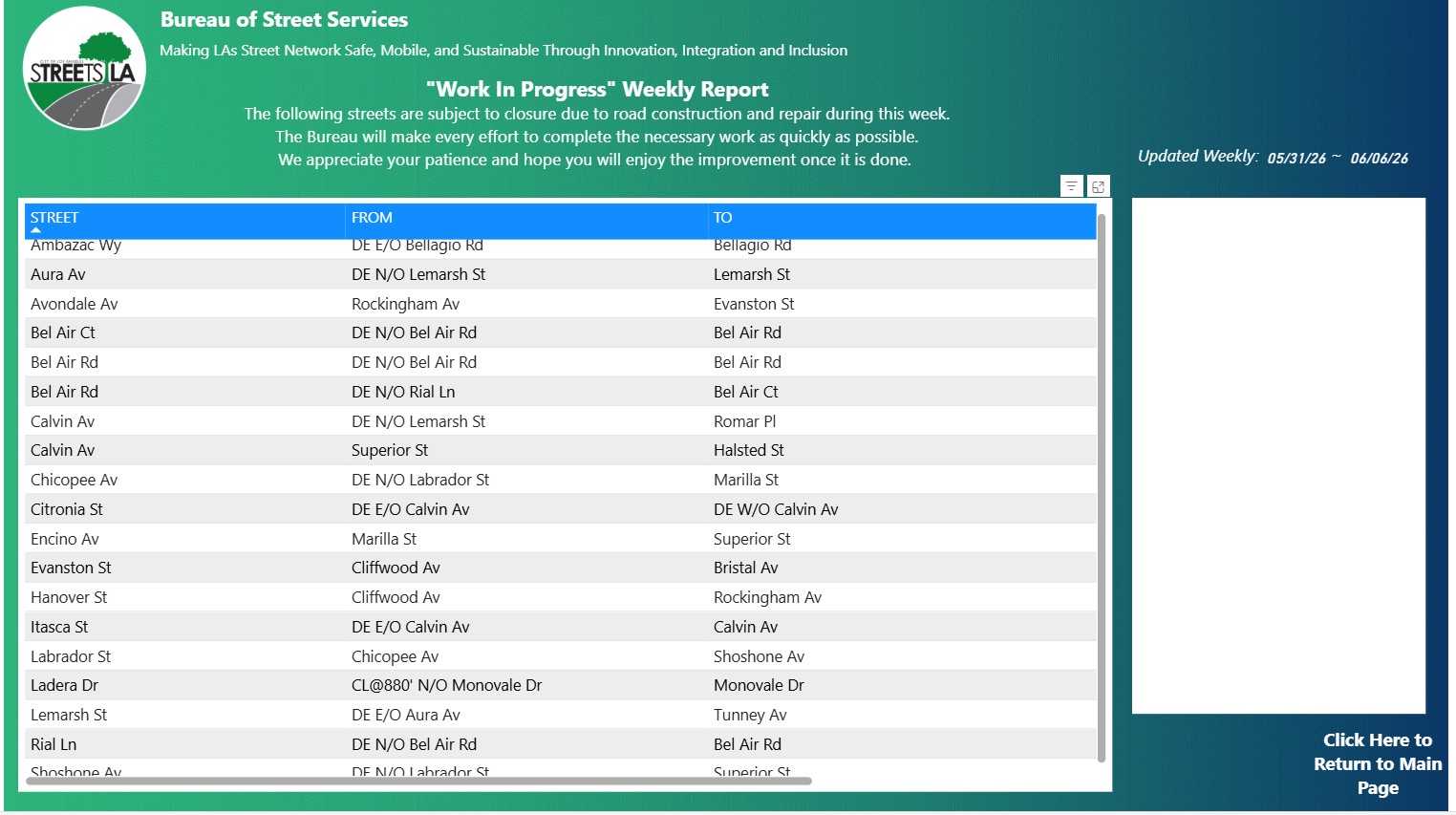
Why sidewalk-less streets? StreetsLA and city elected officials would need to answer that question. They haven’t announced the change, much less its purpose, and I only really spotted and confirmed the shift over the past couple weeks.
But it appears to be a new loophole – like “large asphalt repair” – that the city is using to skirt both accessibility law (no sidewalks means no curb ramps or sidewalk repairs required) and HLA.
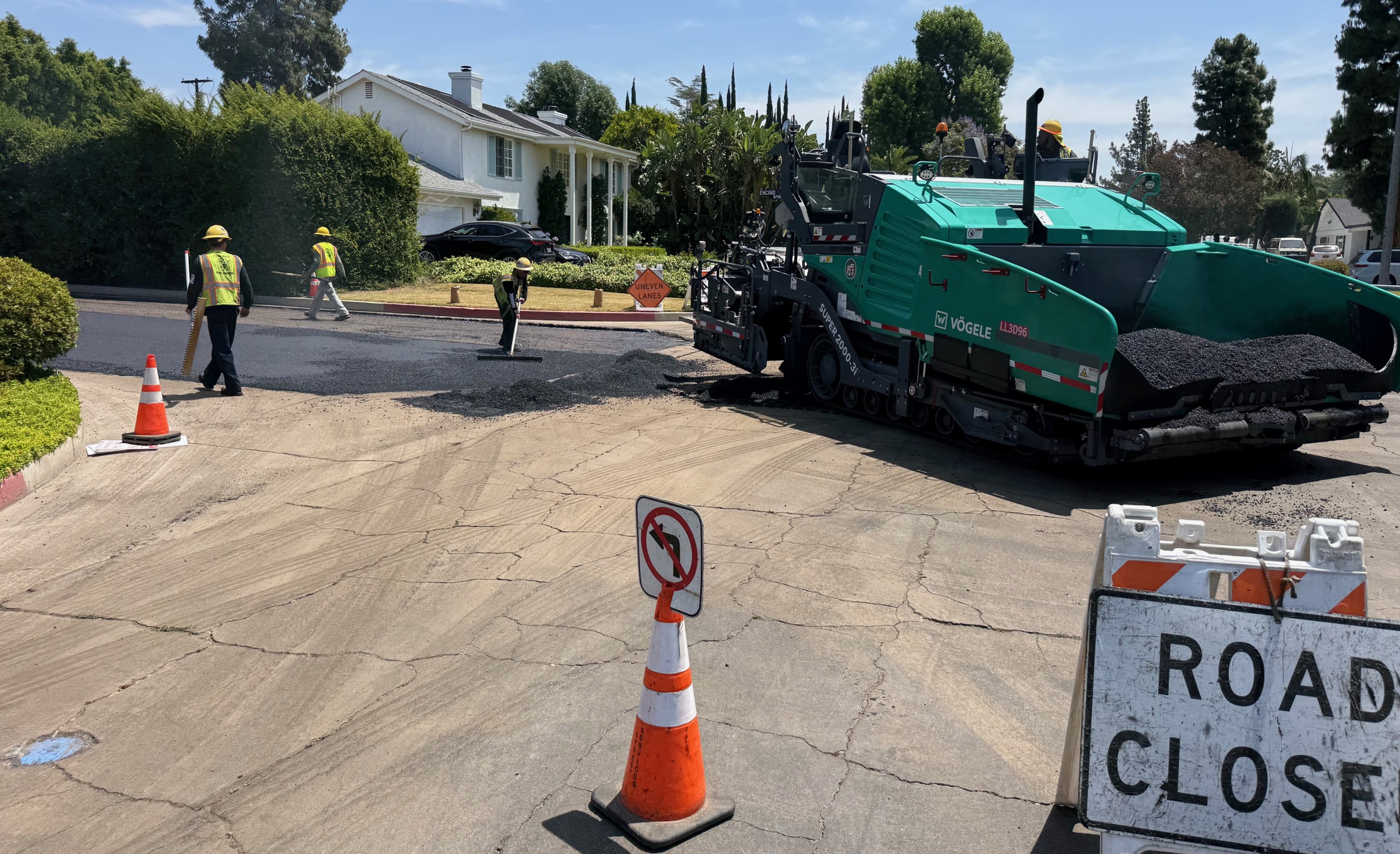
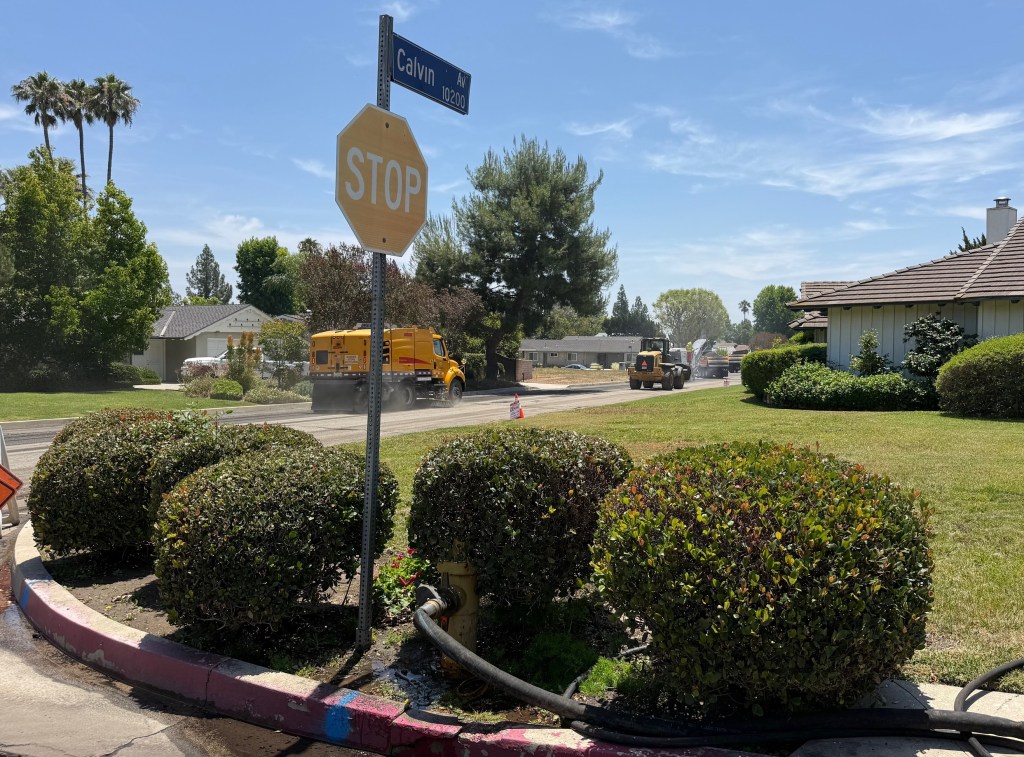
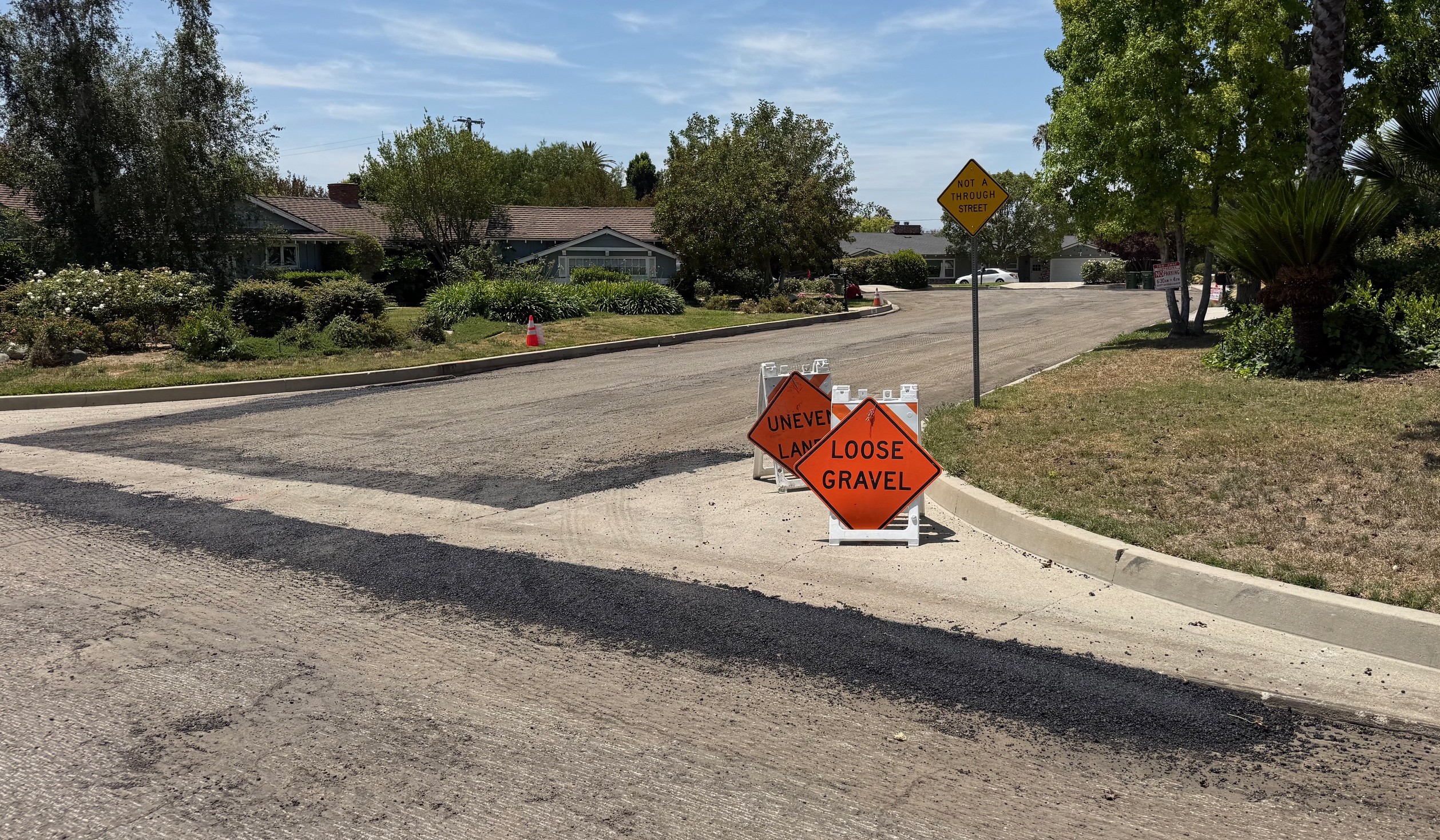
Below are photos of StreetsLA resurfacing projects underway this week.
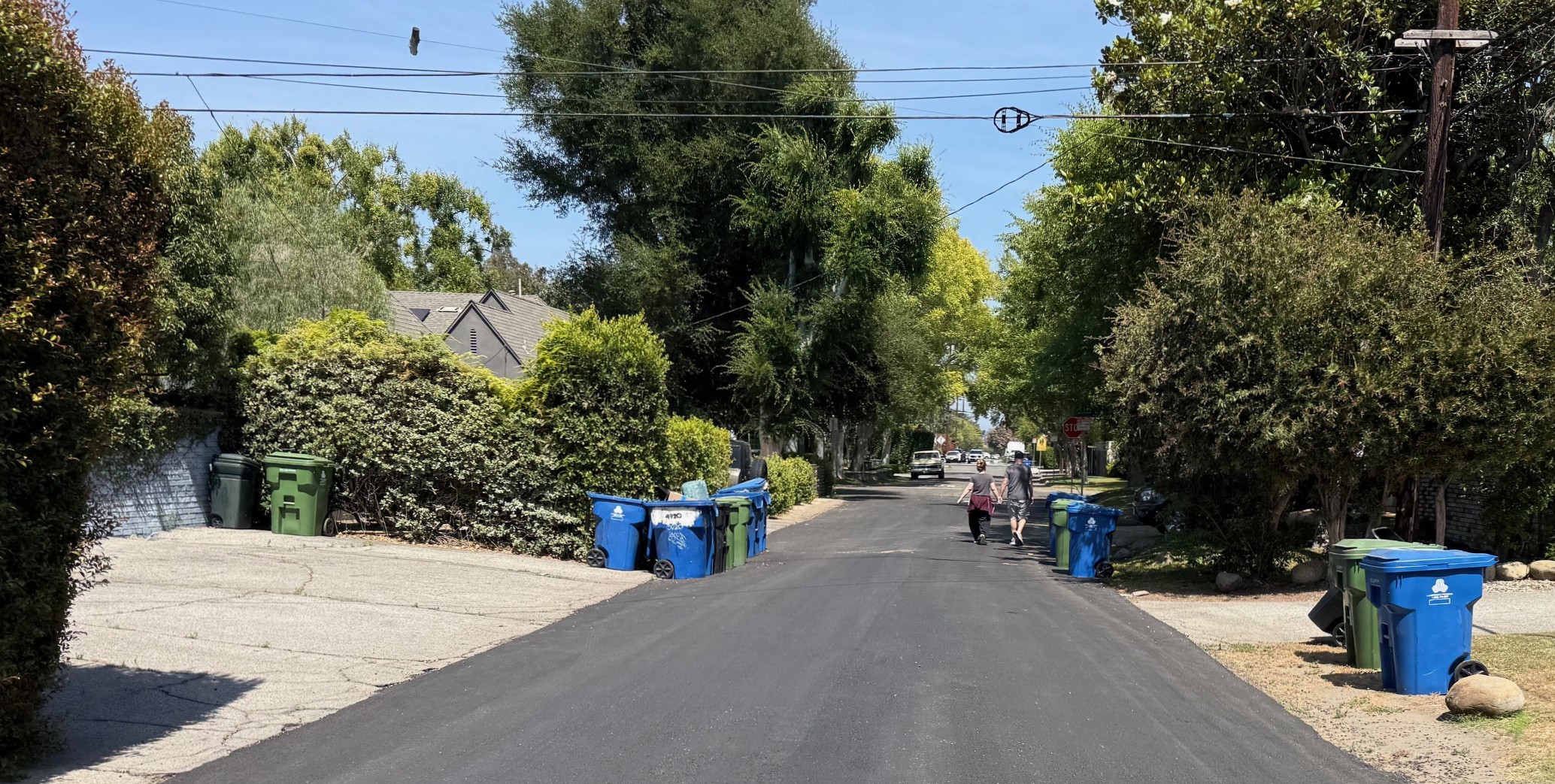
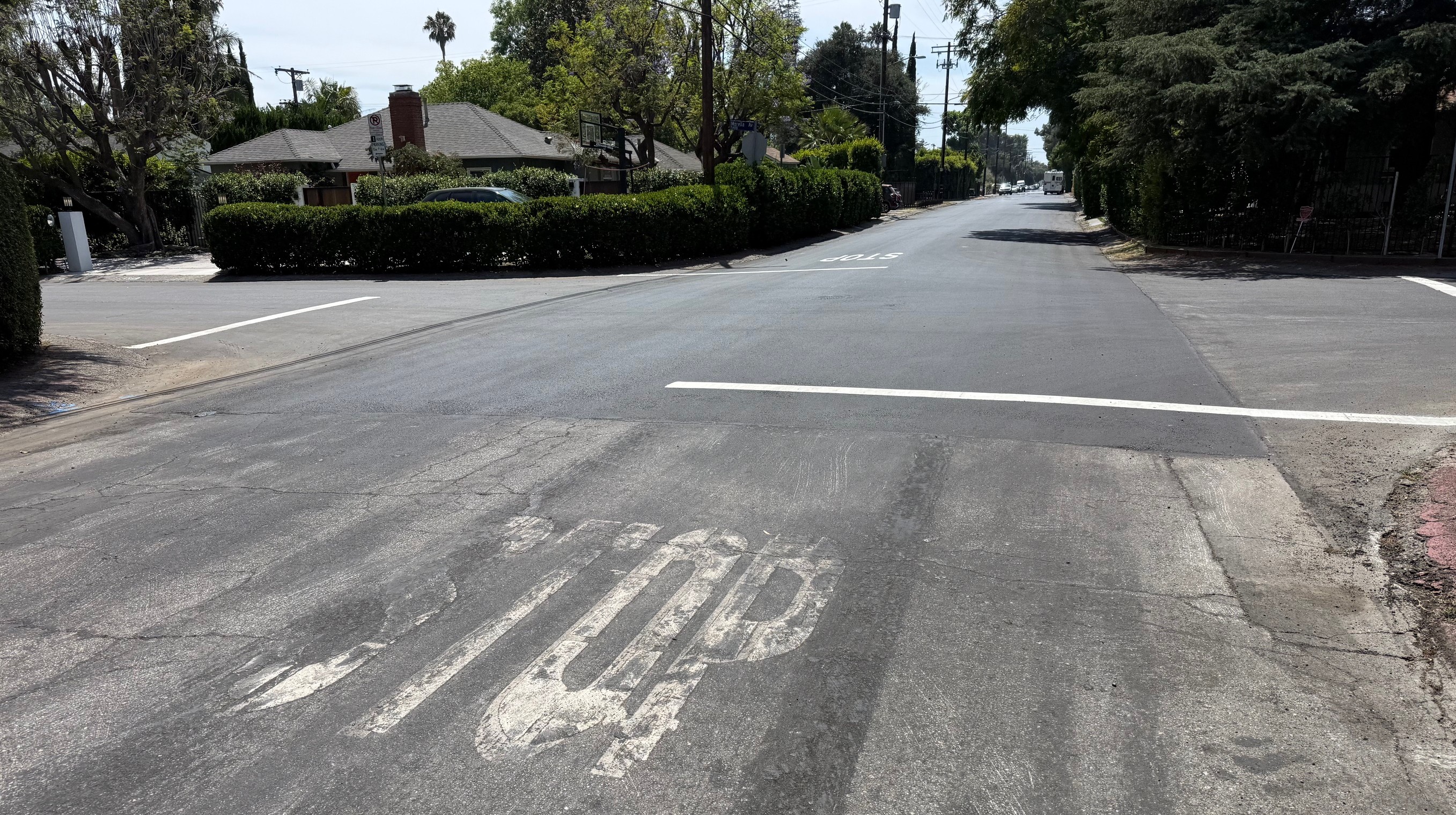
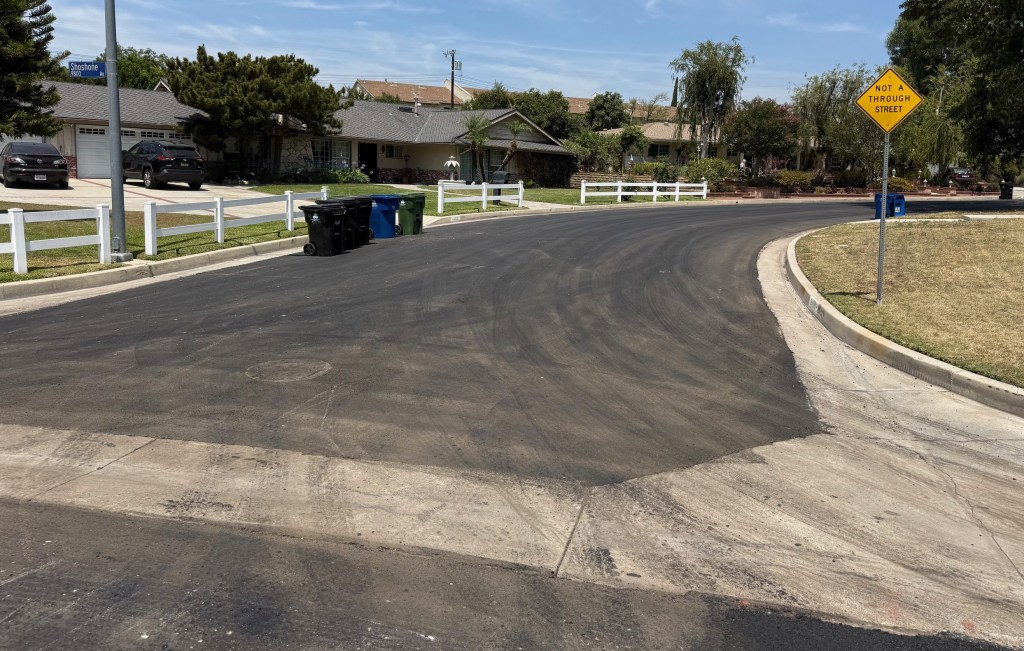
Below are photos of additional recent StreetsLA resurfacing projects (completed since late April), all on streets without sidewalks.
What is perhaps most topsy-turvy about the current city practice is that the city is repaving many street segments that are in good condition. These smaller suburban residential streets don’t see large volumes of traffic, so they tend to be in fairly good shape.
The city tracks what condition streets are in using the “Pavement Condition Index” (PCI). For every block of city street, the StreetsLA PCI scores are mapped on StreetsLA’s Pavement Preservation map (click on PCI layer in menu on the left).
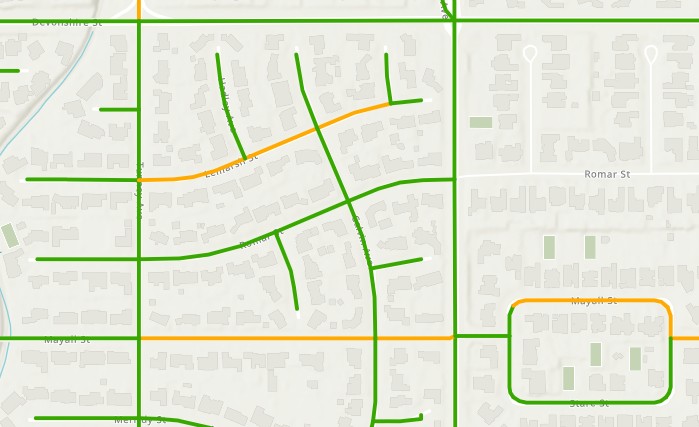
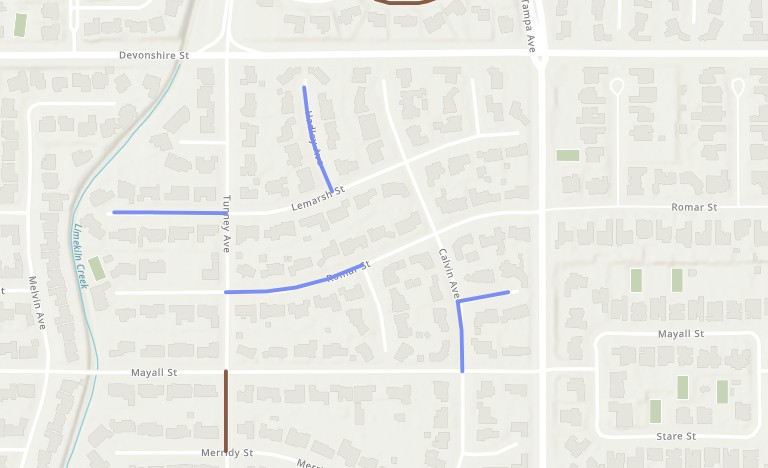
StreetsLA, in attempting to avoid ADA and HLA, is repaving streets that don’t need repaving. This week the city is repaving several street segments already in good condition, including Calvin Avenue (Lemarsh Street to Romar Street) and others.