
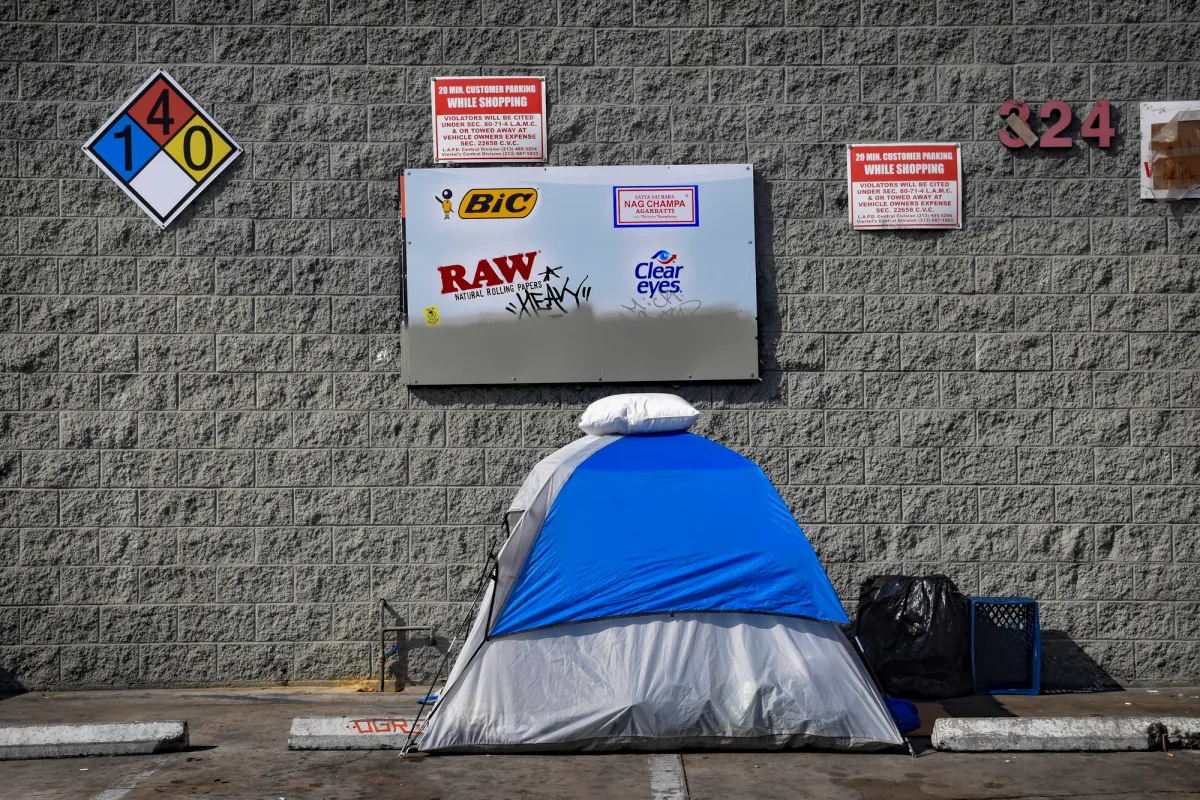
Los Angeles has entered one of the most consequential municipal elections in recent memory. This year, voters will choose a mayor, city attorney, city controller, and more than half of the City Council. At the center of nearly every race sits the same issue that has dominated civic life for years, homelessness.
Candidates have and will continue to debate encampments, public safety, sanitation, affordable housing, mental health treatment, and how billions of taxpayer dollars have been spent with results many Angelenos still struggle to see in their neighborhoods. Homelessness remains the city’s defining political problem because it is visible everywhere from sidewalks to under freeways, beside schools and across commercial corridors.
But while Los Angeles continues its long and often punitive battle over homelessness, another humanitarian crisis has transformed public discourse over the last year, which is the intensified immigration enforcement and fear surrounding ICE operations targeting our undocumented residents.
The response from Los Angeles has been immediate and emotional. Elected officials, activists, clergy, labor groups, and ordinary residents have rallied around immigrant communities with language centered on dignity, humanity, and constitutional protections. Angelenos have spoken passionately about families being separated, workers disappearing from jobs, children fearing their parents may not come home, students apprehensively attending school, residents terrified to use parks or participate in events, and communities living under constant anxiety.
And rightly so.
Los Angeles is a city of immigrants. It is impossible to separate the identity of this city from the immigrant communities that built it and continue to sustain it. The diversity people celebrate about Los Angeles, its neighborhoods, food, languages, cultures, and traditions, exists because generations of immigrants made this city their home. Immigrants are part of the tapestry Angelenos proudly point to when describing what makes Los Angeles unique in the world.
But while immigrants are broadly discussed as neighbors worthy of protection, another vulnerable population in Los Angeles is routinely discussed in profoundly dehumanizing ways, the people experiencing homelessness.
When immigration raids dominate headlines, the public conversation centers on human beings. But when homelessness dominates headlines, the language shifts almost immediately. Unhoused residents become “encampments,” “blight,” “quality-of-life concerns,” or “public safety threats.” They are often discussed less as people in crisis and more as obstacles to tourism, commerce, property values, or neighborhood comfort.
The city’s response reflects that difference in perception. Immigration raids provoke outrage. Homeless sweeps have become normalized.
One involves outside federal agents removing people from public space. The other involves local sanitation workers, law enforcement, and city crews removing people from public space. In both cases, vulnerable human beings are displaced, destabilized, and pushed into fear and uncertainty.
The comparison is uncomfortable, but Los Angeles should be willing to confront uncomfortable truths.
Over the last year, many Angelenos have passionately argued that if authorities can target undocumented immigrants today, broader erosions of civil liberties could follow tomorrow. The warning echoes the famous moral lesson often paraphrased as “first they came for them, and eventually they came for me.”
But that same principle of shared humanity is too often abandoned when discussing homelessness.
We fail to recognize how thin the line can become between accepting aggressive state action against one vulnerable group and normalizing it against another. The mechanisms may differ, but the underlying societal logic can become dangerously similar, with recurring narrative tropes such as these people are disruptive, these people are undesirable, these people should be moved somewhere else, somewhere out of sight.
Both undocumented immigrants and unhoused residents are politically vulnerable populations with limited power. Both are often unable to fully protect themselves from government systems much larger than they are. And both become easy targets when public frustration, fear, or political ambition demand visible action.
Part of this divide may stem from exhaustion. Homelessness has persisted for decades despite billions spent by the city and county government. Many residents feel frustrated and cynical after years of promises with limited visible improvement. Compassion fatigue has taken hold.
But there may also be a more uncomfortable explanation beneath Los Angeles’ unequal empathy which is economic self-interest. Los Angeles is fundamentally a service economy. Immigrant labor sustains daily life throughout the city. Undocumented workers clean homes, prepare meals, care for children, wash cars, landscape properties, work construction jobs, and keep restaurants and hotels operating. Their contributions are deeply woven into the city’s economic fabric.
By contrast, unhoused residents are often perceived through the lens of disorder and dysfunction rather than contribution. Their visibility interrupts the carefully marketed image of Los Angeles as prosperous, progressive, and desirable, a place to visit and invest in.
And layered onto this crisis is a racial disparity that should alarm anyone who claims to care about justice. Black Angelenos make up roughly 8% of the city’s population, yet account for approximately one-third of the homeless population. That staggering imbalance reflects generations of housing discrimination, economic exclusion, over-policing, and systemic inequality. Yet homelessness is rarely discussed with the same moral urgency as other racial justice issues. Instead, Black unhoused residents are disproportionately swept, displaced, and criminalized in public space.
None of this is an argument against protecting immigrants. Los Angeles absolutely should defend due process, civil rights, and vulnerable families from unjust targeting. But a city cannot credibly claim humanitarian values while selectively deciding which vulnerable people deserve humanity.
The coming election has featured endless promises to “clean up” Los Angeles. Candidates have competed to sound compassionate yet tough, humane yet pragmatic, or just fed up and promise to use ways to erase the population. Voters should listen carefully to the moral framework underneath the slogans.
A city reveals its values not by how it treats the comfortable, but by how it treats the people society finds easiest to remove from view.
Right now, Los Angeles operates under two standards of humanity. One vulnerable group is defended as deserving dignity and protection. Another is routinely displaced in the name of order and public comfort.
Both are human beings.
And until Los Angeles confronts that contradiction honestly, no campaign speech about compassion or justice, or where one group of people is uplifted and another is villainized, will truly mean very much at all.