
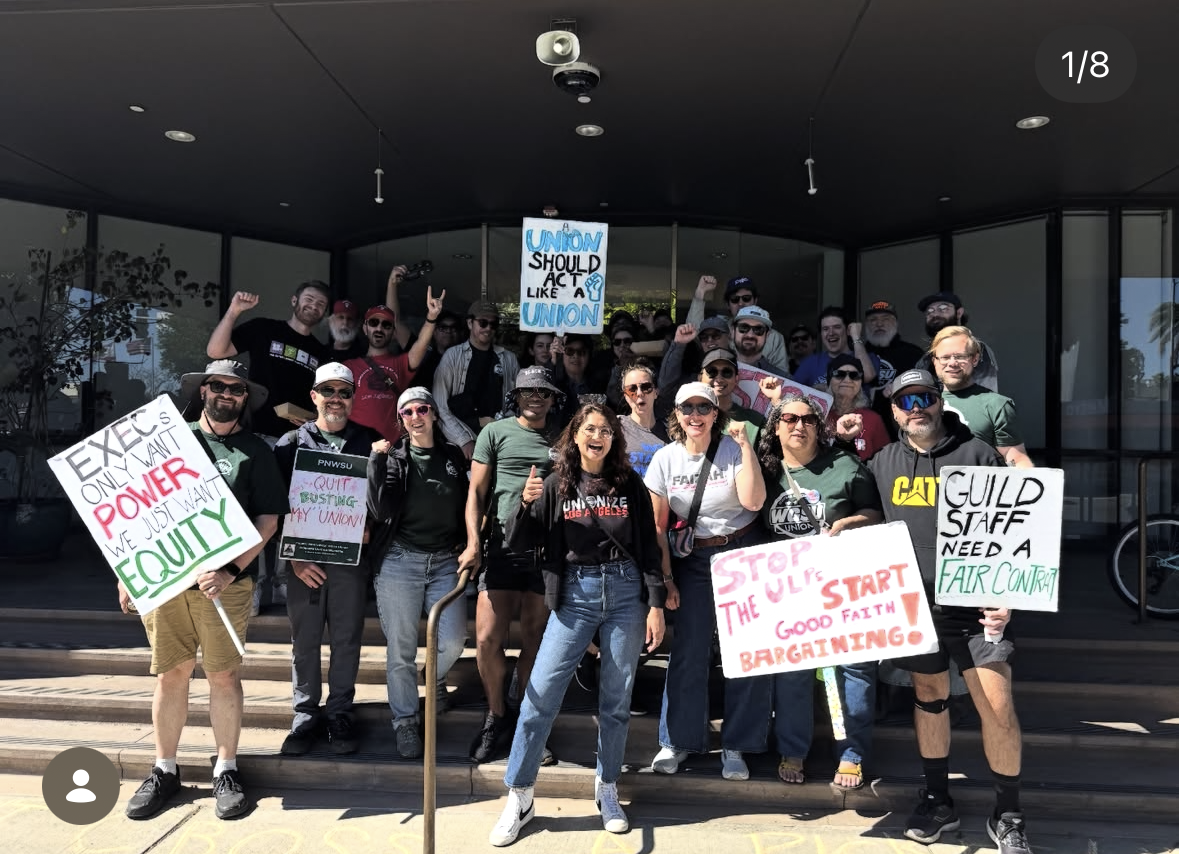
After nearly three months on strike, staff members employed by the Writers Guild of America West ratified their first union contract on May 9, ending an 82-day labor standoff that placed one of Hollywood’s most influential unions on the opposite side of its own workforce. Eighty-nine percent of Writers Guild Staff Union members voted to approve the agreement, establishing the first collective bargaining agreement between WGA West leadership and the staff union representing more than 115 employees.
The Writers Guild Staff Union represents workers across legal, communications, residuals administration, contracts, and other departments responsible for supporting the guild’s approximately 11,000 writers. Staff first organized their union in 2025 and had been bargaining for a first contract since September. When negotiations stalled, workers accused guild management of bargaining in bad faith and launched a strike in February, just weeks before WGA prepared for major studio negotiations.
The dispute created an unusual dynamic inside Hollywood labor politics. The Writers Guild has long positioned itself as one of entertainment labor’s strongest institutions, helping lead major industry organizing fights and securing landmark gains around compensation and artificial intelligence protections during the 2023 writers strike. This time, however, the guild itself became the employer facing worker organizing pressure.
The strike increasingly spilled into public view. Staff members picketed outside WGA headquarters in Los Angeles. Guild leadership canceled its Los Angeles awards ceremony rather than ask members to cross a picket line. In April, striking staff members also lost access to healthcare eligibility, escalating tensions further during negotiations.
The final agreement contains many of the core protections union staff had spent months demanding. The contract establishes seniority provisions governing layoffs, progressive discipline protections, a stepped grievance process, just-cause workplace protections, and a new labor-management committee intended to improve communication between guild leadership and staff. The agreement also includes protections preventing bargaining unit positions from being replaced by artificial intelligence systems, contractors, or temporary workers.
Economically, the contract delivers substantial gains. Staff secured more than $500,000 in wage increases across the bargaining unit. Workers will receive minimum salary increases totaling at least 12% over the three-year contract term, including an immediate 4% increase retroactive to January 1, 2026, another 4% increase scheduled for August 2026, and a third 4% increase in August 2027. The salary floor will rise dramatically from $43,000 to $57,000 retroactive to August 2025, significantly boosting compensation for the guild’s lowest paid workers. The agreement also establishes longevity pay increases for employees who remain in positions for five, ten, and fifteen years and creates a formal wage scale modeled after Writers Guild East staff union standards.
In announcing ratification, union leaders emphasized not only the economic gains but the organizing infrastructure built through the strike itself. Staff described the relationships forged during months of picketing and collective action as strengthening the union for future negotiations.