
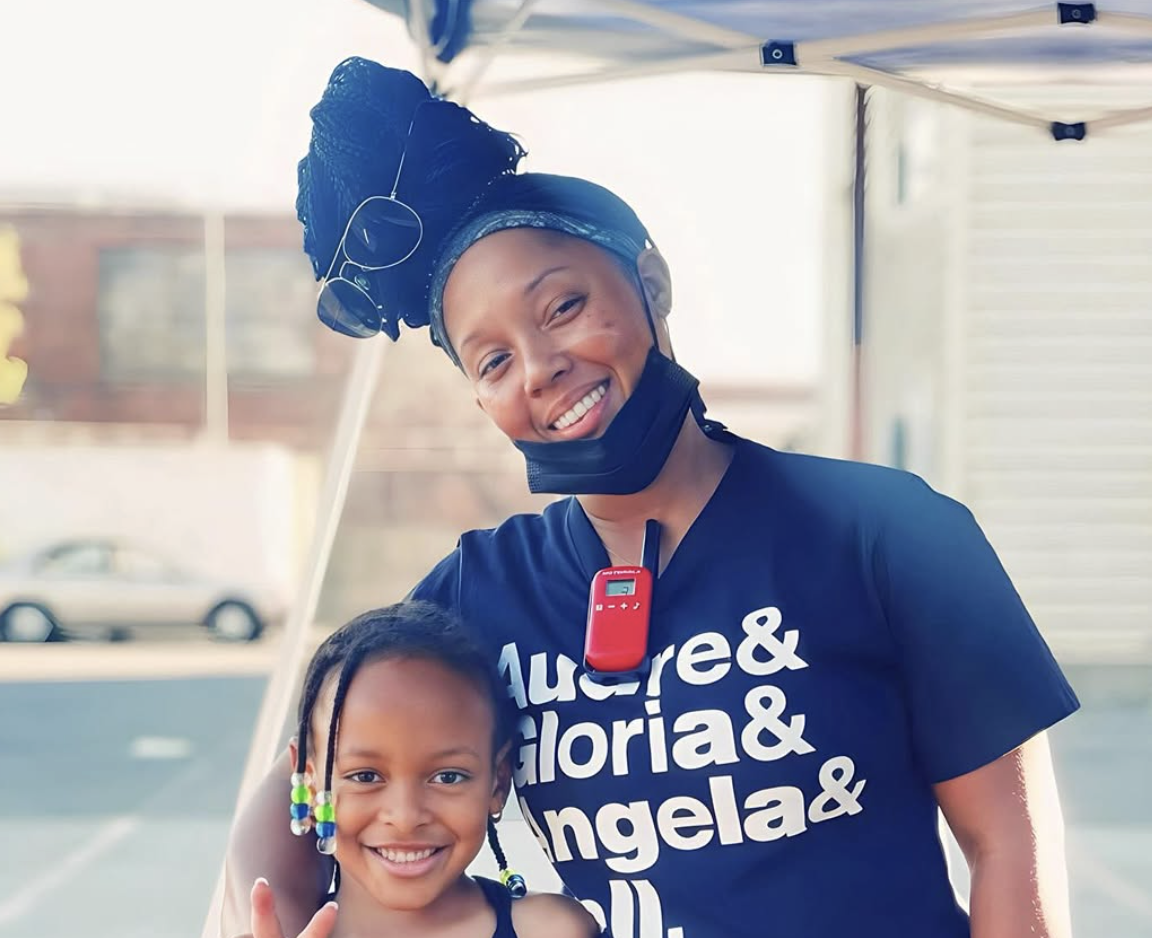
In a city where public systems often fall short of meeting basic needs, a patchwork of grassroots organizations continues to fill the gap, quietly feeding, housing, and supporting thousands of Angelenos every week. Among them is Miss Rodgers’ Neighborhood, a community-led nonprofit founded by Miss Rodgers, whose own experience with homelessness and incarceration now informs a broad network of mutual aid services reaching across Los Angeles, Long Beach, and Orange County.
Miss Rodgers’ story is the foundation of her work. A single mother of two who navigated both homelessness and incarceration, she built the organization out of lived experience. Her certifications in human services, family and addiction studies, victimology, and conflict resolution reflect a formal commitment to that work, but the scale and consistency of MRN’s programming are her direct response to concrete needs she has seen firsthand in the communities she serves.
That experience also shapes how she understands the systems her organization operates within. Miss Rodgers described a pattern she has seen repeatedly, both in her own life and in the lives of the people she now serves. Systems that claim to support people coming out of homelessness or incarceration often function in practice as barriers to stability. Instead of creating clear pathways forward, she said, they layer requirements, delays, and restrictions that make it harder for people to secure housing, maintain employment, or access consistent services. For those trying to rebuild their lives, the result is not a safety net but a cycle that can pull people back into crisis.
That perspective helps explain the structure of MRN’s programs, many of which are designed to bypass those barriers entirely. The organization conducts homeless outreach multiple times a week across Santa Ana, Skid Row, and Echo Park, distributing food, clothing, and essential supplies directly to unhoused residents without preconditions. Weekly grocery distributions provide consistent access to food for families across LA, while neighborhood fridges stocked with prepared meals, produce, and fresh food extend that access around the clock in multiple locations.
The organization’s reach extends beyond food. Monthly pop-up shops in Leimert Park offer free clothing, hygiene products, household items, and meals, transforming what might otherwise be a transactional distribution into a community gathering space. In Compton, MRN hosts its Family First Saturday events, bringing together food distribution, medical support, immigration assistance, and other services into a single, coordinated effort. Group therapy and character development sessions, often held in partnership with local shelters, provide an additional layer of support for individuals navigating recovery, reentry, and housing instability.
MRN also operates a six-month rental assistance program that pairs direct financial support with longer-term stabilization tools. Participants receive monthly grocery stipends alongside financial literacy training and advocacy support, an approach that reflects a broader understanding of housing insecurity as both an immediate and systemic issue. According to the organization, its food programs alone reach more than one million Los Angeles residents each year.
That scale, however, has not insulated the organization from instability. Last summer, MRN lost a $200,000 grant after declining to use its social media platform to promote messaging related to the genocide in Gaza. Miss Rodgers stands by her decision and says she would make the same choice again. The financial impact was immediate. Without that funding, MRN has been forced to scale back parts of its operations and delay plans to expand services.
In the months that followed, Miss Rodgers has personally absorbed many of the organization’s costs in an effort to keep programs running through the end of 2025. That stopgap effort has now created a new crisis. She is currently facing the possibility of eviction, even as she works to stabilize the organization and restore its programming.
The financial pressures extend beyond housing. Regular operations come with ongoing costs that are difficult to sustain without consistent funding. Monthly food expenses for public-facing events are estimated at $1,500, while hot meal service for Family First Saturday events can reach $2,000. These are not abstract line items, they represent meals served, families supported, and community spaces maintained.
What MRN illustrates, in concrete terms, is the degree to which Los Angeles relies on informal systems of care. While city leaders often point to large-scale programs and budget allocations, much of the day-to-day work of keeping people fed and supported is carried out by organizations like this one, operating with limited resources and a high degree of precarity. For Miss Rodgers, the stakes are personal as well as political. The same systems she now works to supplement are the ones she says too often stand in the way of people trying to move forward.