
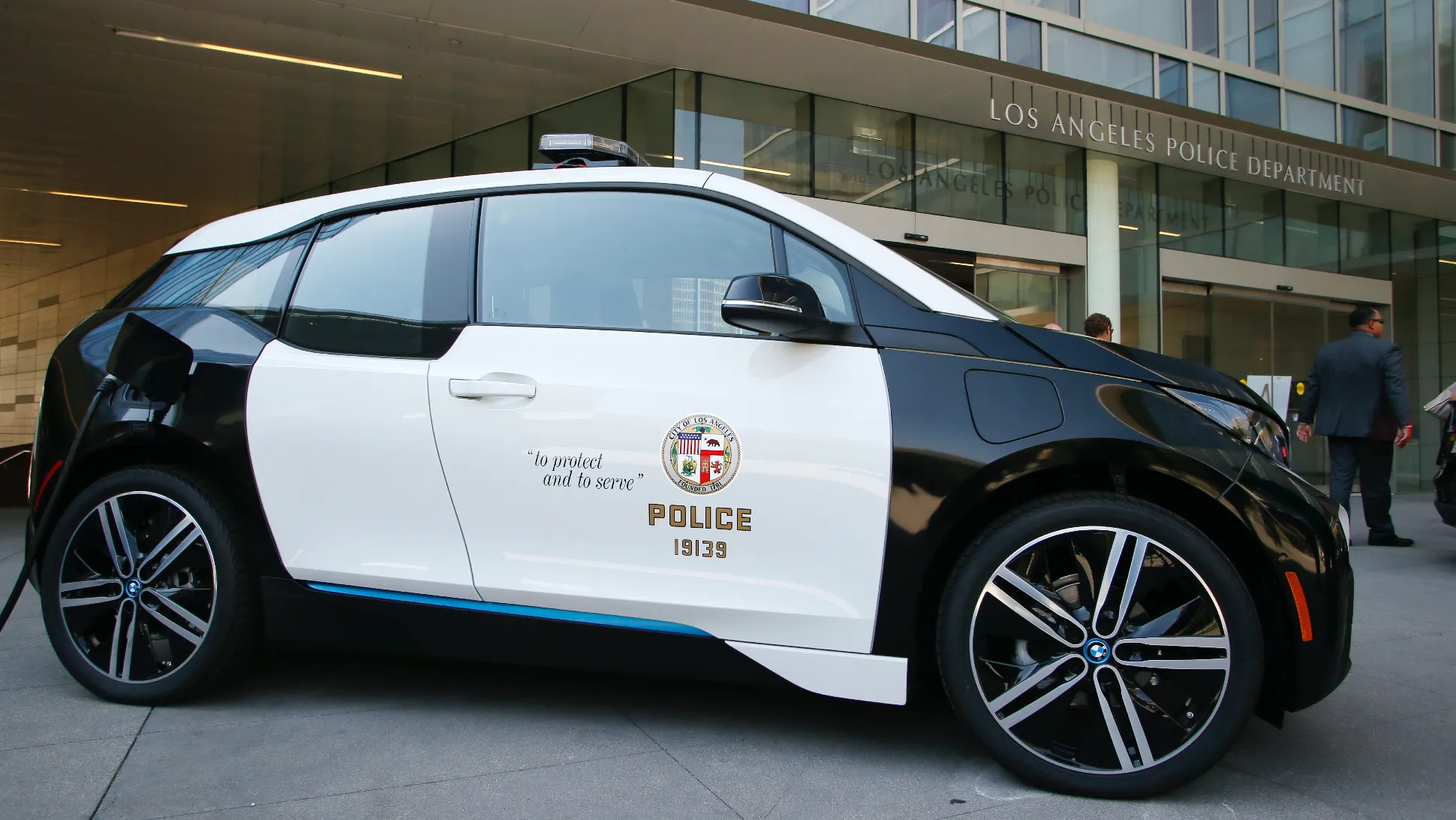
A new program is quietly expanding on the Westside, putting civilian volunteers behind the wheel of city-owned vehicles and giving them a direct line to LAPD. The program was not approved by City Council and has not been the subject of a public hearing. There has been no formal policy debate about where it operates, who participates, or what its impacts might be. At the same time, a separate program with a documented track record of reducing police contact in crisis situations is being held flat in the city budget and still does not serve the neighborhoods where these volunteer patrols are launching.
The neighborhood patrol program is the LAPD’s “Volunteer Community Patrol,” now active in Westchester. Local coverage has framed it as a story of civic engagement, with residents stepping up to fill gaps left by an understaffed and under-resourced police department. Volunteers, described as “trained civilians,” drive marked vehicles, monitor neighborhood activity, and assist in cases like missing person searches. What that framing leaves out is a more basic set of questions about authority and accountability. Who decides what gets reported? Which situations get escalated to police, and what happens when those decisions are driven by racial bias, class assumptions, and neighborhood dynamics that have long led to unequal and harmful outcomes?
The vehicles themselves reflect a history the city has not fully reckoned with. The cars appear to be BMW i3 electric vehicles originally leased by the city beginning in 2016 as part of a sustainability initiative for the LAPD. The program cost more than $10 million in public funds and was intended for non-emergency use. It quickly became a symbol of mismanagement. The vehicles’ limited range made them impractical for patrol, and reporting later showed many were barely used or repurposed for personal errands. Within a few years, the city began offloading them at steep losses. Now, some of those same vehicles appear to have been reassigned to civilian volunteers for neighborhood patrols. What was once deemed unsuitable for sworn officers is now considered adequate for residents tasked with monitoring their communities.
The more significant issue is structural. The Volunteer Community Patrol exists entirely within LAPD’s internal authority. Under the Los Angeles City Charter, the department answers to the Board of Police Commissioners, not the City Council. That means programs like this can be created and expanded without legislative approval or public oversight. A divisional commanding officer can determine how the program operates, who is accepted as a volunteer, and how resources like vehicles are deployed. There is no requirement for a civil rights review, no standardized framework for training, and no mechanism for evaluating impacts across neighborhoods.
Training is one of the clearest gaps in this program. Public descriptions of the program focus on operational basics such as vehicle handling, radio procedures, and general duties, but there is no evidence of a standardized curriculum addressing bias, de-escalation, or how to navigate encounters involving unhoused residents or people in mental health crisis. At the same time, volunteers are encouraged to monitor neighborhood communication channels, including apps and group chats that often serve as hubs for reporting “suspicious” activity. In practice, those spaces frequently amplify complaints about unhoused neighbors or people perceived as out of place because of the color of their skin. The addition of city vehicles and direct police communication channels transforms those informal networks into something with institutional backing.
The geography of the rollout matters. Westchester is a relatively affluent, majority homeowner neighborhood with strong existing neighborhood watch infrastructure and close relationships with local LAPD leadership. It is also a neighborhood shaped by a long history of exclusion, where deed restrictions once explicitly limited residency to white homeowners and where informal practices like racial steering continued even after the Fair Housing Act. That history still informs who is seen as belonging and who is viewed with suspicion.
The Volunteer Community Patrol is being built from within that base, drawing on residents who are already active as block captains or neighborhood organizers. They are the ones deciding what looks suspicious, what gets called in, and which situations are escalated to police. The result is a formalization of existing surveillance patterns, now reinforced by city resources, a direct line to LAPD, and the visual authority of official markings and equipment.
Across the city, a very different approach to public safety remains underfunded and unevenly distributed. The Unarmed Model of Crisis Response was launched to divert non-violent 911 calls to trained mental health professionals instead of police officers. In its first year, it handled thousands of calls, resolved the vast majority without police involvement, and connected many people directly to services. It also operates at a lower cost per call than traditional police responses. Despite those outcomes, the program does not cover Pacific Division, which includes Westchester. Residents calling for a welfare check or reporting a mental health crisis in that area are still routed to police, even as volunteers with radios expand their role in identifying and escalating those situations.
The contrast between the two programs highlights a broader set of priorities. One model relies on trained professionals responding to crisis with the goal of reducing harm and connecting people to care. The other expands the role of civilian observers in identifying and reporting perceived problems, often without clear guardrails or oversight. One has been studied, measured, and shown to reduce police contact, while the other is being implemented largely out of public view and outside the legislative process.
Supporters of the volunteer patrol emphasize that participants do not make arrests and are intended to serve as extra eyes and ears. But the concept of deterrence that often accompanies these programs is not neutral. In practice, it has historically meant increased scrutiny of people who are already marginalized or seen as not belonging. Research on neighborhood watch programs has repeatedly raised concerns about racial profiling and unequal enforcement, particularly in wealthier communities where residents have greater access to institutional channels and resources.
Every additional call routed through police creates the potential for escalation, including encounters that can lead to arrest, use of force, or legal liability for the city. At a time when Los Angeles is already facing monumental costs from police-related settlements, decisions about how calls are generated and handled have direct fiscal as well as human impacts. Expanding programs that increase police contact while limiting those that reduce it moves the city in the wrong direction.
The timing adds another layer of urgency. With the 2028 Summer Olympics approaching, Los Angeles has committed to presenting itself as a global city capable of managing public safety and public health challenges at scale. Whether a person in crisis is met by a mental health responder or an armed officer is exactly the kind of decision that will define how this city is experienced, not just by residents, but by millions of visitors and a global audience.