
Mayor Karen Bass’ flagship homelessness program, Inside Safe, has spent more than $300 million since its December 2022 launch and moved nearly 5,800 people off the streets and into interim motel housing. It has also, according to government data and community organizers, failed the people it was designed to serve in nearly every measurable way.
The clearest evidence is that about 40% of all Inside Safe participants, roughly 2,300 people, had returned to unsheltered homelessness as of December 2025, according to a Los Angeles Times analysis of data from the Los Angeles Homeless Services Authority. At the program’s one-year mark, that figure was around 20%. The program was designed to move participants into permanent housing within 90 days, with a maximum stay of six months. The average stay is now 362 days.
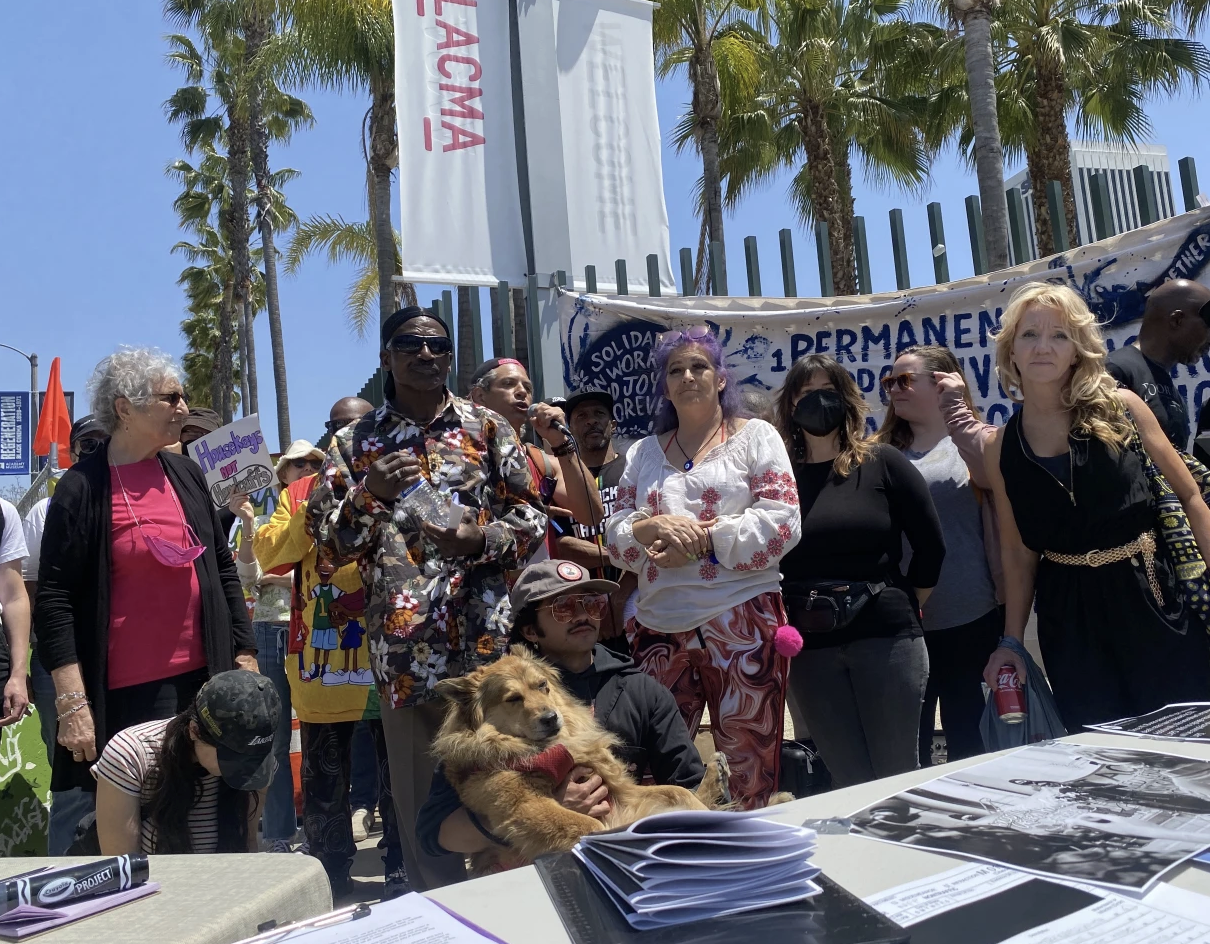
In mid-2024, the Inside Starving Coalition, a group of program participants and allied community organizations, surveyed 56 residents across nine Inside Safe motel sites. Their findings were damning.
More than two-thirds of respondents said no one from Inside Safe had worked with them to find permanent housing, despite that being the program’s stated purpose. Nearly half had received no social services at all. More than a third didn’t know who their case manager was, citing constant staff turnover and poor communication. Three out of four said mental health services had never been offered, even once.
Food was its own crisis. When Inside Safe launched, some sites provided no meals at all, leaving participants, many moved far from their neighborhoods and support networks, to go hungry. After sustained pressure from the Inside Starving campaign, meals were introduced at more sites, but quality remained a serious problem. Two out of three survey respondents said the food had made them sick. Participants described meals as “horrible” and “sometimes expired,” and the program repeatedly failed to accommodate religious dietary restrictions. Cooking appliances were confiscated. As one participant put it: “You either eat it or you starve.”
Conditions grew increasingly restrictive over time. Nearly 60% of respondents said the rules had become more strict and carceral since they moved in. Staff conducted room checks multiple times a day, reportedly entering while residents slept and going through personal belongings. People described the experience as “like being policed or in prison.” One wrote: “I was better off living in a tent.”
Most Inside Safe placements are time-limited rental subsidies lasting one year, after which participants are expected to pay market-rate rent in a city where the average studio costs well over $1,600 a month and minimum wage is $17.28 an hour. Of the 539 people Inside Safe had housed as of mid-2024, 236 had already lost that housing. Only 68 participants, just 2.5% of the total, had been placed in permanent supportive housing, the model research consistently shows produces lasting results.
Inside Safe’s failures reflect deeper structural problems that no single program can fix on its own. Homelessness in Los Angeles is as much an income problem as a housing problem. The cost of housing has soared over four decades while wages at the bottom have stagnated. General Relief, the county’s cash assistance for its poorest residents, remains at $221 per month, unchanged since the early 1980s, when that amount could actually cover a room in a cheap residential hotel.
The city already has a tool designed to address this at scale. Measure ULA, the mansion tax voters passed in 2022 with 58% of the vote, has raised roughly $830 million for affordable housing construction, direct rental assistance, and eviction defense. This is exactly the kind of upstream intervention that prevents homelessness before it starts and costs far less than re-housing someone after they have lost everything. But ULA is under threat, and every dollar carved out of its coffers is a dollar that won’t keep a family housed or build housing that stays affordable in perpetuity.
Los Angeles needs an estimated 267,000 additional affordable units to meet renters’ needs and produces roughly 21,000 per year. Social housing, built with public funding and kept permanently off the speculative market, is the only model that can realistically close that gap. No amount of motel placements will do it.
Research is unambiguous that permanent supportive housing, placing people directly into stable housing with voluntary wraparound services, is the most effective approach for people experiencing chronic homelessness. Inside Safe has placed just 2.5% of its participants there. The rest have been cycled through expensive interim settings with restrictive, punitive conditions that survey respondents repeatedly compared to incarceration, and that research suggests are a primary reason unhoused people refuse shelter in the first place.
Bass has defended Inside Safe, crediting it with a 17.5% reduction in unsheltered homelessness over two years and a double-digit drop in the homeless mortality rate in 2024. The share of participants reaching permanent housing has grown from about 15% two years ago to roughly 25% today. But much of what the program counts as “permanent housing” consists of time-limited subsidies that have already lapsed for hundreds of people.
The program’s $341 million budget was enough to cover a year’s market-rate rent for more than 17,000 studio apartments, yet fewer than 3,000 people were served with those resources. Forty-four people died in the program, and four in ten participants are back on the street. The pressure to do more than study the problem is mounting, and the most obvious starting point remains consistently missing from the policy conversation: asking the people the program is meant to serve what they actually need, and building something designed to deliver it.