
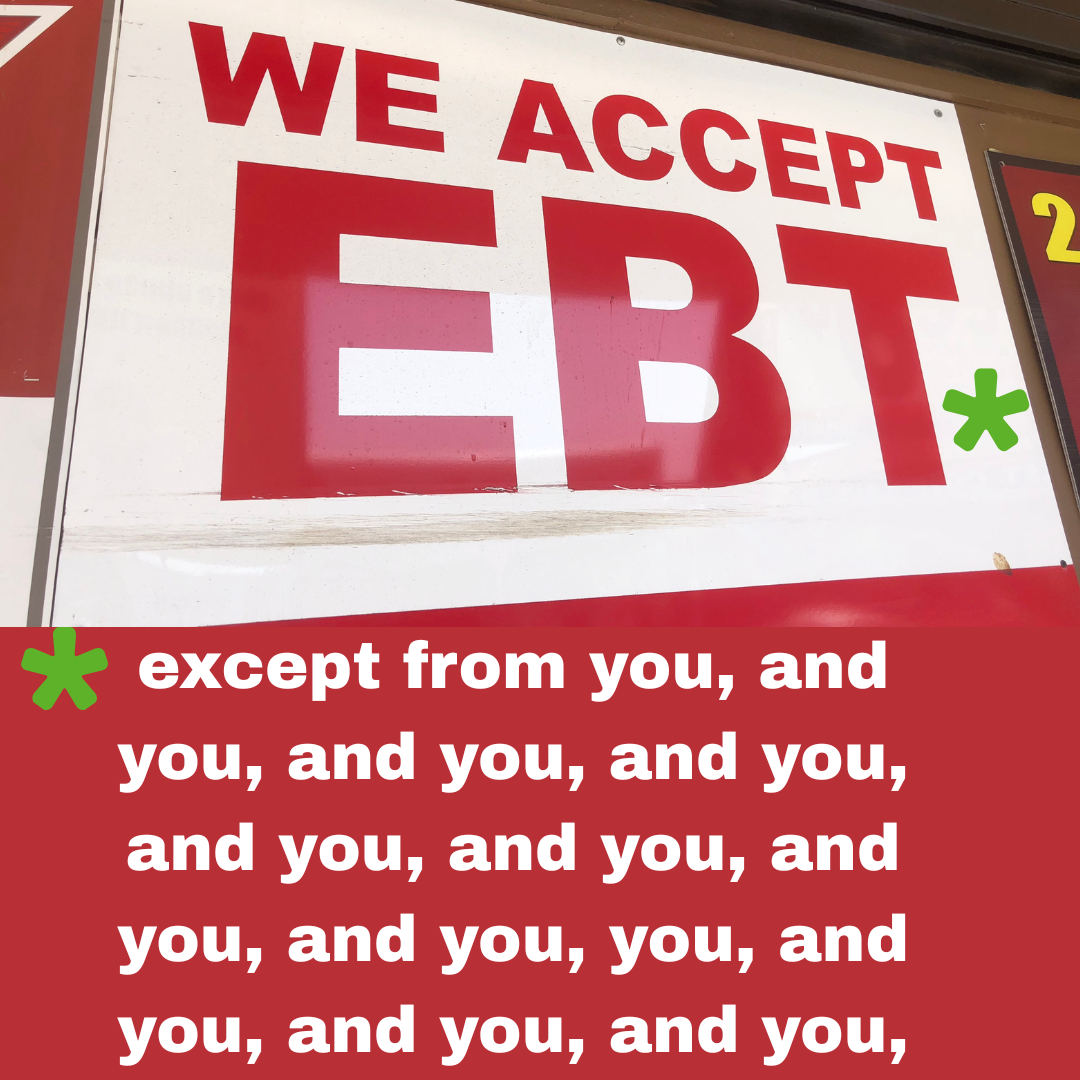
On April 1, 2026, thousands of people in Los Angeles County lost access to CalFresh, California’s food assistance program, not because their circumstances changed, but because federal law changed around them. The people cut off include refugees who fled violence and persecution, asylees who won protection in immigration court, survivors of human trafficking, and domestic violence victims with approved federal petitions. They did everything right, but are now without desperately needed grocery benefits.
In LA County alone, 10,860 people lost CalFresh eligibility on the first of the month and statewide, roughly 72,000 lawfully present immigrants are affected. The driving force is H.R. 1, the “One Big Beautiful Bill Act,” signed by President Trump on July 4, 2025, which made the deepest cuts to the federal SNAP nutrition program in its history.
Mar Vista sits in one of the most immigrant-dense regions of California, and many of the families most affected live right in our neighborhood. Understanding what is happening matters for neighbors, local organizations, and anyone who relies on or supports our community food network.
What H.R. 1 actually changed
Before this law, a wide range of immigrants who had lawful status could receive SNAP benefits, including refugees, asylees, parolees, survivors of trafficking, people with approved Violence Against Women Act petitions, and Special Immigrant Visa holders from Afghanistan and Iraq, among others. H.R. 1 collapsed that list down to three groups: lawful permanent residents (subject to a five-year waiting period), Cuban and Haitian entrants, and citizens of Compact of Free Association nations including Micronesia, the Marshall Islands, and Palau.
Everyone else lost eligibility, including refugees who arrived two years ago, asylees who went through the immigration court process and won, Ukrainian parolees, and Afghan allies who assisted the U.S. military. All are cut off at their next recertification, and new applicants from these groups are denied immediately.
The National Immigration Law Center has flagged an additional complication: some county offices are wrongly stripping benefits from green card holders who previously held refugee or asylee status, because federal guidance has been “confusing and contradictory” about how to handle people who adjusted status\. If you or someone you know received a termination notice and believes it may be an error, legal aid resources are listed at the bottom of this article.
The chilling effect may be the bigger problem
The direct cuts are significant. But researchers and community health workers say an even larger harm may be that eligible immigrants will stop using benefits because they are afraid. The UCLA Latino Policy and Politics Institute found that 38% of Latino CalFresh enrollees in California report avoiding government benefits due to immigration concerns, and 21% of Asian American and Pacific Islander enrollees said the same. A KFF survey from 2025 found that 41% of immigrant adults worry about detention or deportation, and one in five said they had stopped participating in a food, healthcare, or housing program in the past year.
Part of this fear traces to a data-sharing directive. In May 2025, the USDA required states to hand over all SNAP records to the federal government for what it described as “real-time program data analyses”. For immigrants already wary of enforcement, the idea that applying for food assistance could draw federal attention is enough to abandon benefits they are fully entitled to receive. A proposed new public charge rule, which would allow immigration officers to count SNAP use against a visa or green card application, is not yet finalized, but advocates say it is already discouraging enrollment.
Mixed-status families face a compounding crunch. U.S. citizen children remain technically eligible, but household benefits are reduced to cover only the eligible members while all household income still counts against the limit. Research consistently shows that when parents lose eligibility, their citizen children become far less likely to enroll at all.
A timeline of what has happened and what is still to come
- February 2025: Executive Order 14218 directs agencies to share SNAP records with DHS and enhance identity verification for immigrant applicants.
- July 4, 2025: H.R. 1 signed into law. Refugees, asylees, parolees, trafficking survivors, and VAWA petitioners lose federal SNAP eligibility.
- November 2025: Standard utility allowance changes reduce or eliminate CalFresh benefits for 462,000 Californians.
- November 2025: DHS publishes a proposed public charge rule giving officers discretion to count SNAP use against visa and green card applications. Not yet finalized but already causing disenrollment.
- April 1, 2026: Implementation begins. 10,860 LA County immigrants lose CalFresh at their next recertification. Nourish California projects the majority of affected households will lose benefits within six months.
- June 1, 2026: Expanded work requirements take effect, raising the age ceiling from 54 to 64 and shifting the child exemption from under 18 to under 14. An estimated 665,500 additional Californians risk losing benefits.
- October 2026: Federal administrative cost-sharing shifts to states. California begins absorbing a larger share of program costs.
- October 2027: California could owe up to 15% of total CalFresh benefit costs based on its error rate, a potential $2 billion annual liability. California’s delayed expansion of state food benefits for undocumented seniors 55 and older finally takes effect, two years behind the original timeline.
What California is doing, and where the gaps are
California’s main protective tool is the California Food Assistance Program (CFAP), a state-funded program that mirrors CalFresh and uses the same EBT card. Immigrants losing federal CalFresh eligibility will be automatically evaluated for CFAP at recertification, so that no separate application is needed. About 63,000 people were enrolled in CFAP before these cuts, at a cost of $135 million in 2024-25.
But CFAP does not cover everyone losing CalFresh, and not all humanitarian immigrants qualify. The expansion to cover undocumented immigrants age 55 and older, originally promised for October 2025, was pushed back two years to October 2027 as a budget measure. The state has allocated $72 million one-time to support food banks, dropping back to $8 million in ongoing funding the following year. And Governor Newsom’s 2026-27 budget proposes no new revenue to replace lost federal benefits.
The Food4All coalition, led by Nourish California and the California Immigrant Policy Center, is pushing for the state budget to restore benefits to humanitarian immigrants now and expand CFAP to all ages. AB 1049, moving through the legislature, would remove rules that count a sponsor’s income against an immigrant’s CFAP eligibility. Washington State has already committed to shifting affected immigrants automatically to state-funded benefits with no coverage gap, but California has not made that commitment.
How to give help and get help on the Westside
- West Los Rapid Response: Mutual aid and rapid response support for immigrant neighbors on the Westside.
- Food for Comrades: Food recovery and distribution across the Westside and Mid-City. Volunteer or donate via Venmo @foodforcomrades.
- Westside Vendor Buyout: Support immigrant street vendors and fund food redistribution to neighbors in need.
- YMCA FeedLA: Free groceries, warm meals, and home delivery at all 29 LA County YMCA locations. No membership required. Email socialimpact@ymcala.org or call (323) 244-9077. ymcala.org/feedla
- Westside Food Bank: 1710 22nd St, Santa Monica. Supplies about 70 agencies across West LA, Culver City, Venice, and Mar Vista.
- Venice Family Clinic: Locations in Venice, Mar Vista, and Santa Monica. Distributed nearly 1 million pounds of food in 2024 and screens patients for food insecurity