
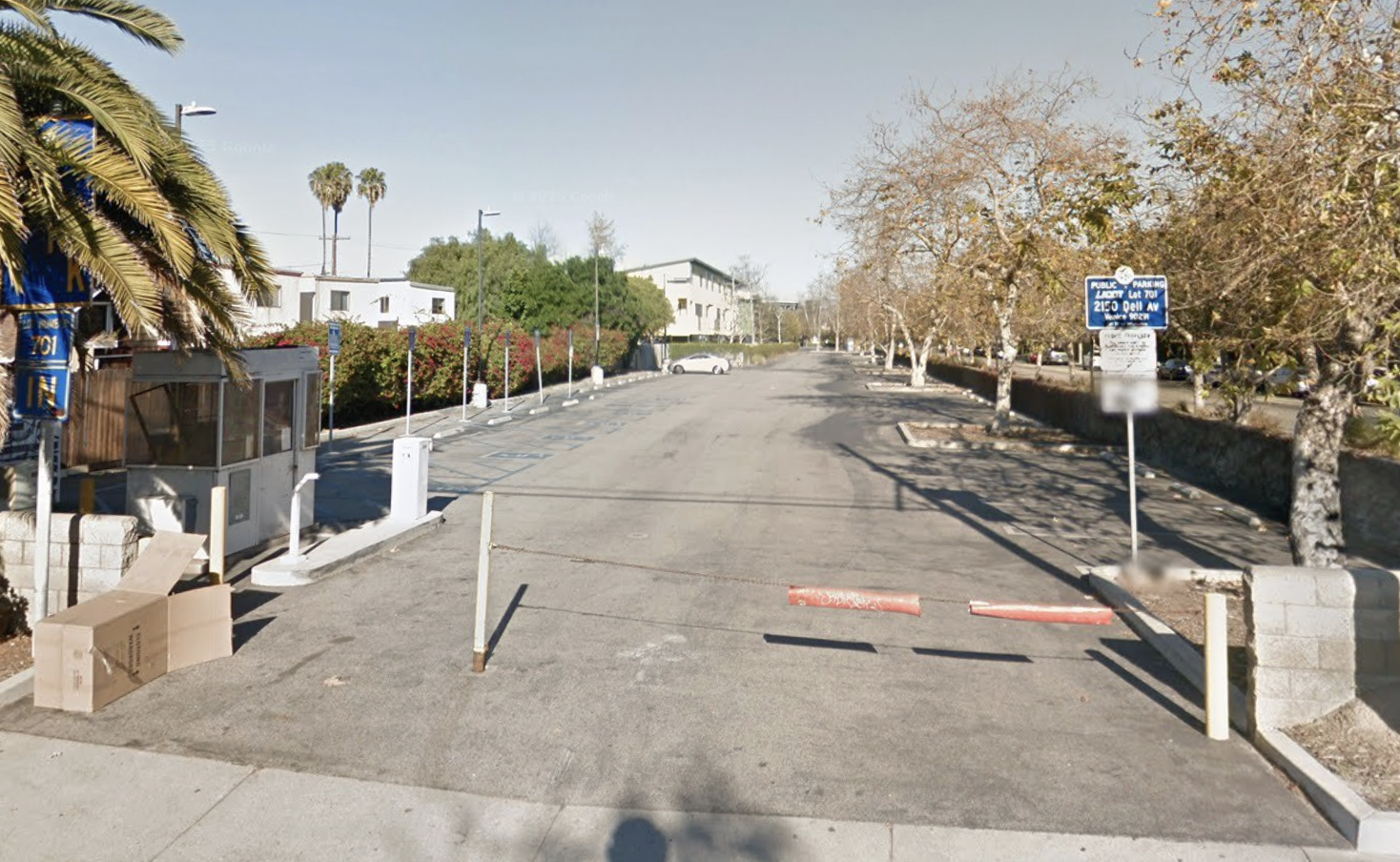
What’s the latest tool in Traci Park’s toolbox for fighting the Venice Dell affordable housing project? A $175,000 feasibility study.
At the March 11 meeting of the City Council’s Transportation Committee, Park introduced an amendment directing LADOT to spend $175,000 studying whether the Venice Dell site, the city-owned parking lot known as Lot 731, could instead become a “mobility hub.” In other words, instead of building housing that has already been approved and funded, the City of Los Angeles is now going to study something else.
The amount itself is striking. In Los Angeles, roughly $26,000 a year can fund a supportive housing subsidy slot with services and case management. The $175,000 Park wants to spend on this study could house about seven people for an entire year. Instead, it will pay for a consultant report exploring an idea that does not yet exist.
That idea is also still highly conceptual. At the committee meeting, LADOT staff explained that the next step would simply be hiring a consultant to analyze the site, study transportation needs, and determine what kinds of mobility services might even make sense there. The feasibility study alone is expected to take 10 to 12 months. If the City decided to move forward after that, any real project would still require additional approvals, including permits from the California Coastal Commission. LADOT also acknowledged that no funding has been identified to actually build the mobility hub.
In other words, the City is preparing to spend $175,000 studying a project that has no design, no funding, and no clear timeline for construction. Meanwhile, the housing project that would go on this site is not hypothetical. The Venice Dell development has already cleared nearly every hurdle that normally stops affordable housing in Los Angeles. It was selected through a city process years ago, approved by the Los Angeles City Council, and approved by the California Coastal Commission. A Superior Court judge upheld the City’s approval of the development agreement, and state housing agencies have committed more than $40 million in funding.
When built, Venice Dell would provide 120 units of deeply affordable housing, including permanent supportive housing for people experiencing homelessness. In other words, this is not a proposal waiting for approval. It is an approved project that should already be under construction.
Supporters of the mobility hub proposal have pointed to the 2028 Olympics as justification for studying the concept now. But given the timeline laid out by LADOT, it is difficult to see how anything could actually be built in time. The feasibility study alone would take roughly a year, and any project would still need approvals from agencies like the California Coastal Commission, a process that can easily add another year or more. Meanwhile, the affordable housing project already approved for Lot 731 has already cleared the Coastal Commission process.
The geography of the proposal also raises obvious questions. Lot 731 is not located at a major transit junction. Venice’s bus activity is concentrated around Windward Circle, where several bus lines converge and where transportation advocates have long identified the logical location for a transit hub. The parking lot Park wants to study sits a couple of blocks away.
And if the argument for a mobility hub is really about preserving parking, it starts to look like an excuse. The Venice Dell project replaces the existing surface lot with an underground parking structure, so the neighborhood would end up with both 120 new apartments and structured parking replacing the current lot. Instead, the City is now studying how to keep the empty lot exactly the way it is.
During the committee discussion, Park framed the proposal as a long-term mobility improvement and suggested the site could support off-site parking and shuttle service to help restaurants meet parking requirements tied to outdoor dining permits. That is not what a mobility hub is supposed to be, but the framing was enough to move the amendment forward. Councilmember Eunisses Hernandez voted against the $175,000 study, while committee chair Heather Hutt, Councilmember Adrin Nazarian, and Park voted yes. The amendment now heads to the Housing and Homelessness Committee.