
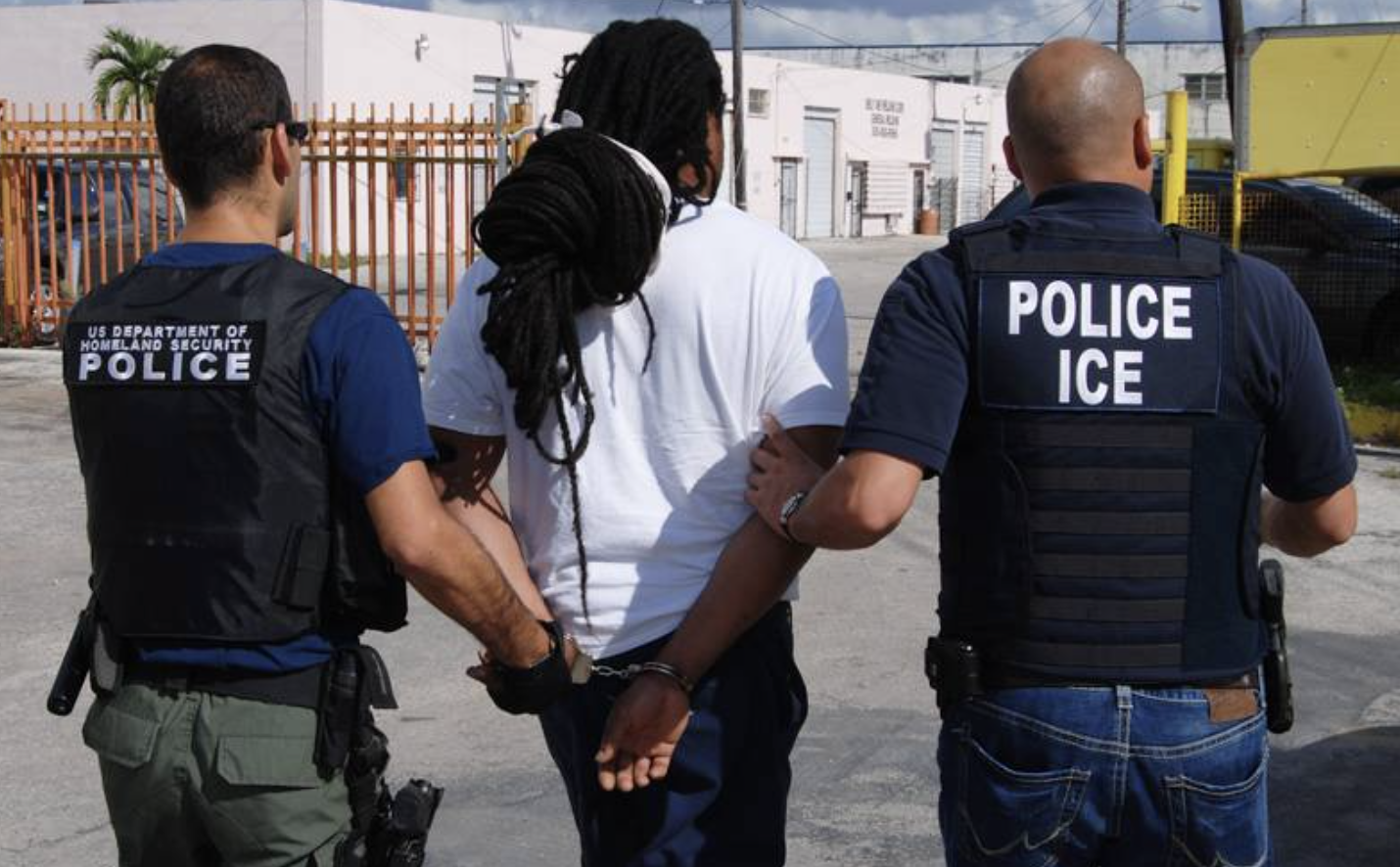
Mayor Karen Bass announced this week that Immigration and Customs Enforcement will be barred from staging operations on city property, directing departments to restrict access to facilities and requiring LAPD to document encounters with federal agents.
The order came amid intense public anger over immigration enforcement in Los Angeles and, in particular, over remarks by LAPD Chief Jim McDonnell suggesting the department would not enforce a new state law aimed at preventing masked federal agents from conducting raids anonymously. The comments drew sharp criticism from City Council members and immigrant-rights advocates, and shortly afterward a federal judge temporarily blocked enforcement of the mask-ban provision while litigation proceeds.
In that context, Bass’s directive looks less like a comprehensive strategy and more like damage control and a response to mounting public pressure. Immigration advocates and policy analysts say the measure highlights a deeper problem: Los Angeles has many of the tools needed to protect immigrant communities, but enforcement on the ground continues to intensify.
The new directive addresses where federal agents can stage operations, but it does not directly affect how deportations are carried out. That distinction matters, because most deportations do not begin with agents parking in a city lot, but with ordinary encounters with the criminal legal system, such as a traffic stop, an arrest, a booking, or an interview in custody. Policies governing jails and policing have long been identified as some of the most significant points where local governments can interrupt the deportation process.
Across the country, jurisdictions seeking to reduce deportations have focused on those points in the pipeline. Some refuse to notify ICE when someone is about to be released from custody or reject requests to hold people beyond their lawful release dates, recognizing that immigration detainers are requests rather than mandates and have been found unconstitutional in many cases. Others prohibit joint operations with ICE or bar officers from prolonging stops to allow federal agents to arrive, limiting the flow of information and cooperation that facilitates enforcement. Some jurisdictions also restrict ICE access to jails, requiring a judicial warrant before agents can interview detainees, a step intended to prevent coercive questioning that often leads to deportation proceedings.
Los Angeles and Los Angeles County have already adopted some of these measures. Local law enforcement generally does not enforce immigration law, and county jail policies largely reject immigration detainers and limit cooperation with federal authorities. The city has also invested in legal defense programs that provide representation to some immigrants facing deportation, and local governments have funded emergency relief programs to help families struggling with housing or food after detentions or job losses.
But those efforts remain limited in scale. In November 2023, the City Council voted to expand the RepresentLA deportation defense program by roughly $1 million, a relatively modest increase intended to provide more legal representation to immigrants facing removal. The measure passed with broad support, but CD11 Councilmember Traci Park joined Councilmember John Lee in voting against it.
Advocates say that example illustrates how the city builds pieces of a protection system, but those pieces are fragmented, unevenly implemented, and not scaled to match the pace of federal enforcement. The new directive banning ICE from city property reflects the same dynamic. It signals opposition and may complicate certain operations, but it does not change the underlying dynamics that lead to arrests, detention, and deportation.
There are also practical questions about how the order will work. Enforcement depends heavily on cooperation from LAPD, but it’s difficult to imagine that cooperation materializing. LAPD support and coordination with ICE in Los Angeles has been well documented, and Chief Jim McDonnell’s refusal to enforce the mask-ban law underscored just how unlikely it is that the department would reliably carry out policies intended to restrict federal immigration enforcement. Some observers have also raised concerns that the policy could place unarmed civilian employees in the position of confronting armed federal agents, a role they are neither trained nor equipped to handle.
Meanwhile, federal enforcement continues. Workers are still being detained near job sites, and immigrant families across Los Angeles report living with growing fear and uncertainty. The debate now unfolding in LA reflects a broader national question. Sanctuary policies, legal defense funds, and emergency assistance programs can reduce harm, but they do not eliminate federal enforcement, and in Los Angeles, the size of those assistance programs pales in comparison to what is actually needed. Cities that have sought to go further have focused on coordination, linking policing policy, jail practices, legal representation, robust housing and food support, and other social services into comprehensive strategies designed to reduce deportations at every stage.