
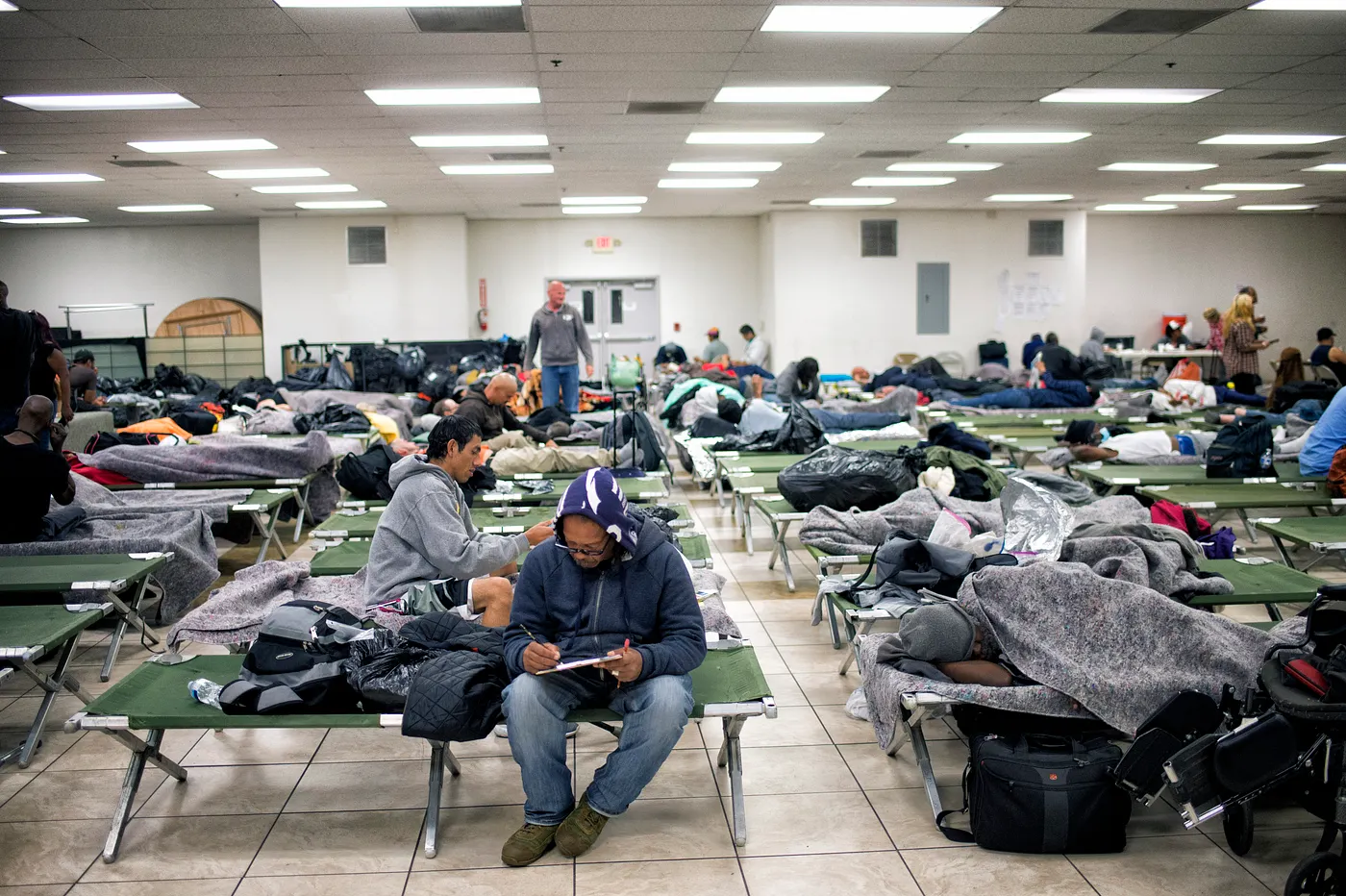
There are just 285 seasonal winter shelter beds in all of Los Angeles County this year. That number comes straight from the county’s winter shelter materials, which list only seven small sites scattered far from the Westside, together accommodating fewer people than fit in a single Metro bus. In a county where more than 75,000 people are unhoused, that means roughly 265 people will be left outside for every available bed. This is the plan for the coldest, wettest months of the year.
Not a single one of those beds is located in Service Planning Area 5, the region that covers Venice, Mar Vista, Westwood, Brentwood, Pacific Palisades, Santa Monica, and Beverly Hills. This means that on the Westside, the county’s official strategy during winter storms is to offer nothing close by. If you are older, disabled, or bundled under blankets hoping to stay dry through the night, the message is clear. If you want help, you must leave your community and travel miles away to South Los Angeles, Long Beach, Whittier, or even Palmdale, where a handful of temporary cots may or may not be available.
RAND’s recent LA LEADS survey shows that more and more people here are sleeping without any protection at all. In Venice, the share of people “sleeping rough” has surged in recent years. Where someone once might have been able to stay in a car or an RV, they are instead on the bare sidewalk, exposed to cold evenings, soaking rain and ocean winds. That shift has tracked directly with stepped up enforcement against vehicle dwellers and encampments. When tents and cars get seized and there is no indoor option, the only remaining place to sleep is the street.
The results are deadly. Los Angeles consistently sees more hypothermia deaths among people experiencing homelessness than New York City and San Francisco combined, even though those cities have much colder winters. The difference is not the climate. It is that Los Angeles forces thousands of people to sleep outside with no roof, no walls and no heat. When it rains in Los Angeles, clothing and bedding get wet. When temperatures drop into the 40s overnight, that cold can turn fatal. People are dying not because this city is too cold but because this city refuses to provide shelter.
Public officials often defend the lack of beds with promises of motel vouchers or warming centers. But vouchers are scarce and often out of reach for people newly pushed onto the street. Warming centers are daytime spaces where people are welcomed inside only to be kicked out again just as temperatures hit their lowest.
This failure lands hardest in Westside communities where the City continues to carry out brutal encampment sweeps while offering no emergency shelter within reasonable distance. Tents are cleared in the afternoon only for storms to arrive that evening. Someone’s blankets, shoes or medications may be thrown away in the process, and there is no back-up plan for the person who has just lost the only things keeping them warm.
Residents of the Westside hear constantly about public safety, about tourism, about maintaining order and cleanliness on sidewalks and near the beach. Yet the most fundamental safety intervention a city can provide during winter is shelter from the elements. The absence of that intervention in SPA 5 reveals what the system actually prioritizes: making homelessness less visible to those who are housed.
Los Angeles County calls its winter shelter system a life-saving program. And it is, for the few people who will manage to reach those limited sites. But a life-saving program that serves less than one half of one percent of the people in need is not a program that is working. It is a program that manages death by neglect while congratulating itself for each individual it rescues.
The Westside is one of the wealthiest regions in the country. It has the political power and the real estate capacity to host emergency facilities that could save lives. Instead, this part of LA continues police-led sweeps that push people around while refusing to build or operate shelters that would keep those same people alive.
It does not have to be this way. Winter shelters are among the simplest and most immediate tools available while longer-term housing solutions are built. They do not fix homelessness, but they prevent the most preventable deaths. A city that claims to value human life cannot accept a winter plan that abandons thousands of people to sleep directly on cold concrete in one of the wealthiest communities on earth.