
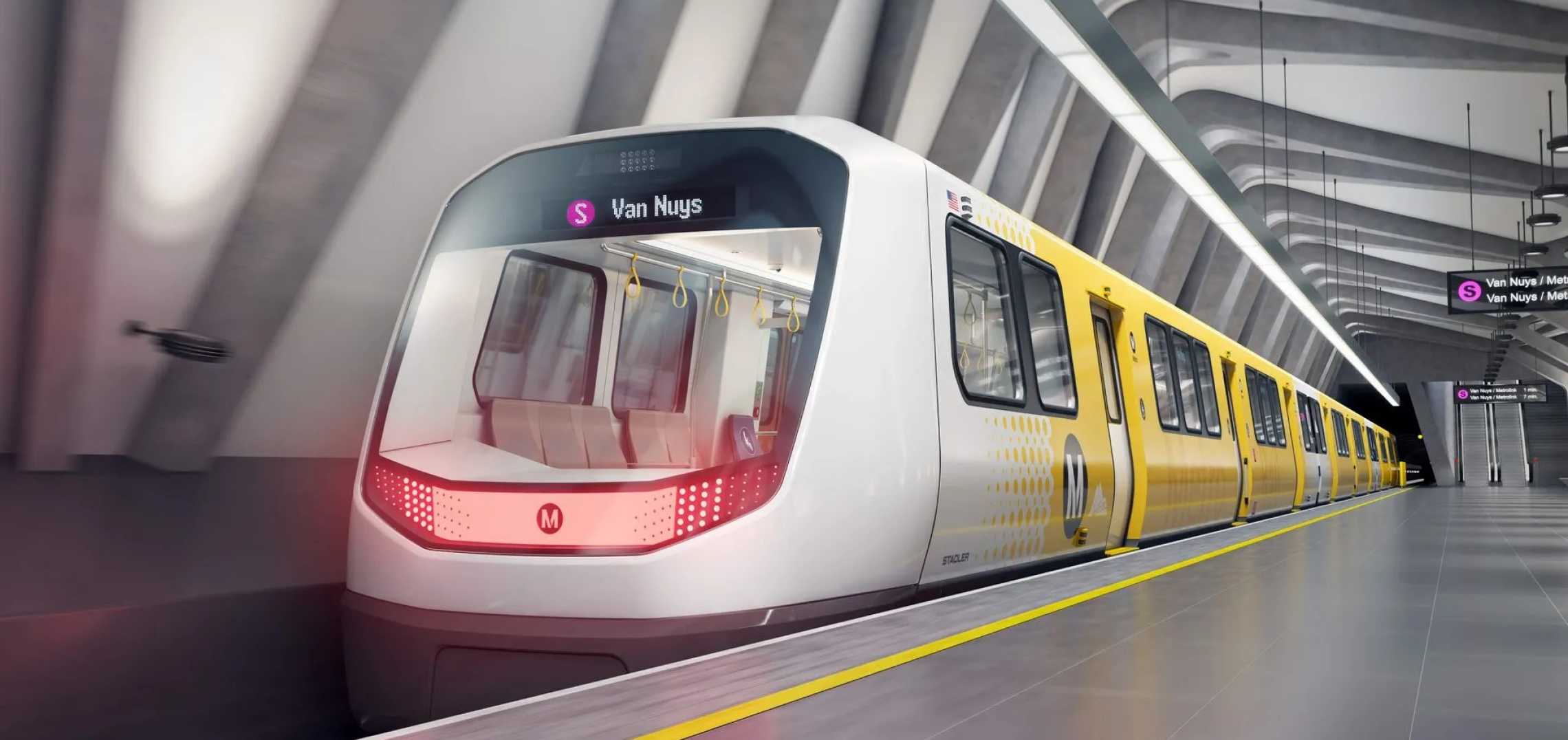
LA Metro staff are recommending a fully underground heavy rail subway as the locally preferred alternative for the Sepulveda Transit Corridor, a move that would lock in a high-capacity rail connection between the San Fernando Valley and the Westside and formally pivot the project away from monorail proposals that have dominated public debate for years.
The recommendation before Metro’s Planning and Programming Committee calls for approval of a Modified Alternative 5 alignment: an automated heavy rail line running underground between the Van Nuys Metrolink Station and the Expo/Sepulveda E Line station, modified to directly connect with the Metro G Line and the future East San Fernando Valley light rail line along Van Nuys Boulevard . If approved, Metro would advance this single alignment into the Final Environmental Impact Report and begin refining design, phasing, and funding.
Metro’s own projections underscore why heavy rail rose to the top. In the Draft EIR comparison, the monorail option labeled Alternative 1 had the lowest ridership and the lowest reduction in vehicle miles traveled, even though it carried the lowest capital cost. By contrast, the heavy rail options generate much higher projected ridership and substantially larger VMT reductions, with Alternative 5 forecast at roughly 124,000 daily riders and the largest daily VMT reduction in the comparison table. Metro also highlights travel time as the political and practical heart of the project. A Valley-to-Westside trip that can take 40 to 80 minutes by car in unreliable traffic is projected at about 18 to 33 minutes by transit depending on the alternative, with the heavy rail options at the fast end.
Public engagement has been unusually large for a Metro corridor decision. Metro reports 8,074 formal comment submissions during the Draft EIR review period, with 7,308 expressing support for the project overall and only 69 expressing opposition to the project as a whole. That enthusiasm has also been visible in the broader transit community, where the recommendation is being treated as a major victory. One commenter reacting to the new recommendation wrote that they were “very very excited that the monorail is basically killed” and called Modified Alternative 5 “a really great option,” capturing the sense that, after years of whiplash, Metro is finally aligning with what many riders and advocates see as a serious rail investment.
But Metro’s report is also blunt about the biggest obstacle ahead: money. The preliminary capital cost estimate for Alternative 5 is $24.2 billion in 2023 dollars, far above the $5.7 billion set aside in the Measure M expenditure plan, with Metro acknowledging the need for additional funding and financing from federal, state, local, and potentially private sources.
That funding reality is why Metro is simultaneously pushing a phased strategy. Staff recommend focusing the initial operating segment on a direct alternative to the 405 through the Sepulveda Pass that connects the Valley and Westside via the G Line and D Line, rather than building disconnected pieces that would not deliver an immediate benefit.
The full Metro Board of Directors is slated to take up the item on Thursday, January 22 at 10:00 a.m., when the Board will vote to select the Locally Preferred Alternative, authorizing Metro to focus its final environmental review and design work on the single chosen route. City Council has also begun weighing in. On January 14, the two Councilmembers representing much of the San Fernando Valley introduced a resolution expressing support for Metro’s Modified Alternative 5 and the proposed phased approach, adding city-level backing as Metro moves toward a final decision.